Private, luxury residential care with 24/7 clinical support, discreet admissions, and a treatment plan personalized to your goals.
When symptoms become difficult to manage in everyday life, residential care provides the structure, safety, and clinical depth needed to begin lasting recovery. At California Healing Centers, we provide inpatient mental health treatment for adults who need a higher level of support than traditional outpatient therapy can provide. Our residential program offers 24/7 clinical care in a safe, structured, and luxurious environment where individuals can step away from daily stressors and focus entirely on healing.
Whether you’re struggling with severe anxiety, depression, trauma, bipolar disorder, obsessive-compulsive disorder, or another mental health condition, our experienced clinical team develops a personalized treatment plan based on your unique needs and recovery goals. We combine evidence-based therapies with holistic wellness services and trauma-informed care to help clients achieve lasting emotional stability, not simply symptom management.
As part of our full continuum of care, our inpatient mental health treatment program also prepares clients for long-term success by creating a seamless transition into lower levels of care, including Partial Hospitalization (PHP), Intensive Outpatient (IOP), and outpatient therapy.


Residential Treatment at a Glance
Compassionate, evidence-based care in a luxury residential setting designed to help clients heal safely and confidently.
24/7 Clinical Care
Round-the-clock live-in mental health support.
Luxury Accommodations
Private, comfortable residences in San Diego.
Personalized Plans
Treatment tailored to every client's needs.
Holistic Therapies
Evidence-based care with whole-person healing.
Continuum of Care
Seamless transition into PHP, IOP and outpatient.
Insurance Verification
Confidential benefits verification available.
When symptoms become difficult to manage independently, residential mental health treatment provides the structure, accountability, and clinical support needed to begin healing safely. Every treatment plan is personalized so clients receive the right level of care throughout their stay.
What is Residential Treatment for Mental Health?
At California Healing Centers, residential care lets you step away from daily stressors and fully focus on healing. Our approach includes trauma-informed care, evidence-based therapies, and holistic methods, helping you tackle the root causes of mental health challenges, not just the symptoms.
Not sure if residential treatment is right for you?
Talk with a specialist who can help you understand your options.
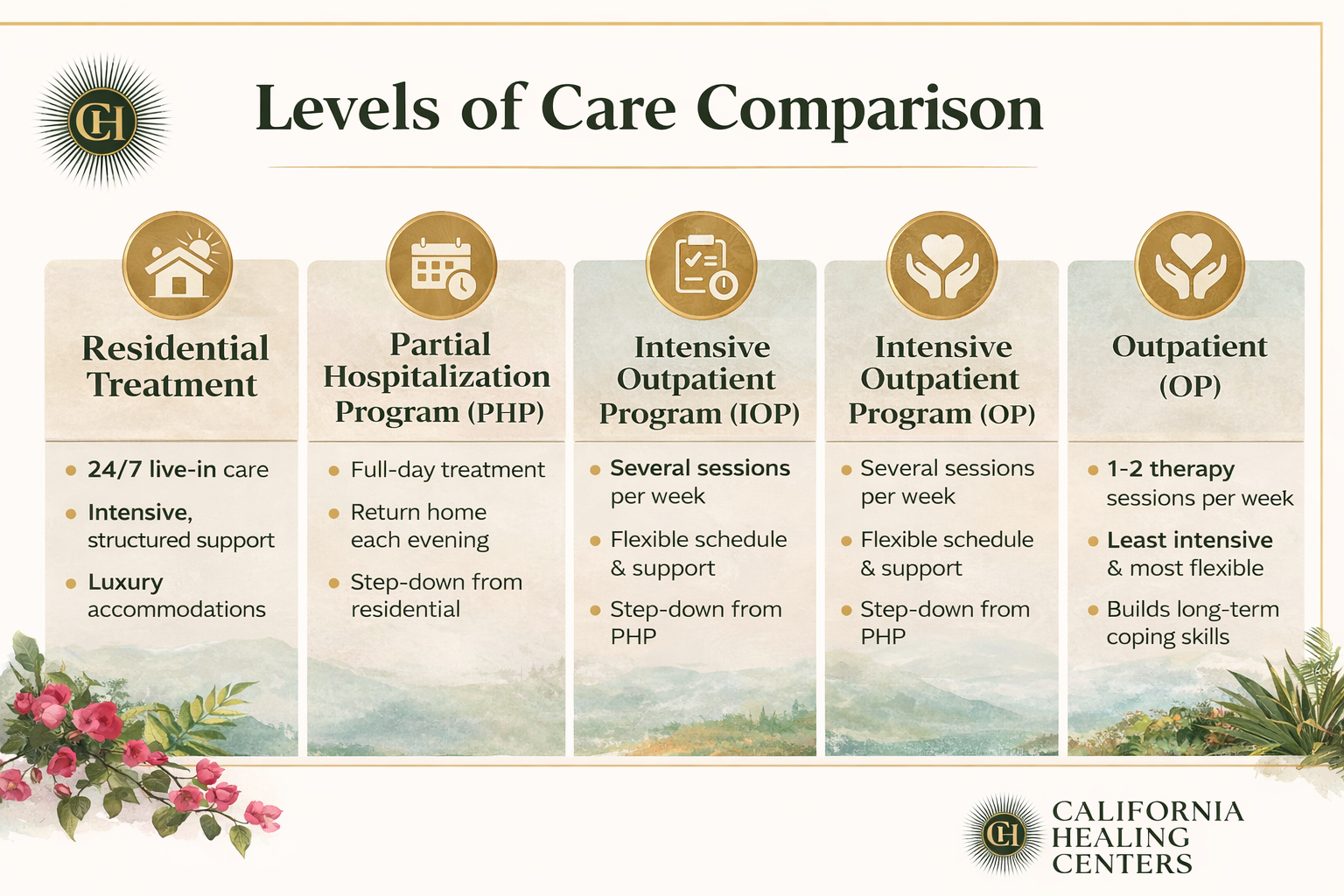
Residential Treatment vs PHP, IOP, and Outpatient Care
Understanding the placement of residential treatment can help you choose the right level of care:
- Residential Treatment (RTC): 24/7 live-in care with full clinical support
- Partial Hospitalization Program (PHP): Full-day treatment, return home at night
- Intensive Outpatient Program (IOP): Several sessions per week
- Outpatient (OP): Weekly therapy with minimal structure
Residential care is ideal when symptoms are severe, safety is a concern, or previous outpatient treatment has not been effective.
Who Needs Inpatient Mental Health Treatment?
Inpatient mental health treatment is designed for adults whose symptoms have become difficult to manage through outpatient care alone. While every person’s situation is unique, residential treatment is often recommended when symptoms significantly interfere with daily life, relationships, employment, or personal safety.
You may benefit from inpatient mental health treatment if you:
- Have severe anxiety, depression, or mood instability that affects everyday functioning
- Continue struggling despite participating in outpatient therapy
- Need medication stabilization under psychiatric supervision
- Recently experienced a mental health crisis or psychiatric hospitalization
- Require a structured environment free from outside stressors
- Experience symptoms related to bipolar disorder, OCD, PTSD, psychotic disorders, or other complex mental health conditions
- Need intensive trauma-focused treatment in a safe, supportive setting
- Want comprehensive care before returning to work, school, or family responsibilities
Our admissions specialists complete a confidential assessment to determine whether inpatient mental health treatment is the most appropriate level of care or whether another program within our continuum may better meet your needs.
What Mental Health Conditions Do We Treat?
Whether you face generalized anxiety, panic attacks, or social anxiety, we develop a treatment plan to help you regain control of your life.
Our trauma-focused approach is especially effective for those struggling with PTSD, offering a path to healing through specialized therapies like EMDR.
We provide thorough care for individuals living with bipolar disorder, focusing on mood stabilization and emotional balance.
We take a comprehensive approach to treating psychotic disorders, including schizophrenia and related conditions.
We create customized plans designed around your unique needs, supporting long-term emotional and behavioral success.
Through tailored therapeutic approaches, we help reduce compulsive behaviors and manage intrusive thoughts.
We assist individuals in developing healthier coping mechanisms and emotional resilience.
We treat various trauma-related conditions with compassionate, expert care.

Signs You May Need Inpatient Mental Health Treatment
Residential treatment may be the right choice if you:
- Feel unable to manage symptoms on your own
- Have not improved with outpatient therapy
- Experience severe anxiety, depression, or mood swings
- Are transitioning from hospitalization
- Need a structured, distraction-free environment
Benefits of Inpatient Mental Health Treatment
Inpatient mental health treatment offers a level of structure, support, and clinical oversight that cannot typically be achieved through outpatient services alone. By temporarily stepping away from everyday responsibilities, clients can focus entirely on healing while receiving comprehensive care from an experienced multidisciplinary team.
Some of the benefits of inpatient mental health treatment include:
Around-the-clock supervision provides immediate access to trained professionals who can respond to changing symptoms, offer emotional support, and adjust treatment as needed.
Every client receives a customized treatment plan based on their diagnosis, personal history, symptoms, strengths, and recovery goals. Treatment evolves throughout the program as progress is made.
Psychiatric providers carefully evaluate medications, monitor effectiveness, and make adjustments when appropriate to improve symptom management and overall stability.
Clients participate in multiple therapeutic services throughout the day, allowing them to make meaningful progress in a relatively short period of time compared to traditional weekly therapy.
Rather than focusing solely on symptom reduction, we address the underlying experiences that contribute to emotional distress through compassionate, evidence-based, trauma-informed treatment.
Living onsite removes many outside distractions and stressors, allowing clients to build healthy routines, develop coping skills, and practice emotional regulation in a supportive setting.
Recovery doesn’t end after inpatient treatment. Every client receives discharge planning and recommendations for continued care, helping create a smooth transition into PHP, IOP, outpatient therapy, or other community resources.
What a Typical Day in Residential Treatment Looks Like
Morning
- Healthy breakfast
- Mindfulness or meditation
- Goal setting for the day
- Community check-in
Midday
- Individual therapy
- Psychiatric appointments or medication management
- Skills-based educational groups
Afternoon
- Process groups
- Cognitive Behavioral Therapy (CBT)
- Dialectical Behavior Therapy (DBT)
- Trauma-focused therapy such as EMDR (when clinically appropriate)
- Holistic wellness activities including yoga, fitness, or creative therapies
Evening
- Dinner with peers
- Reflection groups
- Recreational activities
- Relaxation and preparation for the following day
Every aspect of the daily schedule is designed to help clients develop healthier coping skills, strengthen emotional resilience, and build confidence as they progress through treatment.
Benefits of Inpatient Mental Health Treatment
Many individuals entering treatment wonder what the overall process looks like. While every person’s experience is unique, inpatient mental health treatment generally follows a structured progression that supports both immediate stabilization and long-term recovery.
Treatment begins with a thorough evaluation of your mental health history, current symptoms, medical needs, previous treatment experiences, and recovery goals. This assessment helps our clinical team develop a personalized treatment plan.
Clients meet with psychiatric providers to review current medications, evaluate symptoms, and determine whether medication adjustments may improve emotional stability throughout treatment.
No two recovery journeys are identical. Your care team continuously evaluates your progress and adjusts therapeutic interventions based on your evolving needs.
Our multidisciplinary team regularly evaluates treatment progress to ensure every client continues moving toward their individualized goals.
Throughout treatment, clients learn practical coping strategies to manage stress, regulate emotions, improve communication, establish healthy boundaries, and reduce the likelihood of future mental health crises.
Treatment typically includes a combination of:
- Individual therapy
- Group therapy
- Family therapy when appropriate
- CBT
- DBT
- Trauma-focused therapies
- Holistic wellness services
Planning for continued success begins early. Before discharge, clients work with their treatment team to develop a comprehensive aftercare plan that supports ongoing recovery through lower levels of care and community resources.
Explore your treatment options with a personalized recommendation.
Our team can help you determine the right level of care.

What to Expect During Inpatient Mental Health Treatment
Your personalized treatment plan may include:
One-on-one sessions to explore emotional and psychological challenges.
Structured sessions that foster peer support and shared healing.
Yoga, meditation, and mindfulness practices to support balance.
Modern, evidence-informed approaches that support deeper healing.
Treatment that prioritizes safety, trust, and emotional recovery.
Ongoing psychiatric care and medication monitoring when needed.
How Long Does Inpatient Mental Health Treatment Last?
While every recovery journey is unique, many individuals remain in residential treatment for:
- 30 Days – Ideal for stabilization, comprehensive assessment, medication management, and beginning intensive therapeutic work.
- 60 Days – Provides additional time to address underlying mental health concerns, strengthen coping skills, and establish healthier routines.
- 90 Days or Longer – Recommended for individuals with complex or long-standing mental health conditions, significant trauma histories, or those who benefit from extended therapeutic support.
Several factors influence how long someone remains in inpatient mental health treatment, including:
- Severity of symptoms
- Progress toward treatment goals
- Response to therapy and medication
- Presence of co-occurring conditions
- Clinical recommendations
- Insurance coverage
- Readiness to transition into a lower level of care
Because recovery isn’t measured by a calendar, our goal is to ensure every client leaves treatment with the tools, confidence, and support needed to continue healing successfully.
Who is Our Program For?
- Need more support than outpatient care can provide
- Are transitioning from hospitalization
- Require a structured and supportive environment
- Are ready to address underlying mental health challenges
This program is ideal for individuals seeking focused, uninterrupted healing.
Family Involvement in Treatment
At California Healing Centers, we encourage healthy family involvement whenever it aligns with a client’s treatment goals and clinical recommendations.
Family participation may include:
- Family therapy sessions
- Psychoeducation about mental health conditions
- Communication and conflict-resolution skills
- Healthy boundary setting
- Discharge and aftercare planning
- Ongoing support and relapse prevention education
Our clinicians work closely with both clients and their loved ones to help create healthier relationships and a supportive environment that promotes continued healing after residential treatment.
Preparing for Admission
Knowing what to expect before entering inpatient mental health treatment can help reduce anxiety and make the transition into care feel more manageable. Our admissions team is available to answer questions, explain the process, and guide you through every step before your arrival.
Before admission, we recommend gathering:
- A valid photo ID
- Insurance information
- Current medications or a medication list
- Contact information for healthcare providers
- Comfortable clothing and personal essentials
- Any requested medical documentation
Our admissions specialists will explain what items should be brought with you, what should remain at home, and what to expect during your first day in treatment.
If you have questions before admission, our team is always available to provide guidance and help you feel prepared.
Inpatient Mental Health Treatment vs. Psychiatric Hospitalization
Many people use the terms inpatient mental health treatment, psychiatric hospitalization, and residential treatment interchangeably. While these levels of care may appear similar, they serve different purposes within the mental healthcare continuum.
Psychiatric Hospitalization
Psychiatric hospitals are designed to provide short-term stabilization during an acute mental health crisis. Individuals may be admitted because they are experiencing severe symptoms that require immediate medical attention, intensive monitoring, or crisis intervention.
The primary goals of psychiatric hospitalization include:
- Crisis stabilization
- Immediate safety
- Psychiatric evaluation
- Medication stabilization
- Determining the next appropriate level of care
Hospital stays are generally brief and focus on helping individuals become medically and psychiatrically stable.
Inpatient Mental Health Treatment
Residential inpatient mental health treatment begins after immediate stabilization has occurred. Rather than focusing only on crisis management, treatment addresses the underlying causes of mental health symptoms through comprehensive therapeutic care.
Clients participate in:
- Individual therapy
- Group therapy
- Family therapy
- Trauma-informed treatment
- Medication management
- Holistic wellness services
- Life skills development
- Relapse prevention planning
This allows individuals to build healthier coping strategies, process underlying emotional challenges, and prepare for long-term recovery before returning home.
Transitional Care Between Psychiatric Hold and Outpatient Treatment
If you’re transitioning from a mental health crisis or hospitalization, our residential program provides structured support to help you stabilize and prepare for the next stage of care.
Why Choose California Healing Centers for Inpatient Mental Health Treatment?
Choosing an inpatient mental health treatment program is an important decision. Beyond clinical expertise, it’s essential to find a treatment environment where you feel safe, supported, and empowered throughout your recovery journey.
At California Healing Centers, we combine evidence-based behavioral healthcare with luxury accommodations and compassionate, trauma-informed care to create an environment where healing can truly begin.
Our program offers:
- 24/7 clinical supervision
- Individualized treatment planning
- Licensed therapists and psychiatric providers
- Evidence-based therapies including CBT, DBT, and EMDR
- Holistic wellness services
- Comfortable residential accommodations
- Family involvement throughout treatment
- Comprehensive discharge planning
- A full continuum of care including PHP, IOP, and outpatient services

Rather than simply helping clients manage symptoms, we focus on creating lasting emotional wellness through personalized care that addresses the whole person.
What Happens After Inpatient Mental Health Treatment?
Completing inpatient mental health treatment is an important milestone, but recovery doesn’t end when residential care does. Long-term success is built through continued support, ongoing therapy, and a personalized aftercare plan that helps you maintain the progress you’ve made.
Before discharge, our clinical team works closely with you to create a transition plan based on your individual needs, goals, and continued level of support.
Depending on your progress, your aftercare plan may include:
- Transitioning into our Partial Hospitalization Program (PHP)
- Stepping down to our Intensive Outpatient Program (IOP)
- Continuing with outpatient individual therapy
- Ongoing psychiatric care and medication management
- Family therapy and support services
- Community resources and wellness planning
Because California Healing Centers offers a full continuum of mental health care, many clients can continue working with the same trusted clinical team as they progress through lower levels of treatment. This continuity helps reduce disruptions in care while providing the ongoing guidance needed to support lasting recovery.
Recovery is a journey, not a single event, and we’re committed to supporting you every step of the way.
Does Insurance Cover Residential Treatment?
Our admissions specialists are available to simplify the process by helping you understand your benefits before treatment begins.
We can assist with:
- Confidential insurance verification
- Reviewing your behavioral health benefits
- Explaining deductibles, copays, and out-of-pocket costs
- Determining whether prior authorization is required
- Answering questions about payment options
- Coordinating with your insurance provider throughout the admissions process
Our goal is to make accessing care as straightforward as possible so you can focus on what matters most—your recovery.
Start your recovery with support that’s tailored to you.
We’ll verify your insurance and walk you through every step.
How to Get Started
Taking the first step toward treatment can feel overwhelming, but you don’t have to navigate it alone. Our admissions team is here to guide you through every stage of the process with compassion, confidentiality, and personalized support.
Getting started is simple:
1. Contact Our Admissions Team
Speak with one of our specialists about your symptoms, treatment goals, and questions regarding inpatient mental health treatment.
2. Complete a Confidential Assessment
We’ll perform a comprehensive clinical assessment to determine whether inpatient mental health treatment is the most appropriate level of care for your needs.
3. Verify Your Insurance
Our team will review your insurance benefits, explain your coverage, and discuss available financial options when needed.
4. Schedule Your Admission
Once your treatment plan is established, we’ll coordinate your admission and prepare you for a smooth transition into residential care.
From your first phone call through discharge planning, our team is committed to providing compassionate guidance throughout your recovery journey.
Restore Yourself at California Healing Centers in San Diego
At California Healing Centers, we offer more than just treatment. We provide a space for meaningful transformation.
Our residential program in San Diego combines luxury accommodations with expert clinical care, providing the support needed to heal in a safe and comfortable environment.
If you’re ready to take the next step, our team is here to guide you.
You don’t have to navigate this alone.
Our team is here to support you every step of the way.