
If OCD is part of your life, you probably already know it isn’t only about thoughts. It shows up in how long it takes to leave the house, how many times you reread an email before sending it, and how often you ask someone you love the same question.
Many people with OCD know their rituals don’t make sense and do them anyway, because skipping one feels worse. That gap between knowing and doing is what wears people down. Left untreated, OCD can disrupt work, school, and relationships (1).
Confidential admissions • Residential-only care • 24/7 support
Intrusive thoughts take attention too, even when nobody can see them. You might be nodding through a meeting while mentally reviewing whether something you said earlier could have hurt someone. Your concentration isn’t gone because you don’t care. It’s being spent somewhere else.
Over time, many people start arranging work around OCD: arriving early to finish checking before anyone else shows up, avoiding tasks that trigger doubt, or turning down responsibility they’re afraid they can’t get perfect. From the outside it can look like slowness or indecision. From the inside, it’s exhausting.
OCD at Home and with the People You Love
Reassurance-seeking is one of the most common patterns: asking a partner whether the door is locked, whether you’re a good person, or whether they’re sure they still love you. The answer brings relief for a few minutes, then the doubt comes back. Family members may start helping with rituals or avoiding certain topics to keep the peace, which can quietly make OCD stronger.
Intrusive thoughts can also create distance. A parent with unwanted thoughts about harming their child may avoid being alone with them, while feeling too ashamed to explain why. If these patterns sound familiar, it can help to understand how OCD affects relationships in more depth.
The Time OCD Takes: Compulsions and Daily Routines
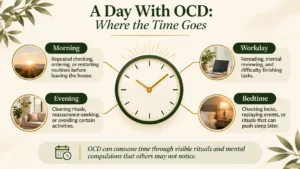
That time rarely comes in one block. It’s ten minutes of handwashing after touching a doorknob, twenty minutes of arranging the kitchen before you can cook, a morning routine that has to restart from the beginning if it’s interrupted. Some compulsions happen entirely in your head, like counting, praying, or replaying conversations, so even a quiet hour on the couch may not be restful.
Avoidance takes time in a different way. Many people stop doing things that trigger their obsessions: skipping restaurants, rerouting drives, putting off travel. The day gets smaller, and what tends to make OCD worse, like stress and lost sleep, often builds up at the same time.
How OCD Affects Sleep
Some people lie awake reviewing the day for anything they might have done wrong. Others get up to recheck something they already checked twice. Short, broken sleep then makes the next day harder: focus drops, irritability rises, and a tired mind tends to have a harder time letting doubts go.
The bottom line: poor sleep can feed OCD, and OCD can steal sleep, which is why the two often need to be treated together.
High-Functioning OCD: When You Seem Fine but Aren't
People in this situation often hide compulsions well. Rituals get done before anyone wakes up. Mental checking happens behind a calm face. Perfectionism gets praised at work, so nobody questions it.
The cost tends to show up somewhere else: exhaustion, short temper at home, a growing list of things you avoid, or a feeling that you can’t keep this up much longer. Seeming fine isn’t the same as being fine, and it isn’t a reason to wait until things fall apart.
When Daily Life Disruption Means It's Time to Get Help
Outpatient therapy is often the right place to start. A higher level of care may make sense when:
- Compulsions take up several hours a day, or keep growing despite weekly therapy
- You’ve had to stop working, studying, or caring for others
- Avoidance has made your world noticeably smaller
- Depression or anxiety has built up alongside the OCD
- You need a medication change and closer support while it takes effect
Residential mental health treatment gives you a structured setting away from the routines and triggers that keep compulsions going. At California Healing Centers, clients work with a psychiatrist and clinical team in a six-bed home in Rancho Santa Fe. Care draws on approaches like cognitive behavioral therapy (CBT), dialectical behavior therapy (DBT), internal family systems (IFS), brainspotting, and neurofeedback, built around each person’s symptoms and goals.
Frequently Asked Questions About How OCD Affects Daily Life
Yes, it can. Repeated checking, perfectionism, and intrusive thoughts can make it harder to focus and meet deadlines. Many people keep working while they struggle, and treatment often helps them get time and concentration back.
It’s very common. Shame about intrusive thoughts leads many people to keep their symptoms private, sometimes for years. Hiding them takes a lot of energy, and it’s one reason OCD can go untreated for a long time.
Look at the direction things are moving. If symptoms are taking more of your day, you’re avoiding more, or weekly sessions aren’t keeping up, it may be time for a higher level of care. Our admissions team can talk through what you’re experiencing and whether residential treatment is a good fit.
Take the Next Step Toward Getting Your Day Back
Sources