Finishing residential PTSD treatment can feel like two things at once: relief that you did something hard, and uncertainty about what happens now. Both are normal. Treatment gives you tools, a clearer understanding of your trauma responses, and a period of stability. Life after treatment is where you learn to use those tools in the places your symptoms actually show up: at home, at work, and in your relationships.
This page is for anyone who has finished residential care or is considering it and wants an honest picture of what comes next. Recovery from post-traumatic stress disorder (PTSD) rarely moves in a straight line. But for most people, it does move.
Leaving a structured, supportive setting is a real transition. In residential care, your days had a rhythm: therapy sessions, meals, rest, and people around you who understood what you were working on. At home, that structure is gone, and the familiar stressors are back.
Many people describe the first weeks as a mix of:
- Relief and pride: You completed something difficult, and you may feel more like yourself than you have in a long time.
- Heightened awareness: You notice triggers and patterns you used to move through on autopilot.
- Fatigue: Trauma work takes energy, and your body may still be catching up.
- Uncertainty: Everyday decisions can feel bigger without a care team down the hall.
None of this means treatment didn’t work. It means you’re applying what you learned in a less controlled environment.
It helps to keep the first few weeks simple. Protect your sleep, keep your schedule predictable, and hold off on major life decisions if you can. Before you leave, your treatment team will typically help you line up ongoing care, such as an outpatient therapist and a psychiatric provider if you take medication, so you aren’t starting from scratch.
What Ongoing PTSD Management Looks Like
PTSD management after residential treatment is usually less intensive but more consistent. Instead of daily sessions, it often includes:
- Regular therapy: Continuing trauma-focused work with an outpatient provider, often using approaches like eye movement desensitization and reprocessing (EMDR) or cognitive behavioral therapy.
- Medication follow-up: If medication is part of your plan, regular check-ins help your provider monitor how it’s working and adjust as needed.
- Daily practices: Grounding, breathing, movement, and sleep routines keep your nervous system steadier over time.
- Support from others: Trusted people who know what you’re working on can help you notice changes and stay on track.
The goal isn’t to stay in intensive treatment forever. It’s to keep practicing the skills that helped you stabilize until they become second nature.
Most of that work happens in ordinary moments: noticing your body tense in a crowded store, pausing before reacting to a sharp comment, or choosing sleep over scrolling at 2 a.m.
How PTSD Symptoms May Change After Treatment
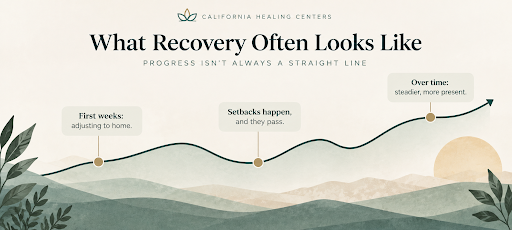
Setbacks are part of this process. Anniversaries, major stress, illness, conflict, or reminders of the trauma can bring symptoms back for a while. A hard week doesn’t erase your progress or mean you’re back where you started. It usually means something is putting pressure on your system, and it’s a signal to lean on your tools and supports.
There’s no fixed PTSD recovery timeline. How things unfold depends on the type of trauma, how long symptoms were present before treatment, whether depression or anxiety is also involved, and the support you have at home. Some people notice steady change within a few months. For others, progress comes in slower stretches with plateaus in between. Both patterns are common.
You may also notice quieter changes that matter just as much: feeling more present with people you love, sleeping more consistently, or having a little more space between a feeling and your reaction to it.
Rebuilding Relationships After PTSD Treatment
Trauma often affects the people closest to you. Before treatment, you may have pulled away, felt irritable or numb, or struggled to trust others. Your partner, family, or friends may have been worried, frustrated, or unsure how to help.
After treatment, relationships often need time to recalibrate. The people around you are adjusting too. They may not know what’s changed, what to ask, or how to support you without overstepping.
A few things tend to help:
- Share what you’re comfortable sharing: You don’t owe anyone the details of your trauma, but telling people what helps (and what doesn’t) gives them a way to show up.
- Name your triggers when it feels safe: A simple “loud arguments are hard for me right now” can prevent a lot of misunderstanding.
- Expect some awkwardness: Old patterns don’t change overnight, on your side or theirs.
- Consider involving loved ones in your care: Some therapists offer joint sessions so partners or family members can learn alongside you.
Trust and closeness usually rebuild through small, consistent moments rather than one big conversation. To learn more about how PTSD affects relationships, including the patterns that show up most often between partners and family members, read our in-depth guide.
Warning Signs That More Support May Be Needed
Struggling sometimes is expected after treatment. It’s worth reaching out to your therapist, psychiatric provider, or treatment team if you notice:
- Nightmares, flashbacks, or intrusive memories returning more often or more intensely for more than a couple of weeks
- Pulling away from people, work, or activities that had started to feel manageable again
- Sleeping much more or much less than usual
- Using alcohol or other substances to cope with symptoms
- Feeling persistently hopeless, numb, or on edge
- Stopping medication or skipping therapy without a plan from your provider
- Having trouble functioning at work or at home
Asking for more help isn’t failure. Sometimes it means adjusting medication or adding therapy sessions. For some people, it means returning to residential mental health treatment for a period of stabilization. Catching changes early usually makes them easier to address.
If you’re having thoughts of harming yourself or feel you’re in crisis, call or text 988 to reach the 988 Suicide & Crisis Lifeline, or call 911.
How to Maintain Progress After Leaving Residential Care
Maintaining progress has less to do with willpower than with structure. The habits that support long-term PTSD recovery tend to be simple and repeatable:
- Keep your follow-up appointments, especially in the first few months, even on weeks you feel fine.
- Protect your sleep with a consistent bedtime and wake time, since poor sleep makes almost every symptom harder to manage.
- Practice your coping tools when you’re calm, so they feel familiar when you need them.
- Move your body regularly, whether that’s walking, yoga, or anything that helps you feel present.
- Build a simple wellness plan with your therapist that lists your early warning signs, what helps, and who to call.
- Stay connected to people who support your recovery, even when isolation feels easier.
- Treat hard days as information, not evidence that you’ve failed.
Recovery after residential treatment isn’t about returning to who you were before the trauma. For many people, it’s about building a life where the trauma no longer sets the terms.
Frequently Asked Questions About Life After PTSD Treatment
Most people transition home with a plan for ongoing care, usually regular therapy with an outpatient provider and, if needed, medication follow-up with a psychiatric provider. The first weeks are an adjustment period as you apply what you learned in treatment to everyday life.
There’s no single timeline. Recovery depends on the type of trauma, how long symptoms were present, any co-occurring conditions, and the support around you. Many people notice meaningful improvement over several months, with occasional setbacks along the way.
Yes. Symptoms can temporarily return during stressful periods, anniversaries, or after reminders of the trauma. A flare-up doesn’t erase your progress. If symptoms return more often or don’t ease after a couple of weeks, talk with your therapist or provider.
Most people benefit from continuing therapy after residential care. Ongoing sessions help you keep building on the work you started, adjust to life at home, and address new challenges as they come up.
Support for What Comes Next
If you or someone you love is considering residential care, California Healing Centers offers PTSD treatment in San Diego in a private, trauma-informed setting in Rancho Santa Fe. Our team can talk through whether residential treatment is the right fit and what planning for life after treatment could look like.
Call (858) 330-4769 or verify your insurance to get started.