If you’re considering residential treatment for post-traumatic stress disorder (PTSD), cost is probably one of the first things on your mind. It may be why you’ve closed this tab more than once. That’s a fair concern, and you deserve a straight answer.
So, does insurance cover PTSD treatment? Often, yes. Many private plans cover it, including residential care, but every plan is different. Here’s what the law requires, what plans typically pay for, and how to find out exactly where you stand.
PTSD is a recognized clinical diagnosis, and treating it is medical care, not an elective service. Most private plans include mental health insurance coverage, and federal and California law limit how much more restrictive it can be than coverage for physical health.
Your coverage comes down to three things:
- Plan type: whether you have a PPO or HMO, and whether you have out-of-network benefits
- Medical necessity: whether your symptoms meet your insurer’s criteria for the care you need
- Cost-sharing: your deductible, coinsurance, and out-of-pocket maximum
A benefits verification checks all three for you.
What Mental Health Parity Law Means for You
- Your deductible, copays, and coinsurance can’t be higher than for comparable medical care
- Your plan can’t set day or visit limits that it doesn’t set on comparable medical care
- Prior authorization rules can’t be applied more strictly to mental health care
- If your plan covers intermediate medical care, such as a skilled nursing facility, it generally can’t exclude a comparable level of mental health care, such as residential treatment
The Affordable Care Act also made mental health care an essential health benefit for individual and small-group plans, including plans bought through Covered California.
California goes further. Under SB 855, in effect since 2021, state-regulated plans must cover medically necessary mental health treatment and base those decisions on generally accepted standards of care, not narrower internal guidelines. Large self-funded employer plans follow federal rules instead, though federal parity still applies. Short-term plans may fall outside these protections entirely.
What Insurance Typically Covers for PTSD Treatment
When PTSD treatment is covered, plans usually focus on core clinical services:
- Psychiatric evaluation and diagnosis
- Individual therapy, including trauma-focused approaches such as EMDR and cognitive behavioral therapy
- Medication management with a psychiatric provider
- Group therapy within a treatment program
- Residential mental health treatment when it’s medically necessary
Plans handle complementary services, such as equine therapy or massage, differently. Our admissions team can explain how yours treats them.
What Insurers Look for With Residential Care
Residential treatment is approved based on medical necessity. Insurers generally look for signs that outpatient care isn’t enough, such as:
- PTSD symptoms that are seriously affecting your ability to work, go to school, or care for yourself
- Outpatient therapy or medication that hasn’t helped enough, or symptoms that have worsened despite it
- A need for round-the-clock support to stabilize, without needing a locked hospital setting
Coverage is usually approved for a set number of days at a time, and the clinical team sends your insurer progress updates to request more when it’s needed. Learn more about residential mental health treatment at CHC and who it’s designed for.
PPO vs. HMO: What's the Difference for Mental Health Coverage?
Your plan type affects residential coverage more than almost anything else.
| PPO | HMO | |
| Out-of-network coverage | Usually yes, at a higher cost share | Generally no, except emergencies |
| Referral needed | Usually no | Often yes |
| Prior authorization for residential care | Usually required | Required |
A PPO typically lets you choose an out-of-network facility and still receive benefits, which is why many people seeking private residential care have one.
An HMO generally limits care to its network, but that doesn’t always end the conversation. Under California law, if a state-regulated plan can’t provide medically necessary mental health care in its network, it generally must arrange that care out of network.
One practical tip: many plans hand mental health benefits to a separate behavioral health company. Its number is often on the back of your insurance card, and it’s usually the right one to call.
How to Find Out If Your Plan Covers CHC
California Healing Centers works with many private insurance plans and also accepts private pay. Whether CHC is in-network or out-of-network depends on your specific plan, so the fastest route is to let our admissions team verify your insurance coverage. We contact your insurer directly and explain the answer in plain language.
If you’d rather call your insurer first, ask these questions:
- Does my plan cover residential mental health treatment?
- Do I have out-of-network benefits, and what are my out-of-network deductible and out-of-pocket maximum?
- Is prior authorization required, and who requests it?
- How much of my deductible have I met this year?
- Are my mental health benefits managed by a separate company?
Write down the representative’s name and a reference number for the call. It makes follow-up much easier.
What If My Insurance Doesn't Cover Residential Treatment?
A “no” from your insurer isn’t always the final answer. Depending on your plan, you may have options:
- Out-of-network benefits: Some plans still reimburse part of the cost of an out-of-network facility
- Single case agreement: An insurer may agree to cover a specific out-of-network provider for one person, often when its network can’t offer the care you need
- Appeal: You can ask your insurer to reconsider, and if your plan is state-regulated and the internal appeal doesn’t resolve it, California offers a free independent medical review by doctors outside your plan
- Private pay: CHC accepts private pay, and our admissions team will walk you through costs openly; health savings or flexible spending account funds may also apply
If residential care isn’t the right fit for your needs, we’ll tell you honestly and help point you toward resources that are.
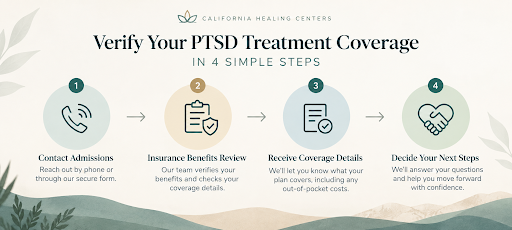
How to Start the Insurance Verification Process
Verifying your benefits doesn’t commit you to anything. Here’s how it works:
- Reach out. Call admissions at (858) 868-7707 or submit the online form. Have your insurance card (front and back) and the policyholder’s name and date of birth handy.
- We contact your insurer. We check your residential benefits, deductible, out-of-pocket maximum, and authorization requirements.
- We explain the results. You’ll usually hear back within 24 hours with what’s covered and what you’d likely owe.
- You decide what’s next. If you move forward, the next steps are a clinical assessment and planning your arrival.
For a closer look at those steps, here’s what to expect in residential PTSD treatment. Our admissions team answers calls from 7:30 a.m. to 9 p.m., and every conversation is confidential.
Frequently Asked Questions
PTSD treatment cost depends on the level of care, length of stay, and your plan’s cost-sharing. Residential care includes 24-hour clinical support, so it costs more than weekly outpatient therapy. A benefits verification gives you an estimate based on your actual plan.
Often, yes, when it’s medically necessary. Residential treatment, which CHC provides, is a level of care just below a hospital inpatient unit, and parity law generally prevents plans from excluding it when they cover comparable medical care.
HIPAA protects your health information, and insurers don’t share your diagnosis or treatment details with employers. If you’re covered under someone else’s plan, California law generally bars your insurer from disclosing mental health services to the policyholder without your consent.
There’s no set number. Insurers usually approve residential care for a set number of days at a time and extend it based on your progress and ongoing clinical need. Our clinical team handles those updates while you focus on treatment.