
Finding the right psychiatric medication often means months of trying a prescription, waiting to see if it works, and starting over when it doesn’t. At California Healing Centers, pharmacogenomic (PGx) testing, often called genetic testing, gives our psychiatric team another source of information before that cycle begins: how your body is likely to process specific medications, based on your DNA.
PGx testing is part of medication management at CHC. It reflects how we approach care overall, with medication decisions grounded in information about you as an individual, not only in what tends to work for most people.
What Is PGx Testing?
Pharmacogenomics is the study of how your genes affect the way you respond to medication. A PGx test looks at specific genes that shape how your body breaks down and reacts to many common medications. Several of the most important ones control enzymes in the liver, which process a large share of psychiatric drugs.
You may also hear PGx testing called genetic testing or GeneSight testing, after one well-known brand.
Small, inherited differences in those genes help explain a familiar frustration. Two people can take the same antidepressant at the same dose and have very different experiences: one feels better with few side effects, while the other feels nothing, or feels worse.
PGx testing is not a diagnosis, and it doesn’t measure your mental health. It also can’t tell you which medication will work. What it gives your prescriber is information about how your body is likely to handle a medication, which is one reason a medication may not work as expected.
Why Medication Trial and Error Is a Problem in Mental Health Treatment
Most psychiatric prescribing starts the same way. A prescriber chooses a medication based on your symptoms, your history, and what tends to work for most people. Then you wait. Many psychiatric medications take several weeks to show their full effect, so learning that one isn’t right can take a month or more.
The research shows why that matters. In depression, only about 30% of people reach remission on the first antidepressant they try, and the odds tend to drop with each new attempt. Every round can mean more weeks of symptoms, new side effects to manage, and less confidence that treatment will help at all.
In residential care, that time is especially valuable. A stay is the window when you have daily clinical oversight and a team watching how you respond. The less of it spent on a medication that doesn’t suit your biology, the more of it goes to the work of getting better.
How PGx Testing Works
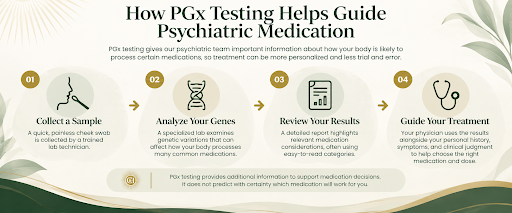
The test itself is simple. A trained lab technician collects a saliva sample by gently swabbing the inside of your cheek. There are no needles, and it takes just a few minutes.
The sample goes to a specialized lab, which analyzes the genes linked to medication response and returns a written report to your care team. Because your genes don’t change over your lifetime, the test only needs to be done once. Your results stay relevant for medications you may take years from now, including ones prescribed after you leave California Healing Centers.
What PGx Testing Reveals About Your Medication Response
Your PGx report sorts medications by how well they’re likely to match your genetic profile, often using simple color-coded categories so the results are easy to read. In general, a medication may be flagged as one your body is likely to process as expected, one that may call for a dose adjustment or closer monitoring, or one where another option may be a better fit.
Your physician can also see how any medications you’re already taking compare, which helps put your past experiences with medication in context.
Behind those colors are a few practical questions. Does your body break a medication down so quickly that it may never reach a helpful level? So slowly that it builds up and causes side effects? Those differences can explain why a medication that helps many people did little for you, or why its side effects were hard to live with.
The report focuses on psychiatric medications, but it also covers some medications for physical health, such as certain heart and blood pressure drugs. That gives your physician a fuller picture when you take medications for more than one condition.
How CHC Uses PGx Testing in Treatment
PGx results feed directly into the psychiatric side of your treatment plan. When your report comes back, it’s added to your medical record and reviewed by your physician alongside everything else the team knows about you: your diagnosis, your medication history, your current symptoms, and how you’re responding day to day.
If a medication you’re taking is flagged, your physician may recommend adjusting the dose or considering a different option. If you’ve already tried several medications that didn’t help, the report can shed light on why and narrow down what to consider next. Genetics is one input among many. Your physician’s clinical judgment, and your own experience, still guide every decision.
Those decisions are made with you, not for you. Your physician walks you through the results, explains what they mean in plain terms, and talks through the options before anything changes.
Because you’re in residential mental health treatment, any change happens with daily support. Our nursing and clinical team watches how you respond, so adjustments can be made carefully instead of waiting weeks for the next outpatient appointment.
Which Conditions Benefit From PGx Testing?
PGx testing can inform care across the conditions we treat, because medication plays a role in care for so many of them. It can be especially useful when medication is central to treatment, including for:
- Depression: antidepressants are among the most studied medications in pharmacogenomics
- Anxiety disorders: many medications prescribed for anxiety are processed by the same liver enzymes the test examines
- PTSD: care often pairs trauma-focused therapy, such as EMDR, with medication for sleep, mood, or anxiety
- Bipolar disorder: finding a regimen that is both effective and tolerable can take time
- Schizophrenia and other psychotic disorders: side effects can make some medications hard to stay on
- ADHD and OCD: some medications used for both are affected by the genes PGx panels review
Testing is also worth discussing if you’ve tried several medications without relief, stopped one because of side effects, or take medications for other health conditions alongside psychiatric ones.
What to Expect: The PGx Testing Process at CHC
- Medication review: Early in your stay, your physician reviews your current medications and treatment history and talks with you about how PGx testing fits into your medication plan.
- Cheek swab: A trained technician collects your sample with a quick, painless cheek swab during your stay.
- Lab analysis: A specialized lab analyzes your sample and sends a report to your care team.
- Results review: Your physician sits down with you to go over the report, including how your current medications compare and what, if anything, should change.
- Adjustments and monitoring: Any medication changes are made carefully, with your nursing and clinical team watching how you respond each day.
- Planning for after treatment: Because your results apply for life, your care team can talk with you about using them with the providers who will manage your medications after discharge.
Frequently Asked Questions About PGx Testing
No. The test uses a quick cheek swab to collect saliva. There are no needles or blood draws.
GeneSight is one widely known brand of pharmacogenomic test, so many people use the name for PGx testing in general. Both refer to the same kind of test: a genetic test that shows how your body is likely to process certain medications. If you’ve had a GeneSight or other PGx test before, let your physician know, since those results may still be useful.
No single test can do that. PGx results show how your body is likely to process and tolerate certain medications. Your physician combines that information with your symptoms, history, and response to treatment to make a recommendation.
No. The test reads your genes, which medications don’t change. Keep taking your medications as prescribed unless your physician tells you otherwise.
Yes. Your genes stay the same throughout your life, so your results can continue to inform medication decisions with your future providers.
Your PGx results become part of your confidential medical record and are protected like the rest of your health information.
Coverage for genetic testing varies by plan. Our admissions team can walk you through your benefits before you arrive, and you can verify your insurance coverage online at any time.
Related Reading
Medication Decisions Built Around You
If you or someone you love has been through round after round of medications without relief, there may be a more precise way forward. California Healing Centers combines residential care, daily clinical oversight, and PGx testing to help you find a medication plan that fits.
Call our admissions team at (858) 868-7707 or verify your insurance coverage to take the next step.