
Mental Health Retreat vs. Residential Treatment: What to Know Before You Choose

When you’re investing in your mental health, the choices can feel surprisingly complicated. Luxury wellness destinations, holistic retreats, executive recovery programs, and licensed residential treatment centers all promise restoration—but they are not designed for the same purpose.

If you’ve been searching for a mental health retreat, you’re likely looking for more than a vacation. You want a place where you can disconnect from daily stress, receive meaningful support, and return home feeling genuinely different.

The key question isn’t whether a retreat is “better” than residential treatment. It’s whether your needs are primarily wellness-focused or whether they require comprehensive clinical care.

For individuals experiencing anxiety disorders, depression, trauma, burnout, mood disorders, or other mental health conditions that significantly interfere with daily life, a retreat alone may not provide the level of care necessary for lasting improvement. In these situations, residential mental health treatment combines an exceptional healing environment with licensed psychiatric care, evidence-based therapy, and around-the-clock clinical support.

At California Healing Centers in Rancho Santa Fe, clients don’t have to choose between luxury and treatment. They receive both within a licensed residential program designed to support meaningful, lasting recovery.

What a Mental Health Retreat Is

The phrase mental health retreat has become increasingly popular, but it describes a broad category rather than a specific level of care.

In general, a mental health retreat is designed to help people step away from the pressures of everyday life and focus on emotional well-being in a peaceful, restorative environment.

Depending on the organization, retreats may include:

  • Stress reduction
  • Mindfulness meditation
  • Yoga
  • Breathwork
  • Nutrition counseling
  • Nature experiences
  • Life coaching
  • Group discussions
  • Sleep optimization
  • Holistic wellness practices

Many retreats are beautifully designed and genuinely beneficial for people experiencing stress, professional burnout, or the desire to reconnect with themselves.

However, most wellness retreats are not licensed healthcare facilities and do not provide psychiatric evaluation, medication management, intensive psychotherapy, or treatment for significant mental health disorders.

That distinction matters.

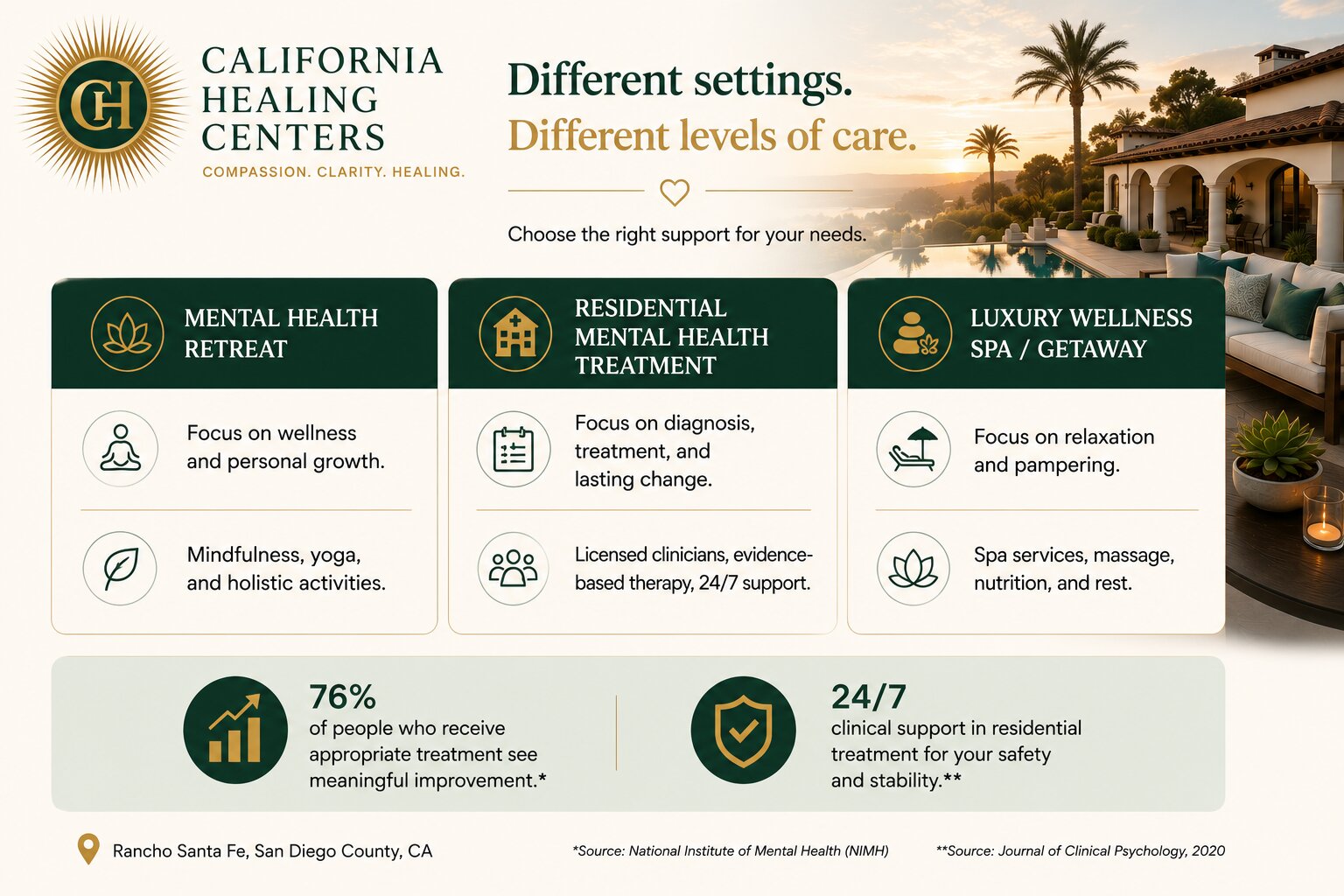
Mental Health Retreat vs. Residential Treatment vs. Spa/Wellness Getaway

Although these experiences may appear similar in marketing materials, they serve very different purposes.

Mental Health Retreat Residential Mental Health Treatment Luxury Wellness Spa
Focus on emotional wellness Focus on diagnosis and treatment Focus on relaxation
May include coaching and mindfulness Licensed clinical care Massage, fitness, nutrition
Usually short-term Individualized treatment length Short stay
Limited medical oversight 24/7 clinical support Minimal medical involvement
Wellness professionals Licensed psychiatrists and therapists Hospitality staff
Optional therapy Daily evidence-based therapy Wellness services

A wellness spa

Luxury spas help people recharge.

They excel at reducing stress, improving sleep, and promoting self-care.

They are not designed to treat clinical mental health conditions.

A mental health retreat

Retreats occupy the middle ground.

Many offer meaningful therapeutic experiences and holistic practices that improve emotional well-being.

Some include licensed therapists.

Others focus primarily on coaching or wellness education.

The level of clinical care varies widely.

Residential treatment

Residential treatment is a licensed healthcare program designed for individuals whose symptoms require structured, comprehensive care.

Clients live on-site while participating in an individualized treatment plan that may include:

  • Psychiatric care
  • Medication management
  • Individual psychotherapy
  • Group therapy
  • Trauma-focused treatment
  • Family involvement
  • Behavioral therapies
  • Holistic wellness services
  • Relapse prevention for co-occurring conditions when appropriate
  • Aftercare planning

The goal extends beyond feeling refreshed.

The goal is measurable clinical improvement and sustainable recovery.

Who a Mental Health Retreat Is Right For

A retreat may be an excellent choice if you’re looking to improve overall well-being without requiring intensive psychiatric treatment.

You may benefit from a retreat if you are:

  • Feeling chronically stressed
  • Recovering from professional burnout
  • Seeking better work-life balance
  • Looking to deepen mindfulness practices
  • Wanting a structured reset
  • Generally functioning well but emotionally depleted
  • Interested in preventative mental wellness

Many executives, entrepreneurs, physicians, attorneys, and other high-performing professionals choose retreats to improve resilience before stress evolves into more significant mental health concerns.

For these individuals, retreats can be highly valuable.
Mental Health Retreat vs Residential Treatment Guide

Who Actually Needs Residential Clinical Treatment (Not Just a Retreat)

There comes a point where self-care alone isn’t enough.

If emotional symptoms have begun interfering with work, relationships, sleep, or daily functioning, a licensed residential program may provide the level of care needed to create lasting change.

Residential treatment may be appropriate if you experience:

Depression that isn’t improving

Persistent sadness, hopelessness, loss of motivation, or inability to function often require comprehensive clinical treatment rather than temporary stress reduction.

Anxiety that dominates daily life

Panic attacks, constant worry, obsessive thinking, or severe avoidance behaviors usually benefit from structured evidence-based therapies.

Trauma symptoms

PTSD and complex trauma frequently require specialized therapeutic approaches delivered by clinicians trained in trauma treatment.

Mood instability

Significant mood fluctuations often require psychiatric assessment alongside psychotherapy.

Previous outpatient therapy that hasn’t been enough

Many clients entering residential treatment have already worked with therapists for months or years without achieving the progress they hoped for.

Residential care offers greater intensity and consistency.

Difficulty functioning

If symptoms are affecting your ability to work, maintain relationships, care for yourself, or enjoy life, it may be time to consider a higher level of care.

Choosing residential treatment is not an indication that you’ve failed.

It reflects choosing the level of support most likely to help you recover.

What to Look for in a Program

Premium pricing alone does not guarantee premium care.

Whether you’re considering a retreat or residential program, evaluate the quality of both the environment and the clinical services.

Look for:

State licensing

Licensed residential facilities operate under healthcare regulations designed to protect client safety and treatment quality.

Licensed clinical professionals

Ask whether treatment is provided by licensed psychologists, psychiatrists, therapists, nurses, and other qualified mental health professionals.

Evidence-based therapies

High-quality programs use approaches supported by clinical research, including:

Psychiatric services

Medication evaluation and management should be available when clinically indicated.

Individualized treatment planning

No two clients should receive identical schedules.

Treatment should be customized to diagnoses, goals, history, and progress.

Luxury without distraction

A beautiful environment supports healing.

However, the setting should enhance—not replace—clinical excellence.

The best programs integrate both.

What to Expect at California Healing Centers’ Residential Program

California Healing Centers was created for individuals seeking exceptional mental health care within a private, upscale residential environment.

Located in Rancho Santa Fe in San Diego County, the program combines the comfort and privacy many clients associate with a luxury retreat with the comprehensive clinical services found in licensed residential treatment.

Clients receive individualized care that may include:

  • Comprehensive psychiatric assessment
  • Individual therapy
  • Group therapy
  • Evidence-based treatment modalities
  • Medication management when appropriate
  • Trauma-informed care
  • Holistic wellness services
  • Nutrition support
  • Mindfulness practices
  • Personalized treatment planning
  • Ongoing discharge and aftercare preparation

The environment is intentionally designed to reduce outside distractions while supporting meaningful therapeutic work.

Many clients appreciate that they can receive intensive clinical care without sacrificing comfort, privacy, or the quality of their surroundings.

For discerning individuals evaluating premium mental health programs, California Healing Centers offers a model that blends sophisticated accommodations with licensed, evidence-based treatment—providing the restorative qualities many people seek in a retreat alongside the clinical depth needed to create lasting change.

Choosing the Right Investment in Your Mental Health

A luxury retreat can be transformative when you’re looking to recharge.

But if you’re living with significant anxiety, depression, trauma, or other mental health conditions, investing in licensed residential treatment may offer far greater long-term value.

The most effective programs recognize that healing involves more than beautiful surroundings.

It requires expert clinicians, individualized treatment, evidence-based therapies, psychiatric support when needed, and an environment that allows you to fully focus on recovery.

California Healing Centers brings these elements together in a setting that reflects the expectations of clients seeking both exceptional care and exceptional comfort.

If you’re evaluating premium mental health programs in Rancho Santa Fe or throughout San Diego County, understanding the difference between a retreat and residential treatment can help you choose the option that truly matches your needs—not just your expectations.

Frequently Asked Questions

What is a mental health retreat?

A mental health retreat is a structured wellness experience designed to help individuals reduce stress, improve emotional well-being, and disconnect from everyday responsibilities. Programs vary widely and may include mindfulness, therapy, coaching, yoga, nutrition, and holistic wellness activities. Most are not licensed residential healthcare facilities.

Is a mental health retreat the same as residential treatment?

No. While both may provide supportive environments, residential treatment is a licensed clinical program offering psychiatric care, evidence-based therapy, medication management when appropriate, and individualized treatment plans for people with significant mental health conditions. Retreats typically focus on wellness rather than comprehensive clinical treatment.

Is a mental health retreat right for me?

A retreat may be appropriate if you’re seeking stress reduction, burnout recovery, or preventive emotional wellness and are functioning well overall. If your symptoms are interfering with work, relationships, daily functioning, or quality of life, a licensed residential treatment program is often the more appropriate choice.

Can residential treatment still feel like a luxury retreat?

Yes. Some residential programs intentionally combine premium accommodations, privacy, holistic wellness services, and beautiful surroundings with comprehensive clinical care. This allows clients to benefit from both a restorative environment and evidence-based treatment without compromising either experience.

Accessibility Toolbar

Mental Health Retreat vs. Residential Treatment: What to Know Before You Choose

When you're investing in your mental health, the choices can feel surprisingly complicated. Luxury wellness destinations, holistic retreats, executive recovery programs, and licensed residential treatment centers all promise restoration—but they are not designed for the same purpose.

If you've been searching for a mental health retreat, you're likely looking for more than a vacation. You want a place where you can disconnect from daily stress, receive meaningful support, and return home feeling genuinely different.

The key question isn't whether a retreat is "better" than residential treatment. It's whether your needs are primarily wellness-focused or whether they require comprehensive clinical care.

For individuals experiencing anxiety disorders, depression, trauma, burnout, mood disorders, or other mental health conditions that significantly interfere with daily life, a retreat alone may not provide the level of care necessary for lasting improvement. In these situations, residential mental health treatment combines an exceptional healing environment with licensed psychiatric care, evidence-based therapy, and around-the-clock clinical support.

At California Healing Centers in Rancho Santa Fe, clients don't have to choose between luxury and treatment. They receive both within a licensed residential program designed to support meaningful, lasting recovery.

What a Mental Health Retreat Is

The phrase mental health retreat has become increasingly popular, but it describes a broad category rather than a specific level of care.

In general, a mental health retreat is designed to help people step away from the pressures of everyday life and focus on emotional well-being in a peaceful, restorative environment.

Depending on the organization, retreats may include:

  • Stress reduction
  • Mindfulness meditation
  • Yoga
  • Breathwork
  • Nutrition counseling
  • Nature experiences
  • Life coaching
  • Group discussions
  • Sleep optimization
  • Holistic wellness practices

Many retreats are beautifully designed and genuinely beneficial for people experiencing stress, professional burnout, or the desire to reconnect with themselves.

However, most wellness retreats are not licensed healthcare facilities and do not provide psychiatric evaluation, medication management, intensive psychotherapy, or treatment for significant mental health disorders.

That distinction matters.

Mental Health Retreat vs. Residential Treatment vs. Spa/Wellness Getaway

Although these experiences may appear similar in marketing materials, they serve very different purposes.

Mental Health Retreat Residential Mental Health Treatment Luxury Wellness Spa
Focus on emotional wellness Focus on diagnosis and treatment Focus on relaxation
May include coaching and mindfulness Licensed clinical care Massage, fitness, nutrition
Usually short-term Individualized treatment length Short stay
Limited medical oversight 24/7 clinical support Minimal medical involvement
Wellness professionals Licensed psychiatrists and therapists Hospitality staff
Optional therapy Daily evidence-based therapy Wellness services

A wellness spa

Luxury spas help people recharge.

They excel at reducing stress, improving sleep, and promoting self-care.

They are not designed to treat clinical mental health conditions.

A mental health retreat

Retreats occupy the middle ground.

Many offer meaningful therapeutic experiences and holistic practices that improve emotional well-being.

Some include licensed therapists.

Others focus primarily on coaching or wellness education.

The level of clinical care varies widely.

Residential treatment

Residential treatment is a licensed healthcare program designed for individuals whose symptoms require structured, comprehensive care.

Clients live on-site while participating in an individualized treatment plan that may include:

  • Psychiatric care
  • Medication management
  • Individual psychotherapy
  • Group therapy
  • Trauma-focused treatment
  • Family involvement
  • Behavioral therapies
  • Holistic wellness services
  • Relapse prevention for co-occurring conditions when appropriate
  • Aftercare planning

The goal extends beyond feeling refreshed.

The goal is measurable clinical improvement and sustainable recovery.

Who a Mental Health Retreat Is Right For

A retreat may be an excellent choice if you're looking to improve overall well-being without requiring intensive psychiatric treatment.

You may benefit from a retreat if you are:

  • Feeling chronically stressed
  • Recovering from professional burnout
  • Seeking better work-life balance
  • Looking to deepen mindfulness practices
  • Wanting a structured reset
  • Generally functioning well but emotionally depleted
  • Interested in preventative mental wellness

Many executives, entrepreneurs, physicians, attorneys, and other high-performing professionals choose retreats to improve resilience before stress evolves into more significant mental health concerns.

For these individuals, retreats can be highly valuable.

Mental Health Retreat vs Residential Treatment Guide

Who Actually Needs Residential Clinical Treatment (Not Just a Retreat)

There comes a point where self-care alone isn't enough.

If emotional symptoms have begun interfering with work, relationships, sleep, or daily functioning, a licensed residential program may provide the level of care needed to create lasting change.

Residential treatment may be appropriate if you experience:

Depression that isn't improving

Persistent sadness, hopelessness, loss of motivation, or inability to function often require comprehensive clinical treatment rather than temporary stress reduction.

Anxiety that dominates daily life

Panic attacks, constant worry, obsessive thinking, or severe avoidance behaviors usually benefit from structured evidence-based therapies.

Trauma symptoms

PTSD and complex trauma frequently require specialized therapeutic approaches delivered by clinicians trained in trauma treatment.

Mood instability

Significant mood fluctuations often require psychiatric assessment alongside psychotherapy.

Previous outpatient therapy that hasn't been enough

Many clients entering residential treatment have already worked with therapists for months or years without achieving the progress they hoped for.

Residential care offers greater intensity and consistency.

Difficulty functioning

If symptoms are affecting your ability to work, maintain relationships, care for yourself, or enjoy life, it may be time to consider a higher level of care.

Choosing residential treatment is not an indication that you've failed.

It reflects choosing the level of support most likely to help you recover.

What to Look for in a Program

Premium pricing alone does not guarantee premium care.

Whether you're considering a retreat or residential program, evaluate the quality of both the environment and the clinical services.

Look for:

State licensing

Licensed residential facilities operate under healthcare regulations designed to protect client safety and treatment quality.

Licensed clinical professionals

Ask whether treatment is provided by licensed psychologists, psychiatrists, therapists, nurses, and other qualified mental health professionals.

Evidence-based therapies

High-quality programs use approaches supported by clinical research, including:

Psychiatric services

Medication evaluation and management should be available when clinically indicated.

Individualized treatment planning

No two clients should receive identical schedules.

Treatment should be customized to diagnoses, goals, history, and progress.

Luxury without distraction

A beautiful environment supports healing.

However, the setting should enhance—not replace—clinical excellence.

The best programs integrate both.

What to Expect at California Healing Centers' Residential Program

California Healing Centers was created for individuals seeking exceptional mental health care within a private, upscale residential environment.

Located in Rancho Santa Fe in San Diego County, the program combines the comfort and privacy many clients associate with a luxury retreat with the comprehensive clinical services found in licensed residential treatment.

Clients receive individualized care that may include:

  • Comprehensive psychiatric assessment
  • Individual therapy
  • Group therapy
  • Evidence-based treatment modalities
  • Medication management when appropriate
  • Trauma-informed care
  • Holistic wellness services
  • Nutrition support
  • Mindfulness practices
  • Personalized treatment planning
  • Ongoing discharge and aftercare preparation

The environment is intentionally designed to reduce outside distractions while supporting meaningful therapeutic work.

Many clients appreciate that they can receive intensive clinical care without sacrificing comfort, privacy, or the quality of their surroundings.

For discerning individuals evaluating premium mental health programs, California Healing Centers offers a model that blends sophisticated accommodations with licensed, evidence-based treatment—providing the restorative qualities many people seek in a retreat alongside the clinical depth needed to create lasting change.

Choosing the Right Investment in Your Mental Health

A luxury retreat can be transformative when you're looking to recharge.

But if you're living with significant anxiety, depression, trauma, or other mental health conditions, investing in licensed residential treatment may offer far greater long-term value.

The most effective programs recognize that healing involves more than beautiful surroundings.

It requires expert clinicians, individualized treatment, evidence-based therapies, psychiatric support when needed, and an environment that allows you to fully focus on recovery.

California Healing Centers brings these elements together in a setting that reflects the expectations of clients seeking both exceptional care and exceptional comfort.

If you're evaluating premium mental health programs in Rancho Santa Fe or throughout San Diego County, understanding the difference between a retreat and residential treatment can help you choose the option that truly matches your needs—not just your expectations.

Frequently Asked Questions

What is a mental health retreat?

A mental health retreat is a structured wellness experience designed to help individuals reduce stress, improve emotional well-being, and disconnect from everyday responsibilities. Programs vary widely and may include mindfulness, therapy, coaching, yoga, nutrition, and holistic wellness activities. Most are not licensed residential healthcare facilities.

Is a mental health retreat the same as residential treatment?

No. While both may provide supportive environments, residential treatment is a licensed clinical program offering psychiatric care, evidence-based therapy, medication management when appropriate, and individualized treatment plans for people with significant mental health conditions. Retreats typically focus on wellness rather than comprehensive clinical treatment.

Is a mental health retreat right for me?

A retreat may be appropriate if you're seeking stress reduction, burnout recovery, or preventive emotional wellness and are functioning well overall. If your symptoms are interfering with work, relationships, daily functioning, or quality of life, a licensed residential treatment program is often the more appropriate choice.

Can residential treatment still feel like a luxury retreat?

Yes. Some residential programs intentionally combine premium accommodations, privacy, holistic wellness services, and beautiful surroundings with comprehensive clinical care. This allows clients to benefit from both a restorative environment and evidence-based treatment without compromising either experience.

Table of Contents
Scroll to Top