
Most people don’t search for treatment because they feel calm and certain.
They search because something inside them feels unsustainable.
Maybe your chest tightens the second the house gets quiet at night. Maybe your thoughts start racing the moment you try to sleep. Maybe you’ve become so used to functioning through anxiety, depression, panic, trauma, or emotional exhaustion that you don’t even remember what calm is supposed to feel like anymore.
And somewhere inside all of that fear is another fear:
“What if treatment is terrifying too?”
A lot of people picture treatment as cold, clinical, or emotionally harsh. They imagine losing freedom, being judged, or sitting in uncomfortable silence all day while strangers force them to talk about painful things before they’re ready.
Honestly, those fears make sense.
Especially if your nervous system already feels overloaded.
At California Healing Centers, many people arrive carrying those exact fears — and are surprised by how human daily life in treatment actually feels. For those considering live-in mental health support, understanding what a normal day looks like can make the idea feel less overwhelming and far more possible.
The First Few Days Usually Feel Emotionally Strange
This is important to say upfront.
Even good change can feel uncomfortable at first.
A lot of people entering treatment are coming directly from:
- emotional chaos
- panic attacks
- sleepless nights
- substance use
- constant overstimulation
- burnout
- survival mode
- isolation
- high stress environments
Then suddenly, everything slows down.
That shift can feel disorienting at first.
Some people cry unexpectedly.
Some sleep constantly for the first few days.
Others feel emotionally numb because their nervous system is still bracing for danger.
None of that means treatment is failing.
In many cases, it means your body is finally realizing it no longer has to stay in full emergency mode every second.
One client once described the first few days this way:
“It felt like my brain didn’t know what to do with quiet.”
That’s more common than people realize.
Mornings Usually Begin With Structure — Not Chaos
For people living with anxiety, depression, trauma, or emotional overwhelm, mornings can feel brutal outside treatment.
You wake up already exhausted.
Your mind immediately starts racing.
You check your phone before your feet hit the floor.
Your chest tightens before the day even begins.
A lot of people become trapped in a cycle where every morning feels like emotionally sprinting uphill before they’ve even fully woken up.
In treatment, mornings are intentionally slower and more predictable.
There’s routine:
- waking up at consistent times
- breakfast
- medication support if needed
- check-ins
- therapy sessions
- space to settle into the day gradually
That consistency matters deeply for overwhelmed nervous systems.
When life has felt emotionally chaotic for a long time, predictability itself can feel calming.
Not exciting.
Not magical.
Just safer.
And honestly, many people don’t realize how exhausted they are until their body finally experiences a few days without constant emotional scrambling.
Group Therapy Feels More Human Than Most People Expect
This is one of the biggest fears treatment seekers carry.
People often imagine group therapy as:
- awkward confessions
- nonstop emotional intensity
- forced vulnerability
- people aggressively confronting each other
Most groups are nothing like that.
Many conversations focus on ordinary but deeply painful human experiences:
- anxiety
- shame
- grief
- loneliness
- perfectionism
- family tension
- trauma
- emotional burnout
- feeling emotionally disconnected
- fear of disappointing people
And slowly, something important happens:
people stop feeling like emotional aliens.
That matters more than most people expect.
Because many people entering treatment have spent years silently believing:
“No one else feels this way.”
“No one else thinks like this.”
“No one else is this overwhelmed.”
Then someone across the room says the exact thing you’ve been terrified to admit out loud yourself.
That kind of recognition can feel incredibly relieving.
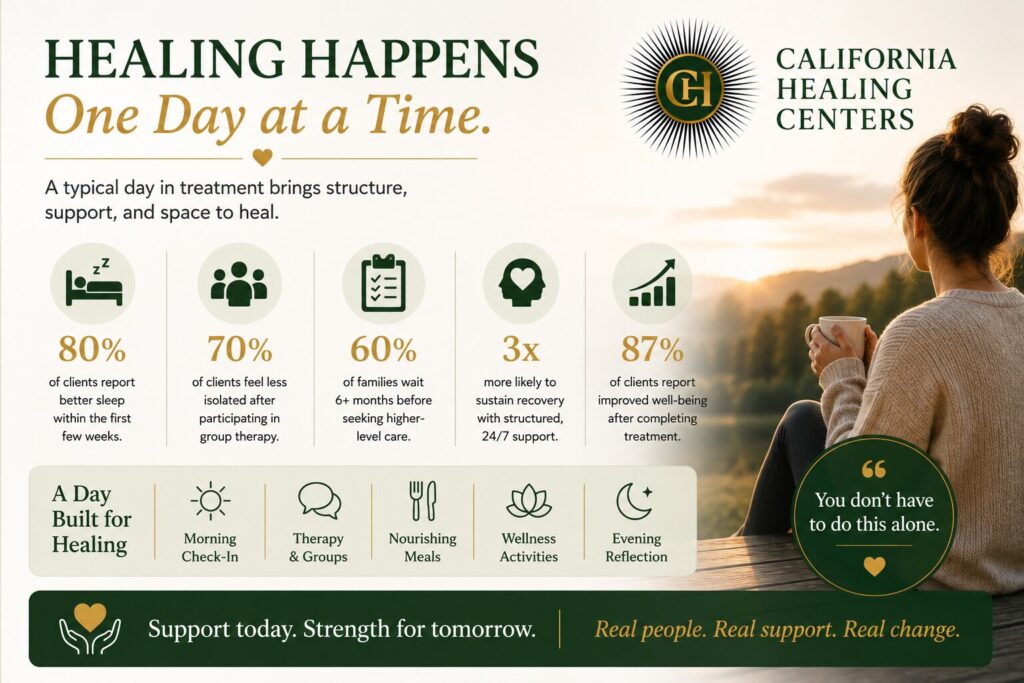
There’s Usually More Rest Than People Expect
A lot of people entering treatment are profoundly exhausted.
Not “I need a vacation” exhausted.
Deeper than that.
The kind of exhaustion that comes from:
- years of anxiety
- emotional masking
- hypervigilance
- trauma
- panic
- chronic stress
- addiction
- pretending to be okay
- never fully relaxing emotionally
Many clients arrive unable to remember the last time they genuinely rested.
Not distracted themselves.
Not passed out.
Not collapsed from exhaustion.
Actual rest.
Treatment environments often create space for people to:
- sleep regularly
- eat consistently
- breathe deeply
- exist without constant performance pressure
- stop monitoring everyone else emotionally
- experience quiet without immediate danger attached to it
At first, that stillness can feel uncomfortable.
Especially for people who survive through busyness or distraction.
But eventually, many people begin noticing small changes:
- their shoulders feel less tense
- their breathing slows down
- they stop checking their phone constantly
- their nervous system softens slightly
Those shifts may sound small.
They aren’t.
Nights Can Feel Less Frightening
For many people, nighttime is the hardest part of the day.
Everything gets quieter.
Distractions disappear.
Thoughts become louder.
People struggling emotionally often describe nights as feeling emotionally unsafe. Anxiety spikes. The chest tightness returns. Regret gets louder. Fear feels bigger in the dark.
That’s why so many people search questions around anxiety worse at night while quietly wondering whether they’re finally reaching a breaking point emotionally.
In treatment, nights tend to feel different because people are no longer carrying everything alone.
There are routines.
Support staff.
Grounding activities.
Consistency.
Safety.
And for many people, that support creates the first genuine emotional exhale they’ve felt in years.
One former client explained it this way:
“It was the first time I could fall asleep without feeling like I was bracing for something.”
That sentence says a lot.
Because many anxious people aren’t just tired.
They’re constantly preparing for emotional disaster.
Treatment Is Not About Becoming a Different Person
This fear comes up constantly.
People worry treatment will:
- flatten their personality
- erase their ambition
- make them weak
- force them to become someone else
But healthy treatment is not about removing who you are.
It’s about helping you reconnect with yourself underneath survival mode.
Many people arrive emotionally disconnected from:
- joy
- creativity
- relationships
- rest
- vulnerability
- their own body
- their own needs
Treatment often helps people rediscover parts of themselves that anxiety, trauma, burnout, or emotional chaos slowly buried over time.
Not through perfection.
Not overnight.
Just through enough safety and support for the nervous system to stop fighting constantly.
Healing Usually Starts Smaller Than People Expect
Movies teach people to expect dramatic breakthroughs.
Real healing is quieter.
It often begins with:
- sleeping through the night
- laughing naturally
- eating consistently
- crying honestly after months of numbness
- feeling safe enough to exhale
- having conversations that don’t feel performative
- realizing you’re not completely alone
Those moments matter deeply.
Because many people entering treatment have spent years functioning while internally unraveling.
The early stages of healing often look less like transformation and more like finally unclenching emotionally after a very long time.
You Do Not Need to Be “Bad Enough” for Support
This may be the most important thing some people need to hear.
Many treatment seekers delay getting help because they think:
- “Other people have it worse.”
- “I’m still functioning.”
- “Maybe I’m overreacting.”
- “I should be able to handle this myself.”
But emotional suffering is not a competition.
You do not need:
- a complete breakdown
- total dysfunction
- a public crisis
- a catastrophic moment
…before deserving support.
If your life feels emotionally exhausting, overwhelming, isolating, or increasingly unmanageable, that matters.
At California Healing Centers, we often remind people:
you do not need to arrive fully hopeful or fully certain treatment will work.
You only need enough willingness to stop surviving completely alone.
FAQ: What Daily Life in Treatment Really Feels Like
Is treatment emotionally intense all day long?
Not usually. While therapy and emotional work are important parts of treatment, there’s also downtime, meals, conversations, rest, recreation, and moments of normal daily life.
What if I feel anxious around other people?
That’s extremely common. Many people enter treatment feeling socially anxious or emotionally guarded. Most clients gradually become more comfortable as they realize others understand what they’re going through.
Will I be forced to talk about traumatic experiences immediately?
No. Good treatment programs move at a pace that feels emotionally safe and clinically appropriate for each person.
Can treatment help if my anxiety spikes at night?
Yes. Many people find that structured support, routines, therapy, and emotional safety significantly reduce nighttime anxiety and overwhelm over time.
What do people usually do between therapy sessions?
Clients may rest, journal, participate in wellness activities, spend time outdoors, connect with peers, attend additional groups, or simply decompress emotionally.
Is treatment only for severe mental health crises?
No. Many people seek treatment before reaching total collapse because they recognize their anxiety, depression, burnout, trauma, or substance use is becoming unsustainable.
What if I’m scared treatment won’t work for me?
That fear is incredibly common. Many people arrive uncertain, skeptical, or emotionally exhausted. Healing often begins gradually through consistency, support, and feeling safe enough to stop surviving alone.
Will treatment change my personality?
Healthy treatment is not about changing who you are. It’s about helping you reconnect with yourself underneath fear, anxiety, burnout, trauma, or emotional survival mode.
If you’ve been feeling emotionally overwhelmed, exhausted, or trapped in constant survival mode, California Healing Centers offers compassionate live-in mental health treatment designed to help people feel safe, supported, and emotionally grounded again.
Call (858) 330-4769 or visit our residential treatment program services to learn more about our residential treatment program services in San Diego, CA.