
It’s Hard to Trust Help After You’ve Already Tried It

Some people search for anxiety treatment because they’re desperate.

Others search because they’re exhausted and running out of ways to pretend they’re okay.

And then there’s another group that rarely gets talked about enough: the people who already tried getting help once and walked away disappointed.

If that’s you, you’re not alone.

A lot of people looking into live-in anxiety treatment in California are carrying more than symptoms. They’re carrying skepticism. Maybe therapy felt surface-level. Maybe medication helped for a while and then stopped. Maybe you stayed in treatment before but left feeling unchanged.

That kind of disappointment changes how you look at help.

It makes every promise sound rehearsed. Every website starts to blur together. And somewhere in the back of your mind, there’s probably a question that sounds something like this:

“How long would I even need to stay for this to actually make a difference?”

If you’re exploring residential treatment options, it helps to know there isn’t one perfect timeline. But there is something many people misunderstand about anxiety recovery:

Healing often takes longer than crisis stabilization.

And those are not the same thing.

Anxiety Can Keep You Functional and Miserable at the Same Time

One reason people delay treatment is because anxiety doesn’t always make life completely fall apart.

You can still go to work. Answer emails. Smile during conversations. Show up for your family.

Meanwhile, your nervous system is running a marathon every single day.

A lot of high-functioning people minimize their suffering because they compare themselves to someone “worse.” But constant panic, racing thoughts, insomnia, emotional shutdown, dissociation, irritability, or living in survival mode isn’t sustainable just because you can technically still function.

Some people spend years convincing themselves they’re “managing” anxiety while quietly structuring their entire life around avoiding overwhelm.

That catches up eventually.

And by the time many people consider live-in treatment, they’re not just anxious anymore. They’re depleted.

The First Week Often Feels Strange, Not Life-Changing

This is important to say honestly.

The beginning of treatment can feel uncomfortable before it feels helpful.

Some people expect immediate relief the second they arrive. But anxiety doesn’t usually disappear because you changed locations. Your brain and body may still be operating like danger is around every corner.

You might feel emotionally numb at first. Irritated. Restless. Skeptical.

You may even spend the first several days mentally preparing your exit plan.

That doesn’t mean treatment failed.

For many people, the first stage of live-in care is about slowing the nervous system down enough for deeper work to become possible later.

Think of it this way: if your mind has been sprinting for years, it doesn’t suddenly trust rest overnight.

Sometimes the hardest part is allowing your body to realize it’s safe enough to unclench.

Most Anxiety Treatment Stays Last Between 30 and 90 Days

People often want a concrete number because uncertainty itself feels stressful.

The truth is that anxiety-focused residential care varies depending on several factors:

  • Severity of symptoms
  • History of trauma
  • Sleep disruption
  • Panic attacks or dissociation
  • Co-occurring depression
  • Previous treatment experiences
  • Ability to function independently after discharge

Some people stay around 30 days and gain enough stability to transition into lower levels of care. Others benefit from 60 or 90 days because their anxiety patterns are deeply rooted and tied to years of emotional exhaustion.

This is where conversations around residential mental health length of stay become important. Not because longer automatically means better, but because meaningful recovery often requires enough time for repetition, emotional safety, and nervous system regulation.

A week or two might calm the immediate crisis.

Longer-term support gives people space to practice living differently.

And honestly, many treatment skeptics underestimate how long it takes for the brain to stop expecting catastrophe all the time.

Leaving Early Can Create the Illusion That You’re Fine

This happens more often than people realize.

Someone starts feeling slightly better after a couple weeks. Their sleep improves a little. The pressure inside their chest eases. They miss home. They convince themselves they’re ready.

So they leave.

At first, it feels freeing.

Then real life returns all at once.

The noise. The responsibilities. The relationships. The overstimulation. The pressure to instantly function like nothing ever happened.

And suddenly the nervous system that just started calming down gets thrown back into the exact environment that overwhelmed it before.

That crash can feel devastating.

Not because the person failed, but because stabilization got mistaken for full recovery.

Anxiety treatment isn’t just about feeling calmer inside a protected environment. It’s about building enough internal stability that stress outside the environment doesn’t immediately consume you again.
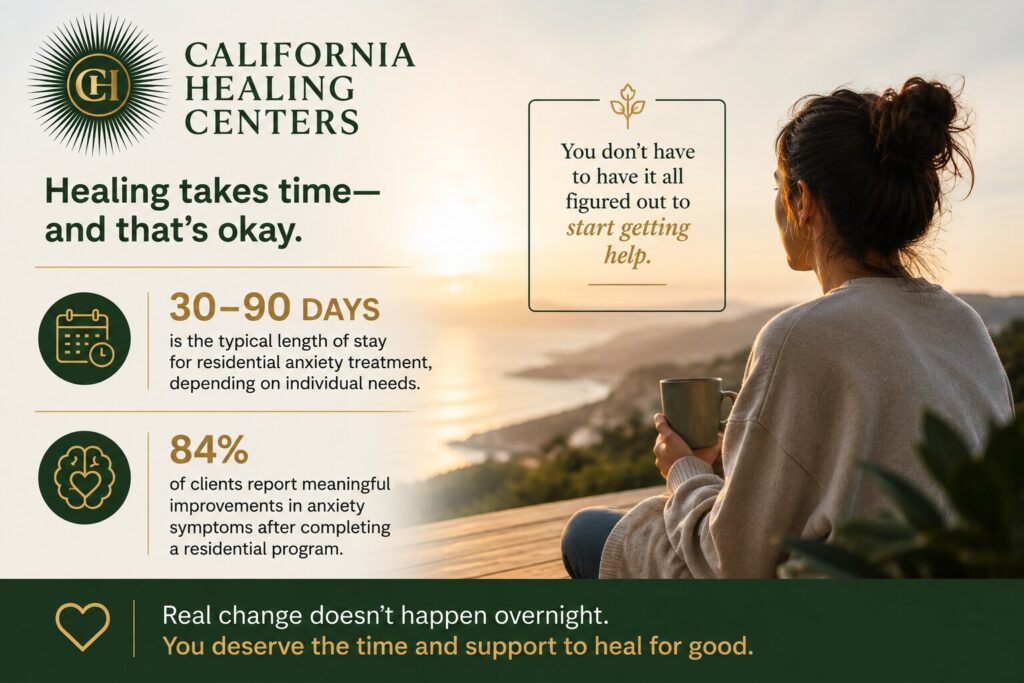
Residential Anxiety Treatment in California

Progress Usually Looks Smaller Than People Expect

This part frustrates people sometimes.

Treatment progress is rarely dramatic.

It’s not usually one giant breakthrough where everything suddenly makes sense.

More often, it’s subtle.

You sleep through the night for the first time in months.

You eat a full meal without nausea.

You stop replaying conversations for hours afterward.

You go thirty minutes without scanning for danger.

You notice silence without panicking inside it.

Small things.

But for people whose nervous systems have been stuck in survival mode, small things are enormous.

One of the reasons some people believe treatment “didn’t work” is because they expected transformation instead of gradual change. Anxiety recovery tends to move quietly at first.

Almost like ice melting.

You don’t notice every degree shift while it’s happening. But eventually something that felt frozen starts moving again.

Treatment Works Differently the Second Time for Many People

This might sound strange, but a lot of people get more out of treatment after previously believing it failed.

Not because they suddenly become perfect patients.

Usually because they arrive more honest.

The first time, many people are still trying to prove they’re okay. They intellectualize everything. Stay emotionally guarded. Focus on getting through the program instead of letting themselves settle into it.

After disappointment or relapse into old patterns, some people finally arrive too tired to keep performing.

And oddly enough, that honesty can create room for real healing.

Skepticism doesn’t disqualify someone from getting better. In some cases, it actually means they’re asking more realistic questions.

The Goal Isn’t to Keep You in Treatment Forever

A lot of people fear residential care because they imagine losing control over their lives.

That fear makes sense.

But good treatment isn’t about keeping someone dependent on a program. It’s about helping them rebuild enough stability to function outside of constant survival mode.

For some people, that means stepping down into structured daytime care afterward. Others continue therapy while slowly returning to work, school, or family responsibilities.

A healthy discharge plan matters just as much as the treatment itself.

The real goal is helping someone return to their life with:

  • Better emotional regulation
  • More self-awareness
  • Stronger coping tools
  • Healthier routines
  • More support than they had before

Not perfection.

Just more steadiness than chaos.

Sometimes the Nervous System Needs More Time Than the Mind Wants to Give It

This is one of the hardest truths for anxious people.

Your mind may want immediate certainty.

Your nervous system doesn’t work on deadlines.

People who’ve lived in chronic fear, hypervigilance, burnout, panic, or emotional suppression often need time to feel safe again in their own bodies. And safety cannot usually be rushed.

That doesn’t mean you’ll stay in treatment forever.

It means healing is often less about forcing yourself to “fix it” quickly and more about creating enough consistency for your brain to stop sounding the alarm every second of the day.

For many people, that process begins slowly.

Then one day they notice something unexpected:

They can breathe again without fighting for it.

FAQ: Residential Anxiety Treatment in California

How long do most people stay in residential anxiety treatment?

Most stays range between 30 and 90 days depending on symptom severity, trauma history, emotional stability, and how someone responds to treatment. Some people stabilize quickly, while others benefit from more time in a structured environment.

Is 30 days enough for anxiety treatment?

For some people, yes. A 30-day stay can help stabilize symptoms, improve sleep, and interrupt overwhelming patterns. But people dealing with long-term anxiety, trauma, or repeated treatment experiences may need additional support afterward.

Why do some people stay longer in live-in treatment?

Longer stays often allow more time for emotional regulation, therapy work, medication adjustments if needed, and practicing healthier coping skills before returning to daily stressors.

What happens after residential treatment ends?

Many people transition into outpatient therapy or structured daytime care after leaving live-in treatment. Continuing support can help reinforce the progress made during treatment and reduce the risk of falling back into survival-mode patterns.

Does treatment still help if therapy didn’t work before?

It can. Some people respond differently in a structured environment where stress, distractions, and daily pressures are reduced. Others find that they’re more emotionally open or ready for deeper work after previous experiences that didn’t fully help.

Will I lose my independence in residential treatment?

Residential care is designed to provide support and structure, not take away your identity or independence. The goal is to help you regain stability so you can function more confidently outside treatment.

How do I know if I need live-in treatment for anxiety?

People often consider live-in care when anxiety starts affecting sleep, work, relationships, physical health, or daily functioning in ways that outpatient therapy alone hasn’t improved.

Is it normal to feel unsure about treatment?

Completely. Many people entering treatment feel skeptical, nervous, emotionally flat, or afraid it won’t work. Doubt doesn’t mean you’re beyond help. It usually means you’ve been overwhelmed for a long time.

If you want to learn more about live-in care and what treatment timelines can realistically look like, California Healing Centers offers supportive residential treatment program services designed for people who are exhausted by surviving.

Call (858) 330-4769 or visit our residential treatment program services to learn more about our residential treatment program services San Diego, CA.


Leave a Comment

Your email address will not be published. Required fields are marked *

Accessibility Toolbar

It’s Hard to Trust Help After You’ve Already Tried It

Some people search for anxiety treatment because they’re desperate.

Others search because they’re exhausted and running out of ways to pretend they’re okay.

And then there’s another group that rarely gets talked about enough: the people who already tried getting help once and walked away disappointed.

If that’s you, you’re not alone.

A lot of people looking into live-in anxiety treatment in California are carrying more than symptoms. They’re carrying skepticism. Maybe therapy felt surface-level. Maybe medication helped for a while and then stopped. Maybe you stayed in treatment before but left feeling unchanged.

That kind of disappointment changes how you look at help.

It makes every promise sound rehearsed. Every website starts to blur together. And somewhere in the back of your mind, there’s probably a question that sounds something like this:

“How long would I even need to stay for this to actually make a difference?”

If you’re exploring residential treatment options, it helps to know there isn’t one perfect timeline. But there is something many people misunderstand about anxiety recovery:

Healing often takes longer than crisis stabilization.

And those are not the same thing.

Anxiety Can Keep You Functional and Miserable at the Same Time

One reason people delay treatment is because anxiety doesn’t always make life completely fall apart.

You can still go to work. Answer emails. Smile during conversations. Show up for your family.

Meanwhile, your nervous system is running a marathon every single day.

A lot of high-functioning people minimize their suffering because they compare themselves to someone “worse.” But constant panic, racing thoughts, insomnia, emotional shutdown, dissociation, irritability, or living in survival mode isn’t sustainable just because you can technically still function.

Some people spend years convincing themselves they’re “managing” anxiety while quietly structuring their entire life around avoiding overwhelm.

That catches up eventually.

And by the time many people consider live-in treatment, they’re not just anxious anymore. They’re depleted.

The First Week Often Feels Strange, Not Life-Changing

This is important to say honestly.

The beginning of treatment can feel uncomfortable before it feels helpful.

Some people expect immediate relief the second they arrive. But anxiety doesn’t usually disappear because you changed locations. Your brain and body may still be operating like danger is around every corner.

You might feel emotionally numb at first. Irritated. Restless. Skeptical.

You may even spend the first several days mentally preparing your exit plan.

That doesn’t mean treatment failed.

For many people, the first stage of live-in care is about slowing the nervous system down enough for deeper work to become possible later.

Think of it this way: if your mind has been sprinting for years, it doesn’t suddenly trust rest overnight.

Sometimes the hardest part is allowing your body to realize it’s safe enough to unclench.

Most Anxiety Treatment Stays Last Between 30 and 90 Days

People often want a concrete number because uncertainty itself feels stressful.

The truth is that anxiety-focused residential care varies depending on several factors:

  • Severity of symptoms
  • History of trauma
  • Sleep disruption
  • Panic attacks or dissociation
  • Co-occurring depression
  • Previous treatment experiences
  • Ability to function independently after discharge

Some people stay around 30 days and gain enough stability to transition into lower levels of care. Others benefit from 60 or 90 days because their anxiety patterns are deeply rooted and tied to years of emotional exhaustion.

This is where conversations around residential mental health length of stay become important. Not because longer automatically means better, but because meaningful recovery often requires enough time for repetition, emotional safety, and nervous system regulation.

A week or two might calm the immediate crisis.

Longer-term support gives people space to practice living differently.

And honestly, many treatment skeptics underestimate how long it takes for the brain to stop expecting catastrophe all the time.

Leaving Early Can Create the Illusion That You’re Fine

This happens more often than people realize.

Someone starts feeling slightly better after a couple weeks. Their sleep improves a little. The pressure inside their chest eases. They miss home. They convince themselves they’re ready.

So they leave.

At first, it feels freeing.

Then real life returns all at once.

The noise. The responsibilities. The relationships. The overstimulation. The pressure to instantly function like nothing ever happened.

And suddenly the nervous system that just started calming down gets thrown back into the exact environment that overwhelmed it before.

That crash can feel devastating.

Not because the person failed, but because stabilization got mistaken for full recovery.

Anxiety treatment isn’t just about feeling calmer inside a protected environment. It’s about building enough internal stability that stress outside the environment doesn’t immediately consume you again.

Residential Anxiety Treatment in California

Progress Usually Looks Smaller Than People Expect

This part frustrates people sometimes.

Treatment progress is rarely dramatic.

It’s not usually one giant breakthrough where everything suddenly makes sense.

More often, it’s subtle.

You sleep through the night for the first time in months.

You eat a full meal without nausea.

You stop replaying conversations for hours afterward.

You go thirty minutes without scanning for danger.

You notice silence without panicking inside it.

Small things.

But for people whose nervous systems have been stuck in survival mode, small things are enormous.

One of the reasons some people believe treatment “didn’t work” is because they expected transformation instead of gradual change. Anxiety recovery tends to move quietly at first.

Almost like ice melting.

You don’t notice every degree shift while it’s happening. But eventually something that felt frozen starts moving again.

Treatment Works Differently the Second Time for Many People

This might sound strange, but a lot of people get more out of treatment after previously believing it failed.

Not because they suddenly become perfect patients.

Usually because they arrive more honest.

The first time, many people are still trying to prove they’re okay. They intellectualize everything. Stay emotionally guarded. Focus on getting through the program instead of letting themselves settle into it.

After disappointment or relapse into old patterns, some people finally arrive too tired to keep performing.

And oddly enough, that honesty can create room for real healing.

Skepticism doesn’t disqualify someone from getting better. In some cases, it actually means they’re asking more realistic questions.

The Goal Isn’t to Keep You in Treatment Forever

A lot of people fear residential care because they imagine losing control over their lives.

That fear makes sense.

But good treatment isn’t about keeping someone dependent on a program. It’s about helping them rebuild enough stability to function outside of constant survival mode.

For some people, that means stepping down into structured daytime care afterward. Others continue therapy while slowly returning to work, school, or family responsibilities.

A healthy discharge plan matters just as much as the treatment itself.

The real goal is helping someone return to their life with:

  • Better emotional regulation
  • More self-awareness
  • Stronger coping tools
  • Healthier routines
  • More support than they had before

Not perfection.

Just more steadiness than chaos.

Sometimes the Nervous System Needs More Time Than the Mind Wants to Give It

This is one of the hardest truths for anxious people.

Your mind may want immediate certainty.

Your nervous system doesn’t work on deadlines.

People who’ve lived in chronic fear, hypervigilance, burnout, panic, or emotional suppression often need time to feel safe again in their own bodies. And safety cannot usually be rushed.

That doesn’t mean you’ll stay in treatment forever.

It means healing is often less about forcing yourself to “fix it” quickly and more about creating enough consistency for your brain to stop sounding the alarm every second of the day.

For many people, that process begins slowly.

Then one day they notice something unexpected:

They can breathe again without fighting for it.

FAQ: Residential Anxiety Treatment in California

How long do most people stay in residential anxiety treatment?

Most stays range between 30 and 90 days depending on symptom severity, trauma history, emotional stability, and how someone responds to treatment. Some people stabilize quickly, while others benefit from more time in a structured environment.

Is 30 days enough for anxiety treatment?

For some people, yes. A 30-day stay can help stabilize symptoms, improve sleep, and interrupt overwhelming patterns. But people dealing with long-term anxiety, trauma, or repeated treatment experiences may need additional support afterward.

Why do some people stay longer in live-in treatment?

Longer stays often allow more time for emotional regulation, therapy work, medication adjustments if needed, and practicing healthier coping skills before returning to daily stressors.

What happens after residential treatment ends?

Many people transition into outpatient therapy or structured daytime care after leaving live-in treatment. Continuing support can help reinforce the progress made during treatment and reduce the risk of falling back into survival-mode patterns.

Does treatment still help if therapy didn’t work before?

It can. Some people respond differently in a structured environment where stress, distractions, and daily pressures are reduced. Others find that they’re more emotionally open or ready for deeper work after previous experiences that didn’t fully help.

Will I lose my independence in residential treatment?

Residential care is designed to provide support and structure, not take away your identity or independence. The goal is to help you regain stability so you can function more confidently outside treatment.

How do I know if I need live-in treatment for anxiety?

People often consider live-in care when anxiety starts affecting sleep, work, relationships, physical health, or daily functioning in ways that outpatient therapy alone hasn’t improved.

Is it normal to feel unsure about treatment?

Completely. Many people entering treatment feel skeptical, nervous, emotionally flat, or afraid it won’t work. Doubt doesn’t mean you’re beyond help. It usually means you’ve been overwhelmed for a long time.

If you want to learn more about live-in care and what treatment timelines can realistically look like, California Healing Centers offers supportive residential treatment program services designed for people who are exhausted by surviving.

Call (858) 330-4769 or visit our residential treatment program services to learn more about our residential treatment program services San Diego, CA.

Table of Contents
Scroll to Top