
The hardest part about going back to treatment wasn’t admitting I relapsed.
It was admitting I was exhausted.
Exhausted from pretending I still had everything under control.
Exhausted from telling people I was “fine.”
Exhausted from trying to recreate the version of myself everyone believed I had become after treatment the first time.
By the time I started thinking about going back, shame had already settled into my life quietly. Not dramatic shame. The quieter kind. The kind that follows you while you answer texts normally, go to work, laugh at the right moments, and secretly wonder how long you can keep yourself together emotionally.
And honestly, I hated the idea of returning.
I thought going back meant I failed.
I thought people would see me differently.
I thought I had ruined every ounce of progress I fought so hard to build.
What I eventually realized was this:
going back may have been the first truly honest thing I’d done in months.
At California Healing Centers, many alumni exploring live-in mental health treatment return carrying this exact fear — that needing support again somehow erases their progress. But healing is rarely linear, especially for people navigating anxiety, trauma, depression, emotional burnout, or substance use after relapse.
Relapse Usually Starts Emotionally Long Before It Happens Physically
This surprised me most.
I used to think relapse was the moment someone drank again.
Or used again.
Or disappeared completely.
But for me, the relapse started emotionally long before that.
It started when:
- I stopped being honest
- I isolated more
- I convinced myself I didn’t need support anymore
- I became emotionally numb
- I stopped talking about what was actually happening internally
- I focused more on looking stable than feeling stable
At first, none of it seemed dangerous.
That’s what makes relapse so deceptive.
Emotional spirals usually begin quietly while your life still appears functional from the outside.
Especially after treatment.
Especially after people already trust you again.
Especially when everyone around you desperately wants to believe you’re doing okay.
One day you skip a meeting.
Then you stop answering certain calls.
Then you start thinking:
“You’re probably fine now.”
But underneath that confidence is often something far less stable:
emotional exhaustion.
Looking “Recovered” Became More Important Than Staying Connected
This is something many alumni understand privately.
After treatment, people celebrate your progress.
They relax around you again.
They stop worrying constantly.
Your family finally breathes again.
And while that feels good initially, it can also create enormous pressure.
You begin feeling responsible for protecting everyone else from ever being scared again.
So instead of saying:
“I’m struggling.”
You say:
“I’m just tired.”
Instead of admitting:
“My mental health feels shaky again.”
You tell yourself:
“You’re overreacting.”
Instead of asking for support early, you keep trying to manage everything alone until the isolation becomes unbearable internally.
One former client explained it perfectly:
“I became committed to protecting the image of recovery instead of protecting my actual recovery.”
That sentence hit me hard because I understood it immediately.
There’s a difference between:
being emotionally connected
and
being emotionally performative.
And a lot of alumni slowly drift into performance mode without realizing it.
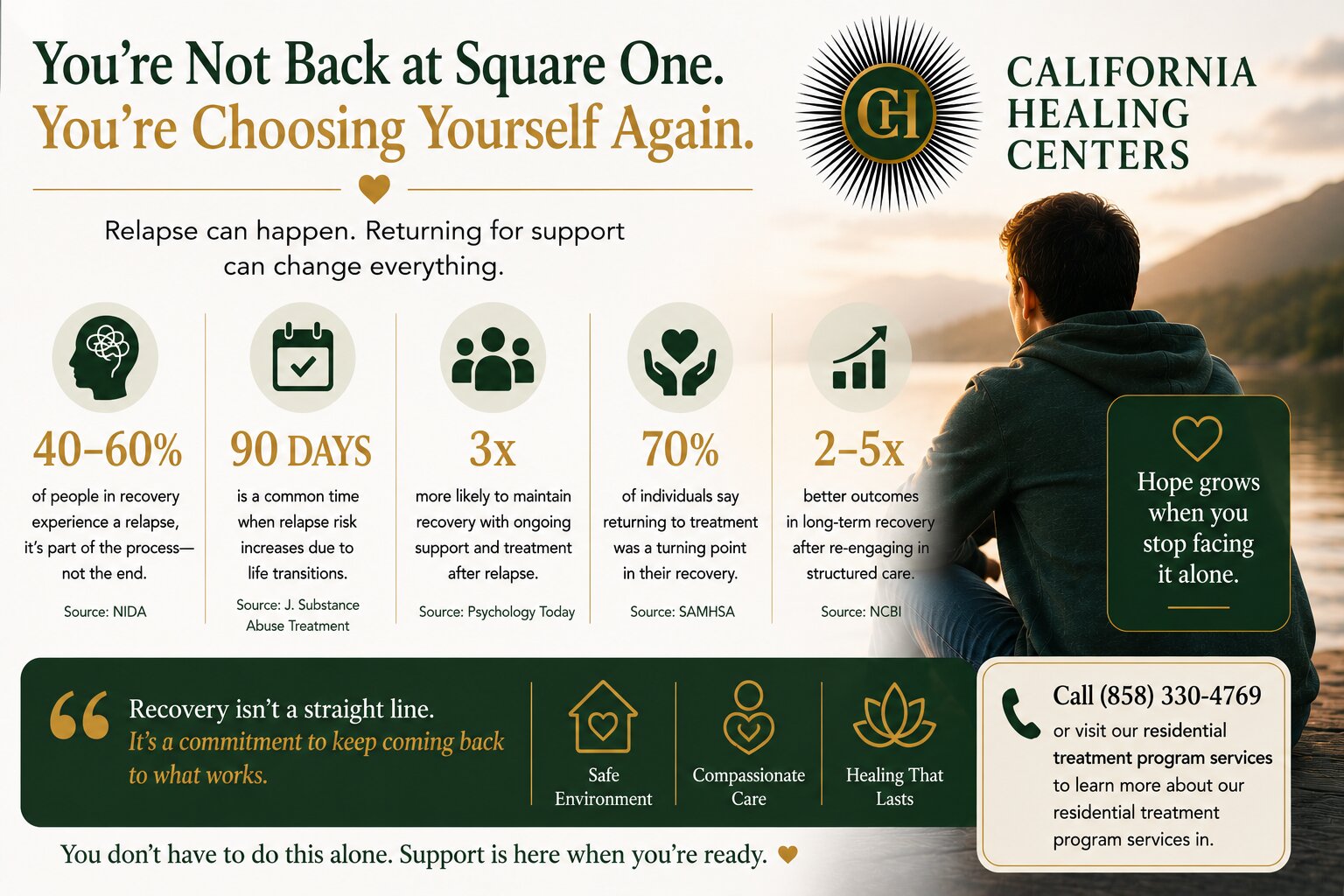
Shame Gets Louder After 90 Days
There’s something uniquely painful about relapsing after people already believed you were doing well.
Especially around the 90-day mark.
You’ve already:
- rebuilt trust slightly
- started feeling hopeful again
- imagined a different future
- heard people say they’re proud of you
- convinced yourself maybe the hardest part was behind you
So when things begin slipping emotionally again, panic sets in fast.
Not just fear of relapse itself.
Fear of disappointing everyone.
And honestly, shame can become so overwhelming that it pushes people deeper into hiding.
You don’t want to tell anyone you’re struggling because:
- you don’t want to scare your family again
- you don’t want people to lose trust
- you don’t want to become “the relapse story”
- you don’t want to feel weak
- you don’t want to start over
But here’s what I eventually learned:
healing does not erase itself because you struggled again.
One therapist told me something during my return that stayed with me:
“You’re not back at the beginning. You’re returning with more awareness.”
That sentence changed everything for me.
Because the second time, I wasn’t entering treatment pretending I could still outwork my pain.
I was exhausted enough to stop performing strength constantly.
And strangely, that honesty created deeper healing than the first time ever did.
The Warning Signs Were There Earlier Than I Wanted to Admit
Looking back, the signs were obvious.
Not obvious to everyone else.
Obvious to me.
I just kept minimizing them.
I noticed:
- I stopped enjoying things emotionally
- conversations started feeling draining
- I avoided vulnerability
- I became emotionally detached
- I isolated more frequently
- I stopped caring about routines that once helped me
- my thoughts became darker and more hopeless
- substances started sounding comforting again
But because I was still functioning externally, I convinced myself it wasn’t serious yet.
This is why so many people delay returning for support.
The outside world rewards performance.
It rarely notices emotional deterioration until the collapse becomes visible.
And honestly, many alumni become extremely skilled at looking okay while quietly unraveling internally.
Especially people carrying unresolved trauma, anxiety, depression, or emotional exhaustion beneath sobriety itself.
Going Back Felt Humiliating — Until It Didn’t
I wish more people talked honestly about this part.
Walking back into treatment felt emotionally brutal at first.
I worried:
- people would judge me
- staff would see me as a failure
- other clients would think I didn’t try hard enough
- my family would secretly feel disappointed
But something unexpected happened instead.
People understood.
Not in a performative way.
In a real way.
Because many people in treatment spaces understand something the outside world often doesn’t:
relapse is complicated.
Especially in compassionate environments focused on inpatient mental health San Diego support, many people arrive carrying enormous shame after periods of emotional decline, relapse, depression, trauma, or burnout.
And surprisingly, being around people who understood my shame made it easier to stop drowning in it alone.
One person told me:
“The fact that you came back matters more than the fact that you slipped.”
I still think about that sentence sometimes.
Because I had spent weeks convincing myself I was beyond help again.
The Second Time Felt Emotionally Different
The first time I entered treatment, part of me still believed I could control everything if I just tried hard enough.
The second time, I understood something much more honestly:
willpower alone was not saving me anymore.
That awareness changed everything.
I listened differently.
I spoke more honestly.
I stopped trying to sound emotionally polished.
I admitted how lonely I felt.
I admitted how disconnected I’d become from myself.
And for the first time in a long time, I stopped trying to “win” recovery.
That shift matters deeply.
Because recovery is not something you perform perfectly forever.
It’s something you keep choosing — especially when shame tells you not to.
Sometimes Progress Looks Different Than People Expect
This may be the most important thing I learned.
Progress is not always:
“Never struggle again.”
Sometimes progress looks like:
- recognizing warning signs earlier
- asking for help sooner
- refusing to disappear completely
- returning before total collapse
- being emotionally honest faster
- allowing support back in before losing everything
The first time I spiraled emotionally, I waited until things became catastrophic.
The second time, I noticed the warning signs sooner:
- numbness
- isolation
- emotional exhaustion
- dishonesty
- cravings
- hopelessness
- emotional disconnection
And even though I still relapsed, I came back before destroying my entire life again.
That matters.
Healing deserves credit for those moments too.
Recovery Does Not Make You Immune to Being Human
This may be the deepest truth underneath all of this.
Treatment is not a magical line separating “broken person” from “fixed person.”
You are still human afterward.
Stress still affects you.
Trauma still echoes.
Loneliness still matters.
Depression still hurts.
Burnout still exists.
The goal was never perfection.
The goal was learning how to reconnect with support before shame completely isolates you again.
And honestly?
Going back helped me understand recovery more realistically than the first time ever did.
Not as perfection.
Not as performance.
But as ongoing honesty.
You Are Allowed to Need Help Again
If you’re reading this while quietly spiraling after relapse, hear this clearly:
Needing support again does not erase your progress.
You are not weak because:
- you’re struggling again
- sobriety feels harder than expected
- your mental health deteriorated again
- you feel emotionally exhausted
- you need more support than you thought you would
You are human.
And sometimes the bravest thing a person can do is return before everything fully collapses.
At California Healing Centers, we’ve seen alumni reconnect with themselves after relapse, depression, anxiety, trauma, burnout, and periods of deep shame. Not because they were starting over — but because healing sometimes requires returning with greater honesty than before.
FAQ: Returning to Treatment After Relapse
Does going back to treatment mean I failed?
No. Returning for support often reflects self-awareness, honesty, and willingness to reconnect with healing before things worsen further.
Is relapse common after treatment?
Relapse can happen, especially during periods of stress, isolation, emotional overwhelm, or untreated mental health struggles. Recovery is rarely perfectly linear.
Why does relapse feel so emotionally devastating?
Many people fear disappointing loved ones or losing the identity they built during recovery. Shame often becomes louder than the relapse itself.
Can treatment still help if I’ve already been before?
Yes. Many people return to treatment with deeper emotional insight, greater honesty, and more awareness of what they need emotionally and mentally.
What are early emotional warning signs of relapse?
Isolation, emotional numbness, hopelessness, dishonesty, increased cravings, anxiety, depression, emotional exhaustion, and disconnecting from support systems can all signal emotional decline.
Is it normal to resist going back?
Absolutely. Many alumni fear judgment, embarrassment, or feeling like they’re “starting over.” Those fears are extremely common.
Can treatment help with both mental health and substance use?
Yes. Many people returning for care are navigating overlapping struggles involving trauma, anxiety, depression, burnout, and substance use at the same time.
What if I feel ashamed asking for help again?
You can feel ashamed and still deserve support. Those two things can exist together. Healing often begins the moment honesty becomes stronger than shame.
How do I know if I need more support again?
If you feel emotionally disconnected, increasingly isolated, overwhelmed, hopeless, or unable to maintain stability safely, reconnecting with support may help before things worsen further.
What if my family is disappointed in me?
Many families feel scared initially, but most would rather see someone seek help early than continue suffering silently. Returning for care is not weakness — it’s self-preservation.
If you’re struggling after relapse and wondering whether it’s time to reconnect with support, California Healing Centers offers compassionate live-in mental health treatment for adults seeking stability, healing, and a safe place to begin again.
Call (858) 330-4769 or visit our residential treatment program services to learn more about our residential treatment program services in San Diego, CA.