
The Exhaustion of Pretending You’re Fine After Dark

There’s a specific kind of fear that shows up at night.

Not always loud panic. Not always dramatic breakdowns.

Sometimes it’s quieter than that.

You climb into bed exhausted, fully aware you need sleep, but the second the room gets dark your mind starts moving faster instead of slower. Thoughts pile on top of each other. Your chest feels tight. Your body feels alert even though you’re exhausted.

You check the clock.

Then check it again twenty minutes later.

Then your brain starts doing math:
“If I fall asleep right now, I’ll still get five hours.”
“Okay… four and a half.”
“Now four.”

And suddenly bedtime feels less like rest and more like a battle you keep losing.

If you’ve been searching for answers because nighttime anxiety is becoming overwhelming, we want you to know something important before anything else:

You are not broken.

You are not weak.

And you are not failing because your nervous system refuses to calm down after dark.

At our residential treatment program, we work with many people who feel emotionally exhausted from fighting their own minds every night. A lot of them spent months — sometimes years — trying to quietly manage it alone before finally admitting they needed support.

Nighttime Anxiety Feels More Intense Because Everything Else Gets Quiet

During the day, your brain has competition.

Conversations. Notifications. Work. Responsibilities. Traffic. Noise. Movement. Even stress itself can temporarily distract people from deeper anxiety.

Then nighttime arrives.

The world slows down.

Your nervous system doesn’t.

That’s part of why so many people experience anxiety worse at night even if they seem relatively functional during the day.

The distractions disappear, and suddenly your thoughts have center stage.

For some people, this looks like racing thoughts about the future. For others, it becomes physical:

  • Tight chest
  • Restlessness
  • Sweating
  • Rapid heartbeat
  • Shaking
  • Feeling unable to fully breathe
  • Constant tension in the body

And honestly, one of the scariest parts is how isolating nighttime anxiety feels.

At 2 a.m., it can genuinely feel like you’re the only person awake struggling this way.

You are not.

Exhaustion Makes Anxiety Louder

This cycle becomes vicious quickly.

Anxiety makes it hard to sleep.

Lack of sleep makes the nervous system more reactive.

Then the next night, your body is already emotionally overloaded before bedtime even starts.

Over time, many people stop fearing sleeplessness and start fearing nighttime itself.

They dread getting into bed because their brain has started associating nighttime with panic, overthinking, and emotional overwhelm.

Some people stay awake scrolling for hours because distraction feels safer than silence.

Others fall asleep briefly, then wake up with racing thoughts and a pounding heart at 3 a.m.

And unfortunately, sleep deprivation affects almost everything:

  • Emotional regulation
  • Patience
  • Stress tolerance
  • Concentration
  • Physical health
  • Panic symptoms
  • Depression
  • Irritability
  • Decision-making

Eventually, even small stressors can feel emotionally enormous because the nervous system never fully resets.

Your Nervous System Is Trying to Protect You — Even If It Feels Cruel

This part matters deeply.

Many people become angry at themselves for nighttime anxiety. They think:
“Why can’t I just calm down?”
“Why am I like this?”
“What’s wrong with me?”

But anxiety is not a character flaw.

It’s a nervous system response.

An overwhelmed brain starts scanning constantly for danger, stress, uncertainty, or emotional threat. At night, when external distractions disappear, those internal alarm systems often become more noticeable.

For some people, nighttime anxiety is connected to:

  • Chronic stress
  • Burnout
  • Trauma
  • Panic disorder
  • Emotional suppression
  • Depression
  • Grief
  • Substance use
  • Relationship stress
  • Long-term hypervigilance

And honestly, many people struggling at night have spent years being the “strong one” during the day.

The reliable person.

The caretaker.

The productive employee.

The emotionally composed friend.

Nighttime is often where all the pressure they carried silently starts leaking out.

Trying to Force Sleep Usually Backfires

This frustrates people constantly.

The harder someone tries to force themselves to sleep, the more alert the nervous system often becomes.

You start monitoring yourself:
“Am I asleep yet?”
“Why is my heart beating so fast?”
“What if tomorrow is terrible because I’m exhausted again?”

Suddenly your brain treats sleep like a performance test you’re failing.

That pressure alone can intensify anxiety.

Sleep tends to happen more naturally when the nervous system feels safer — not more controlled.

And honestly, many anxious people are trying to “solve” sleep while their body still feels emotionally under attack.

That’s why harsh self-pressure rarely works long term.

Your Body May Be Carrying More Stress Than You Realize

Many first-time treatment seekers underestimate how physically anxiety affects the body.

They think anxiety is “just thoughts.”

Meanwhile their nervous system has been running like an engine stuck at high RPMs for months or years.

Over time, chronic anxiety can affect:

  • Sleep quality
  • Digestion
  • Appetite
  • Muscle tension
  • Heart rate
  • Focus
  • Energy levels
  • Immune functioning
  • Emotional resilience

Some people become so accustomed to operating in high-alert mode that calm starts feeling unfamiliar.

That’s important to understand because many people secretly believe they should simply “snap out of it” if they were stronger.

But exhausted nervous systems do not heal through shame.

They heal through regulation, support, consistency, and safety.
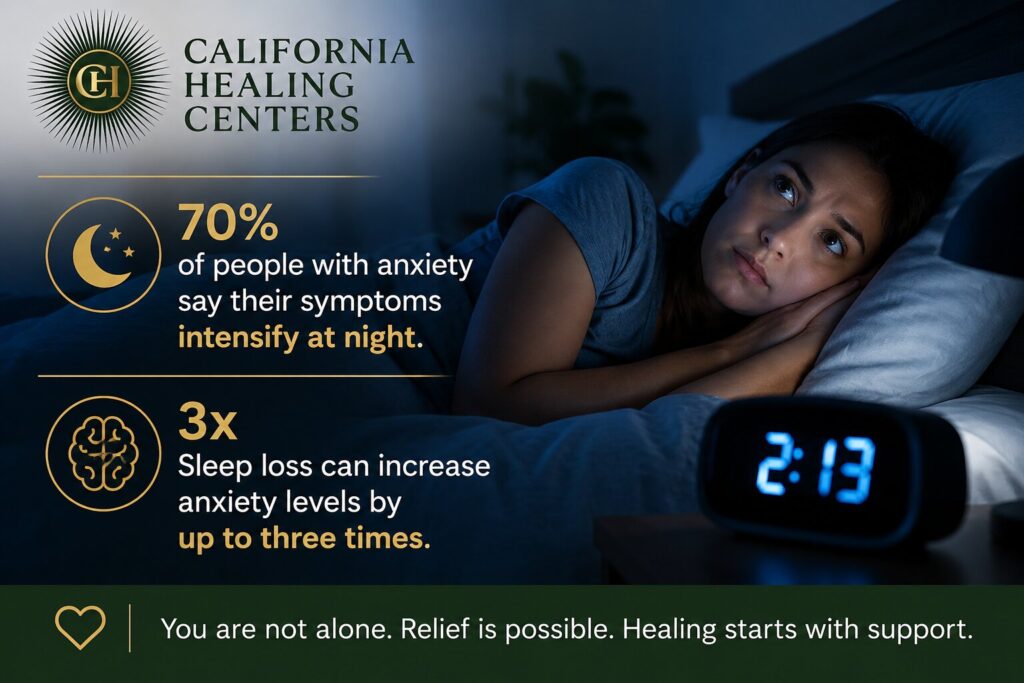
Anxiety, Sleep, and Feeling Overwhelmed at Night

Small Nighttime Changes Can Genuinely Help

No single routine fixes anxiety for everyone. But there are small adjustments that can help lower nervous system stimulation before bed.

Some people benefit from:

  • Reducing caffeine later in the day
  • Lowering lights at night
  • Limiting stressful media or doom-scrolling
  • Keeping a consistent sleep routine
  • Practicing breathing or grounding exercises
  • Using calming audio or white noise
  • Avoiding emotionally activating conversations late at night
  • Journaling racing thoughts before bed
  • Getting support instead of isolating

And honestly, one of the biggest shifts is reducing shame around what’s happening.

People often improve faster once they stop treating themselves like a problem to fix.

Sometimes Nighttime Anxiety Is a Sign You Need More Support Than Coping Skills Alone

This is important to say gently.

There comes a point where self-help strategies may stop feeling sufficient.

Not because you failed.

Because your nervous system has been overwhelmed for too long without enough support.

If your nights regularly involve:

  • Panic attacks
  • Severe insomnia
  • Constant dread
  • Racing thoughts you cannot interrupt
  • Emotional breakdowns
  • Physical anxiety symptoms
  • Fear of being alone with your thoughts
  • Feeling emotionally unsafe at night

…it may be time to seek deeper support instead of continuing to white-knuckle it alone.

Many people wait until they’re completely emotionally depleted before asking for help because they assume things need to get “worse” first.

They don’t.

You are allowed to seek care before you completely fall apart.

Healing Often Begins With Rest — Real Rest

One of the cruelest parts of anxiety is that it convinces people rest must be earned.

That you can only relax after you’ve solved everything perfectly.

But nervous systems do not recover through constant pressure and hypervigilance.

They recover through safety.

Consistency.

Support.

Predictability.

Emotional regulation.

For some people, therapy and lifestyle changes help significantly. For others, especially when anxiety has become emotionally consuming, live-in treatment provides enough structure and nervous system stabilization for true healing to finally begin.

Sometimes people don’t need more discipline.

They need relief.

And honestly, one of the most emotional moments for many clients happens after they finally sleep deeply again for the first time in months.

Not because everything in life is suddenly fixed.

Because their body finally stopped bracing against danger long enough to rest.

You Don’t Need to “Earn” Help By Suffering More

A lot of first-time treatment seekers believe they need to completely collapse before asking for support.

That belief keeps people trapped in silent suffering far longer than necessary.

You are allowed to seek help because:

  • You can’t sleep consistently
  • Your anxiety feels unmanageable at night
  • Your nervous system feels constantly overwhelmed
  • Panic is becoming more frequent
  • You feel emotionally exhausted
  • Your thoughts feel too loud when things get quiet
  • You’re tired of surviving this way

You do not need to prove your pain to deserve care.

And honestly, many people who finally seek treatment later say the same thing afterward:
“I wish I had stopped trying to carry this alone sooner.”

FAQ: Anxiety, Sleep, and Feeling Overwhelmed at Night

Why does anxiety feel stronger at night?

Nighttime removes distractions and external stimulation, which makes racing thoughts and physical anxiety symptoms more noticeable. Exhaustion can also intensify emotional sensitivity.

Can anxiety really stop you from sleeping?

Yes. Anxiety activates the body’s stress response system, making it difficult for the brain and body to fully relax enough for restful sleep.

Why do I panic the second I lie down?

Many people become hyper-aware of their thoughts, heartbeat, breathing, or physical sensations at bedtime. Fear about not sleeping can also trigger additional anxiety.

Is nighttime anxiety common?

Very common. Many people experience racing thoughts, dread, panic symptoms, or emotional overwhelm more intensely during nighttime hours.

Can lack of sleep make anxiety worse?

Absolutely. Sleep deprivation increases stress hormones, emotional reactivity, irritability, panic symptoms, and difficulty regulating anxious thoughts.

What helps calm nighttime anxiety?

Some people benefit from grounding techniques, calming routines, reduced nighttime stimulation, therapy, nervous system regulation, and professional support when symptoms become overwhelming.

Should I seek help if anxiety is affecting my sleep every night?

If anxiety is consistently interfering with sleep, emotional stability, work, relationships, or daily functioning, it may be time to seek professional support instead of continuing to manage it alone.

Can treatment help with severe nighttime anxiety?

Yes. Many treatment programs help people stabilize overwhelming anxiety, regulate sleep patterns, and address the underlying emotional stress contributing to panic and insomnia.

Does nighttime anxiety mean something is seriously wrong with me?

Not necessarily. It often means your nervous system is overwhelmed, exhausted, or operating in prolonged stress mode. Anxiety can become intense without meaning you are “crazy” or beyond help.

What if I’m scared treatment won’t work?

That fear is extremely common for first-time treatment seekers. Many people enter treatment uncertain or afraid. You do not need to feel fully confident before reaching out for support.

If your nights have started feeling emotionally unbearable and you’re exhausted from trying to calm your nervous system alone, California Healing Centers offers compassionate residential treatment program services designed to help people feel safe, supported, and emotionally grounded again.

Call (858) 330-4769 or visit our residential treatment program services to learn more about our residential treatment program services San Diego, CA.


Leave a Comment

Your email address will not be published. Required fields are marked *

Accessibility Toolbar

The Exhaustion of Pretending You’re Fine After Dark

There’s a specific kind of fear that shows up at night.

Not always loud panic. Not always dramatic breakdowns.

Sometimes it’s quieter than that.

You climb into bed exhausted, fully aware you need sleep, but the second the room gets dark your mind starts moving faster instead of slower. Thoughts pile on top of each other. Your chest feels tight. Your body feels alert even though you’re exhausted.

You check the clock.

Then check it again twenty minutes later.

Then your brain starts doing math:
“If I fall asleep right now, I’ll still get five hours.”
“Okay… four and a half.”
“Now four.”

And suddenly bedtime feels less like rest and more like a battle you keep losing.

If you’ve been searching for answers because nighttime anxiety is becoming overwhelming, we want you to know something important before anything else:

You are not broken.

You are not weak.

And you are not failing because your nervous system refuses to calm down after dark.

At our residential treatment program, we work with many people who feel emotionally exhausted from fighting their own minds every night. A lot of them spent months — sometimes years — trying to quietly manage it alone before finally admitting they needed support.

Nighttime Anxiety Feels More Intense Because Everything Else Gets Quiet

During the day, your brain has competition.

Conversations. Notifications. Work. Responsibilities. Traffic. Noise. Movement. Even stress itself can temporarily distract people from deeper anxiety.

Then nighttime arrives.

The world slows down.

Your nervous system doesn’t.

That’s part of why so many people experience anxiety worse at night even if they seem relatively functional during the day.

The distractions disappear, and suddenly your thoughts have center stage.

For some people, this looks like racing thoughts about the future. For others, it becomes physical:

  • Tight chest
  • Restlessness
  • Sweating
  • Rapid heartbeat
  • Shaking
  • Feeling unable to fully breathe
  • Constant tension in the body

And honestly, one of the scariest parts is how isolating nighttime anxiety feels.

At 2 a.m., it can genuinely feel like you’re the only person awake struggling this way.

You are not.

Exhaustion Makes Anxiety Louder

This cycle becomes vicious quickly.

Anxiety makes it hard to sleep.

Lack of sleep makes the nervous system more reactive.

Then the next night, your body is already emotionally overloaded before bedtime even starts.

Over time, many people stop fearing sleeplessness and start fearing nighttime itself.

They dread getting into bed because their brain has started associating nighttime with panic, overthinking, and emotional overwhelm.

Some people stay awake scrolling for hours because distraction feels safer than silence.

Others fall asleep briefly, then wake up with racing thoughts and a pounding heart at 3 a.m.

And unfortunately, sleep deprivation affects almost everything:

  • Emotional regulation
  • Patience
  • Stress tolerance
  • Concentration
  • Physical health
  • Panic symptoms
  • Depression
  • Irritability
  • Decision-making

Eventually, even small stressors can feel emotionally enormous because the nervous system never fully resets.

Your Nervous System Is Trying to Protect You — Even If It Feels Cruel

This part matters deeply.

Many people become angry at themselves for nighttime anxiety. They think:
“Why can’t I just calm down?”
“Why am I like this?”
“What’s wrong with me?”

But anxiety is not a character flaw.

It’s a nervous system response.

An overwhelmed brain starts scanning constantly for danger, stress, uncertainty, or emotional threat. At night, when external distractions disappear, those internal alarm systems often become more noticeable.

For some people, nighttime anxiety is connected to:

  • Chronic stress
  • Burnout
  • Trauma
  • Panic disorder
  • Emotional suppression
  • Depression
  • Grief
  • Substance use
  • Relationship stress
  • Long-term hypervigilance

And honestly, many people struggling at night have spent years being the “strong one” during the day.

The reliable person.

The caretaker.

The productive employee.

The emotionally composed friend.

Nighttime is often where all the pressure they carried silently starts leaking out.

Trying to Force Sleep Usually Backfires

This frustrates people constantly.

The harder someone tries to force themselves to sleep, the more alert the nervous system often becomes.

You start monitoring yourself:
“Am I asleep yet?”
“Why is my heart beating so fast?”
“What if tomorrow is terrible because I’m exhausted again?”

Suddenly your brain treats sleep like a performance test you’re failing.

That pressure alone can intensify anxiety.

Sleep tends to happen more naturally when the nervous system feels safer — not more controlled.

And honestly, many anxious people are trying to “solve” sleep while their body still feels emotionally under attack.

That’s why harsh self-pressure rarely works long term.

Your Body May Be Carrying More Stress Than You Realize

Many first-time treatment seekers underestimate how physically anxiety affects the body.

They think anxiety is “just thoughts.”

Meanwhile their nervous system has been running like an engine stuck at high RPMs for months or years.

Over time, chronic anxiety can affect:

  • Sleep quality
  • Digestion
  • Appetite
  • Muscle tension
  • Heart rate
  • Focus
  • Energy levels
  • Immune functioning
  • Emotional resilience

Some people become so accustomed to operating in high-alert mode that calm starts feeling unfamiliar.

That’s important to understand because many people secretly believe they should simply “snap out of it” if they were stronger.

But exhausted nervous systems do not heal through shame.

They heal through regulation, support, consistency, and safety.

Anxiety, Sleep, and Feeling Overwhelmed at Night

Small Nighttime Changes Can Genuinely Help

No single routine fixes anxiety for everyone. But there are small adjustments that can help lower nervous system stimulation before bed.

Some people benefit from:

  • Reducing caffeine later in the day
  • Lowering lights at night
  • Limiting stressful media or doom-scrolling
  • Keeping a consistent sleep routine
  • Practicing breathing or grounding exercises
  • Using calming audio or white noise
  • Avoiding emotionally activating conversations late at night
  • Journaling racing thoughts before bed
  • Getting support instead of isolating

And honestly, one of the biggest shifts is reducing shame around what’s happening.

People often improve faster once they stop treating themselves like a problem to fix.

Sometimes Nighttime Anxiety Is a Sign You Need More Support Than Coping Skills Alone

This is important to say gently.

There comes a point where self-help strategies may stop feeling sufficient.

Not because you failed.

Because your nervous system has been overwhelmed for too long without enough support.

If your nights regularly involve:

  • Panic attacks
  • Severe insomnia
  • Constant dread
  • Racing thoughts you cannot interrupt
  • Emotional breakdowns
  • Physical anxiety symptoms
  • Fear of being alone with your thoughts
  • Feeling emotionally unsafe at night

…it may be time to seek deeper support instead of continuing to white-knuckle it alone.

Many people wait until they’re completely emotionally depleted before asking for help because they assume things need to get “worse” first.

They don’t.

You are allowed to seek care before you completely fall apart.

Healing Often Begins With Rest — Real Rest

One of the cruelest parts of anxiety is that it convinces people rest must be earned.

That you can only relax after you’ve solved everything perfectly.

But nervous systems do not recover through constant pressure and hypervigilance.

They recover through safety.

Consistency.

Support.

Predictability.

Emotional regulation.

For some people, therapy and lifestyle changes help significantly. For others, especially when anxiety has become emotionally consuming, live-in treatment provides enough structure and nervous system stabilization for true healing to finally begin.

Sometimes people don’t need more discipline.

They need relief.

And honestly, one of the most emotional moments for many clients happens after they finally sleep deeply again for the first time in months.

Not because everything in life is suddenly fixed.

Because their body finally stopped bracing against danger long enough to rest.

You Don’t Need to “Earn” Help By Suffering More

A lot of first-time treatment seekers believe they need to completely collapse before asking for support.

That belief keeps people trapped in silent suffering far longer than necessary.

You are allowed to seek help because:

  • You can’t sleep consistently
  • Your anxiety feels unmanageable at night
  • Your nervous system feels constantly overwhelmed
  • Panic is becoming more frequent
  • You feel emotionally exhausted
  • Your thoughts feel too loud when things get quiet
  • You’re tired of surviving this way

You do not need to prove your pain to deserve care.

And honestly, many people who finally seek treatment later say the same thing afterward:
“I wish I had stopped trying to carry this alone sooner.”

FAQ: Anxiety, Sleep, and Feeling Overwhelmed at Night

Why does anxiety feel stronger at night?

Nighttime removes distractions and external stimulation, which makes racing thoughts and physical anxiety symptoms more noticeable. Exhaustion can also intensify emotional sensitivity.

Can anxiety really stop you from sleeping?

Yes. Anxiety activates the body’s stress response system, making it difficult for the brain and body to fully relax enough for restful sleep.

Why do I panic the second I lie down?

Many people become hyper-aware of their thoughts, heartbeat, breathing, or physical sensations at bedtime. Fear about not sleeping can also trigger additional anxiety.

Is nighttime anxiety common?

Very common. Many people experience racing thoughts, dread, panic symptoms, or emotional overwhelm more intensely during nighttime hours.

Can lack of sleep make anxiety worse?

Absolutely. Sleep deprivation increases stress hormones, emotional reactivity, irritability, panic symptoms, and difficulty regulating anxious thoughts.

What helps calm nighttime anxiety?

Some people benefit from grounding techniques, calming routines, reduced nighttime stimulation, therapy, nervous system regulation, and professional support when symptoms become overwhelming.

Should I seek help if anxiety is affecting my sleep every night?

If anxiety is consistently interfering with sleep, emotional stability, work, relationships, or daily functioning, it may be time to seek professional support instead of continuing to manage it alone.

Can treatment help with severe nighttime anxiety?

Yes. Many treatment programs help people stabilize overwhelming anxiety, regulate sleep patterns, and address the underlying emotional stress contributing to panic and insomnia.

Does nighttime anxiety mean something is seriously wrong with me?

Not necessarily. It often means your nervous system is overwhelmed, exhausted, or operating in prolonged stress mode. Anxiety can become intense without meaning you are “crazy” or beyond help.

What if I’m scared treatment won’t work?

That fear is extremely common for first-time treatment seekers. Many people enter treatment uncertain or afraid. You do not need to feel fully confident before reaching out for support.

If your nights have started feeling emotionally unbearable and you’re exhausted from trying to calm your nervous system alone, California Healing Centers offers compassionate residential treatment program services designed to help people feel safe, supported, and emotionally grounded again.

Call (858) 330-4769 or visit our residential treatment program services to learn more about our residential treatment program services San Diego, CA.

Table of Contents
Scroll to Top