
“If I Tell Someone, Will They Lock Me Away?”

There is a question many people carry for weeks, months, or even years before they finally say it out loud.

Not because they don’t want answers.

Because they’re afraid of what the answer might be.

The question sounds something like this:

“I’ve been having thoughts that scare me, but I’m terrified of being hospitalized. What are my options?”

If you’re asking yourself that right now, I want you to know something important.

You are not the first person to feel this way.

And you are certainly not alone.

Many people who struggle emotionally never tell anyone what they’re experiencing because they assume that being honest automatically means losing control of their life. They imagine being forced into a hospital, separated from loved ones, or treated as though they are incapable of making decisions.

Those fears are powerful.

They also prevent many people from receiving support that could make a meaningful difference.

If you’re looking for answers, exploring residential treatment options may help you better understand the different levels of care available when emotional pain begins feeling too heavy to carry alone.

The Fear of Hospitalization Is More Common Than People Realize

One of the biggest misconceptions about mental health treatment is that there are only two possibilities.

Either you keep everything to yourself.

Or you end up in a hospital.

In reality, mental health care exists on a spectrum.

Yet many people continue believing that if they admit they’re struggling, someone will immediately take control away from them.

This fear often develops because of stories they’ve heard, television portrayals, or misunderstandings about how mental health professionals evaluate risk.

As a clinician, I can tell you that conversations about emotional distress are far more nuanced than many people expect.

Professionals don’t simply hear one sentence and make decisions based on that alone.

Instead, they work to understand the entire picture.

What are you experiencing?

How long has it been happening?

How intense are the thoughts?

What support systems do you have?

What is helping?

What is making things worse?

Those details matter.

Thoughts Exist on a Wide Spectrum

One reason these conversations can feel confusing is that suicidal thoughts don’t always look the way people imagine.

Some individuals experience fleeting thoughts during periods of extreme stress.

Others feel overwhelmed by hopelessness but have no intention of acting on those feelings.

Some struggle with recurring thoughts that become increasingly difficult to manage.

Others may find themselves in immediate danger.

These experiences are not identical.

That’s why mental health professionals assess risk carefully rather than making assumptions.

Someone who says, “I wish I could disappear for a while,” may require a very different level of support than someone who feels unable to stay safe.

The distinction matters because treatment recommendations are based on individual circumstances, not fear or panic.

Why People Stay Silent

Parents often tell me they had no idea how much their child was carrying.

Their son seemed withdrawn.

Their daughter stopped participating in activities she once loved.

They noticed irritability, isolation, changes in sleep, or declining motivation.

What they didn’t realize was how much emotional pain existed beneath the surface.

Many young adults stay silent because they don’t want to worry their families.

Others fear being judged.

Some feel embarrassed.

And many are convinced nobody will understand.

The silence becomes its own kind of prison.

Every day, they wake up carrying something they cannot share.

Every day, they become more isolated.

It’s like trying to hold a beach ball underwater.

The longer you force it down, the more energy it takes.

Eventually, something has to give.

There Are More Options Than Most People Know

One of the most reassuring things many people discover is that support isn’t limited to emergency situations.

Depending on what is happening, treatment options may include:

  • Individual therapy
  • Psychiatric support
  • Medication management
  • Crisis counseling
  • Family involvement
  • Structured daytime care
  • Multi-day weekly treatment
  • Live-in treatment environments

The goal is always to connect individuals with the level of support that matches their needs.

For some people, weekly therapy sessions may be appropriate.

Others may benefit from more structured care while remaining connected to family and daily responsibilities.

Some require round-the-clock support because symptoms have become too difficult to manage safely on their own.

The important thing to remember is that there is rarely a one-size-fits-all answer.

When Mental Health and Substance Use Become Connected

Many families begin noticing emotional struggles after substance use becomes more visible.

A parent may discover their twenty-year-old is drinking more heavily.

Perhaps marijuana use has increased.

Maybe old substance use patterns have returned after a period of improvement.

It’s easy to assume the substances are the entire problem.

Sometimes they’re only part of the story.

Many individuals use alcohol or drugs to cope with emotional pain they don’t know how to explain.

Anxiety.

Depression.

Trauma.

Hopelessness.

Shame.

Loneliness.

Substances often become an attempt to quiet emotions that feel unbearable.

Unfortunately, they frequently make those emotions worse over time.

When mental health and substance use collide, comprehensive treatment may become especially important because both challenges influence one another.

What Parents Often Notice First

Parents frequently recognize changes before they understand what those changes mean.

They notice their child sleeping all day.

Skipping meals.

Avoiding friends.

Ignoring phone calls.

Losing interest in activities they once enjoyed.

Grades drop.

Work performance suffers.

Conversations become shorter.

The spark seems to disappear.

Many parents respond by focusing on behavior.

“What happened?”

“Why are you acting like this?”

“What’s wrong?”

Those questions come from love.

But they don’t always uncover what’s happening underneath.

A different approach often creates more room for honesty.

Instead of asking why someone’s behavior changed, consider asking:

“How have things been feeling lately?”

“You seem overwhelmed. Do you want to talk?”

“I’m worried about you, not angry at you.”

Small shifts in language can make difficult conversations feel safer.
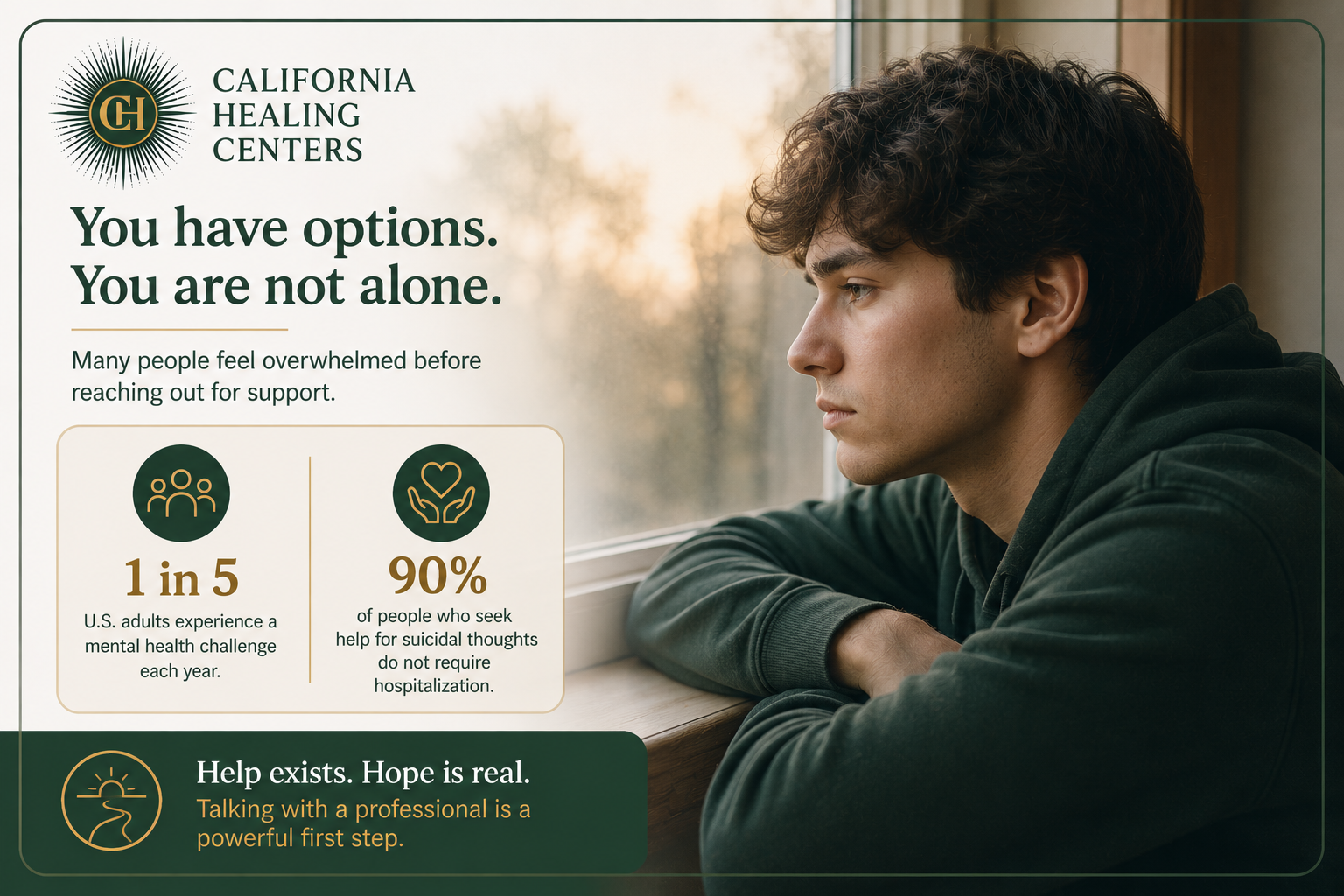
Scared to Ask for Help You Have More Options Than You Think

Reaching Out Does Not Mean You’ve Failed

One of the saddest myths surrounding mental health is the idea that needing support represents weakness.

Many people believe they should simply push through.

They tell themselves they should be stronger.

More resilient.

More grateful.

More capable.

Meanwhile, they continue carrying burdens that would overwhelm almost anyone.

Seeking support is not failure.

It’s not giving up.

It’s not surrendering independence.

It’s recognizing that human beings were never meant to navigate overwhelming pain entirely alone.

In fact, many people who eventually receive effective treatment describe the same realization.

They wish they had reached out sooner.

Not because treatment magically solved everything.

Because they finally stopped carrying the weight by themselves.

The Goal Is Safety, Not Punishment

Fear often convinces people that mental health treatment is designed to take something away from them.

Their freedom.

Their independence.

Their choices.

The reality is that treatment exists for a different reason.

Safety.

Support.

Stability.

Hope.

Professionals want to understand what you’re experiencing so they can help identify the most appropriate next step.

Sometimes that means outpatient support.

Sometimes it means more structured care.

Sometimes it means involving family members or trusted supports.

The purpose is not punishment.

The purpose is protection.

And for many people, simply learning that truth makes it easier to begin the conversation.

You Do Not Have to Wait for Things to Get Worse

One of the most dangerous beliefs people carry is that they must reach a breaking point before seeking support.

They tell themselves:

“It’s not bad enough yet.”

“Other people have it worse.”

“I can handle this a little longer.”

Unfortunately, emotional pain often becomes more difficult to manage when it goes untreated.

You don’t need to wait until you’re in crisis.

You don’t need to prove your suffering.

And you don’t need to have every answer before reaching out.

Sometimes the bravest step is simply telling another person what’s been happening.

You Deserve More Than Survival

If you’ve been carrying thoughts that scare you, overwhelm you, or leave you feeling trapped, please know that support exists.

You deserve more than simply surviving each day.

You deserve the opportunity to feel safe, understood, and hopeful again.

For many people, the first step isn’t treatment.

It’s conversation.

And that conversation can become the beginning of something better.

If you’re looking for help for suicidal thoughts, speaking with a qualified mental health professional can provide clarity about your options and help determine what level of support may be appropriate for your situation.

Call 858-330-4769 or visit our residential treatment program services to learn more about our residential treatment program services San Diego, CA.

Frequently Asked Questions

Does talking about suicidal thoughts automatically mean I’ll be hospitalized?

No. Mental health professionals evaluate many factors when determining what type of support may be appropriate. Having thoughts does not automatically mean hospitalization is necessary.

What if I’m scared to tell my family?

Many people share that fear. A therapist, counselor, or trusted professional can often help you navigate those conversations and determine how much information feels appropriate to share.

Can suicidal thoughts happen without wanting to die?

Yes. Some individuals experience thoughts related to hopelessness, emotional exhaustion, or wanting pain to stop without having a desire to end their life. These experiences are still important to discuss with a professional.

What should parents do if they suspect their child is struggling?

Start with compassionate curiosity rather than judgment. Focus on listening, expressing concern, and encouraging open conversation about what your child may be experiencing.

Are there treatment options besides hospitalization?

Yes. Depending on the situation, support may include therapy, medication management, structured daytime care, multi-day weekly treatment, or live-in treatment environments.

When should someone seek immediate emergency help?

Immediate emergency support should be sought if a person feels unable to stay safe, has a plan to harm themselves, or is at immediate risk of acting on suicidal thoughts.

Can substance use make suicidal thoughts worse?

Yes. Alcohol and drugs can intensify depression, impulsivity, hopelessness, and emotional distress, making it more difficult to manage mental health symptoms safely.


Accessibility Toolbar

“If I Tell Someone, Will They Lock Me Away?”

There is a question many people carry for weeks, months, or even years before they finally say it out loud.

Not because they don't want answers.

Because they're afraid of what the answer might be.

The question sounds something like this:

"I've been having thoughts that scare me, but I'm terrified of being hospitalized. What are my options?"

If you're asking yourself that right now, I want you to know something important.

You are not the first person to feel this way.

And you are certainly not alone.

Many people who struggle emotionally never tell anyone what they're experiencing because they assume that being honest automatically means losing control of their life. They imagine being forced into a hospital, separated from loved ones, or treated as though they are incapable of making decisions.

Those fears are powerful.

They also prevent many people from receiving support that could make a meaningful difference.

If you're looking for answers, exploring residential treatment options may help you better understand the different levels of care available when emotional pain begins feeling too heavy to carry alone.

The Fear of Hospitalization Is More Common Than People Realize

One of the biggest misconceptions about mental health treatment is that there are only two possibilities.

Either you keep everything to yourself.

Or you end up in a hospital.

In reality, mental health care exists on a spectrum.

Yet many people continue believing that if they admit they're struggling, someone will immediately take control away from them.

This fear often develops because of stories they've heard, television portrayals, or misunderstandings about how mental health professionals evaluate risk.

As a clinician, I can tell you that conversations about emotional distress are far more nuanced than many people expect.

Professionals don't simply hear one sentence and make decisions based on that alone.

Instead, they work to understand the entire picture.

What are you experiencing?

How long has it been happening?

How intense are the thoughts?

What support systems do you have?

What is helping?

What is making things worse?

Those details matter.

Thoughts Exist on a Wide Spectrum

One reason these conversations can feel confusing is that suicidal thoughts don't always look the way people imagine.

Some individuals experience fleeting thoughts during periods of extreme stress.

Others feel overwhelmed by hopelessness but have no intention of acting on those feelings.

Some struggle with recurring thoughts that become increasingly difficult to manage.

Others may find themselves in immediate danger.

These experiences are not identical.

That's why mental health professionals assess risk carefully rather than making assumptions.

Someone who says, "I wish I could disappear for a while," may require a very different level of support than someone who feels unable to stay safe.

The distinction matters because treatment recommendations are based on individual circumstances, not fear or panic.

Why People Stay Silent

Parents often tell me they had no idea how much their child was carrying.

Their son seemed withdrawn.

Their daughter stopped participating in activities she once loved.

They noticed irritability, isolation, changes in sleep, or declining motivation.

What they didn't realize was how much emotional pain existed beneath the surface.

Many young adults stay silent because they don't want to worry their families.

Others fear being judged.

Some feel embarrassed.

And many are convinced nobody will understand.

The silence becomes its own kind of prison.

Every day, they wake up carrying something they cannot share.

Every day, they become more isolated.

It's like trying to hold a beach ball underwater.

The longer you force it down, the more energy it takes.

Eventually, something has to give.

There Are More Options Than Most People Know

One of the most reassuring things many people discover is that support isn't limited to emergency situations.

Depending on what is happening, treatment options may include:

  • Individual therapy
  • Psychiatric support
  • Medication management
  • Crisis counseling
  • Family involvement
  • Structured daytime care
  • Multi-day weekly treatment
  • Live-in treatment environments

The goal is always to connect individuals with the level of support that matches their needs.

For some people, weekly therapy sessions may be appropriate.

Others may benefit from more structured care while remaining connected to family and daily responsibilities.

Some require round-the-clock support because symptoms have become too difficult to manage safely on their own.

The important thing to remember is that there is rarely a one-size-fits-all answer.

When Mental Health and Substance Use Become Connected

Many families begin noticing emotional struggles after substance use becomes more visible.

A parent may discover their twenty-year-old is drinking more heavily.

Perhaps marijuana use has increased.

Maybe old substance use patterns have returned after a period of improvement.

It's easy to assume the substances are the entire problem.

Sometimes they're only part of the story.

Many individuals use alcohol or drugs to cope with emotional pain they don't know how to explain.

Anxiety.

Depression.

Trauma.

Hopelessness.

Shame.

Loneliness.

Substances often become an attempt to quiet emotions that feel unbearable.

Unfortunately, they frequently make those emotions worse over time.

When mental health and substance use collide, comprehensive treatment may become especially important because both challenges influence one another.

What Parents Often Notice First

Parents frequently recognize changes before they understand what those changes mean.

They notice their child sleeping all day.

Skipping meals.

Avoiding friends.

Ignoring phone calls.

Losing interest in activities they once enjoyed.

Grades drop.

Work performance suffers.

Conversations become shorter.

The spark seems to disappear.

Many parents respond by focusing on behavior.

"What happened?"

"Why are you acting like this?"

"What's wrong?"

Those questions come from love.

But they don't always uncover what's happening underneath.

A different approach often creates more room for honesty.

Instead of asking why someone's behavior changed, consider asking:

"How have things been feeling lately?"

"You seem overwhelmed. Do you want to talk?"

"I'm worried about you, not angry at you."

Small shifts in language can make difficult conversations feel safer.

Scared to Ask for Help You Have More Options Than You Think

Reaching Out Does Not Mean You've Failed

One of the saddest myths surrounding mental health is the idea that needing support represents weakness.

Many people believe they should simply push through.

They tell themselves they should be stronger.

More resilient.

More grateful.

More capable.

Meanwhile, they continue carrying burdens that would overwhelm almost anyone.

Seeking support is not failure.

It's not giving up.

It's not surrendering independence.

It's recognizing that human beings were never meant to navigate overwhelming pain entirely alone.

In fact, many people who eventually receive effective treatment describe the same realization.

They wish they had reached out sooner.

Not because treatment magically solved everything.

Because they finally stopped carrying the weight by themselves.

The Goal Is Safety, Not Punishment

Fear often convinces people that mental health treatment is designed to take something away from them.

Their freedom.

Their independence.

Their choices.

The reality is that treatment exists for a different reason.

Safety.

Support.

Stability.

Hope.

Professionals want to understand what you're experiencing so they can help identify the most appropriate next step.

Sometimes that means outpatient support.

Sometimes it means more structured care.

Sometimes it means involving family members or trusted supports.

The purpose is not punishment.

The purpose is protection.

And for many people, simply learning that truth makes it easier to begin the conversation.

You Do Not Have to Wait for Things to Get Worse

One of the most dangerous beliefs people carry is that they must reach a breaking point before seeking support.

They tell themselves:

"It's not bad enough yet."

"Other people have it worse."

"I can handle this a little longer."

Unfortunately, emotional pain often becomes more difficult to manage when it goes untreated.

You don't need to wait until you're in crisis.

You don't need to prove your suffering.

And you don't need to have every answer before reaching out.

Sometimes the bravest step is simply telling another person what's been happening.

You Deserve More Than Survival

If you've been carrying thoughts that scare you, overwhelm you, or leave you feeling trapped, please know that support exists.

You deserve more than simply surviving each day.

You deserve the opportunity to feel safe, understood, and hopeful again.

For many people, the first step isn't treatment.

It's conversation.

And that conversation can become the beginning of something better.

If you're looking for help for suicidal thoughts, speaking with a qualified mental health professional can provide clarity about your options and help determine what level of support may be appropriate for your situation.

Call 858-330-4769 or visit our residential treatment program services to learn more about our residential treatment program services San Diego, CA.

Frequently Asked Questions

Does talking about suicidal thoughts automatically mean I'll be hospitalized?

No. Mental health professionals evaluate many factors when determining what type of support may be appropriate. Having thoughts does not automatically mean hospitalization is necessary.

What if I'm scared to tell my family?

Many people share that fear. A therapist, counselor, or trusted professional can often help you navigate those conversations and determine how much information feels appropriate to share.

Can suicidal thoughts happen without wanting to die?

Yes. Some individuals experience thoughts related to hopelessness, emotional exhaustion, or wanting pain to stop without having a desire to end their life. These experiences are still important to discuss with a professional.

What should parents do if they suspect their child is struggling?

Start with compassionate curiosity rather than judgment. Focus on listening, expressing concern, and encouraging open conversation about what your child may be experiencing.

Are there treatment options besides hospitalization?

Yes. Depending on the situation, support may include therapy, medication management, structured daytime care, multi-day weekly treatment, or live-in treatment environments.

When should someone seek immediate emergency help?

Immediate emergency support should be sought if a person feels unable to stay safe, has a plan to harm themselves, or is at immediate risk of acting on suicidal thoughts.

Can substance use make suicidal thoughts worse?

Yes. Alcohol and drugs can intensify depression, impulsivity, hopelessness, and emotional distress, making it more difficult to manage mental health symptoms safely.

Table of Contents
Scroll to Top