
Everyone around you thinks you’re coping.
You rarely yell. You avoid conflict whenever possible. You apologize quickly, blame yourself first, and work hard to keep your emotions from affecting anyone else.
But inside, it’s a different story.
A small misunderstanding can leave you consumed by shame. A perceived rejection may trigger hours of self-criticism. Instead of expressing anger outwardly, you direct it toward yourself. You withdraw, isolate, or silently convince yourself that you’re the problem.
If you’ve been searching for quiet BPD, you may be trying to understand why your emotional pain feels so intense even though few people seem to notice it.
Although “quiet BPD” is not an official diagnosis in the DSM-5, it is a term many clinicians and individuals use to describe a presentation of borderline personality disorder in which emotional distress is largely turned inward rather than expressed outwardly. Because the signs are often hidden, many people spend years believing they simply have anxiety, depression, or low self-esteem.
If these patterns are interfering with relationships, work, or your quality of life, comprehensive borderline personality disorder treatment can help address the underlying emotional dysregulation rather than only the symptoms. At California Healing Centers in Rancho Santa Fe, treatment combines Dialectical Behavior Therapy (DBT), trauma-informed care, and individualized residential support to help clients develop lasting emotional stability.
What This Presentation Looks Like
The term quiet BPD describes a pattern in which many of the emotional struggles associated with borderline personality disorder are directed inward.
Borderline personality disorder is characterized by difficulties with emotional regulation, interpersonal relationships, self-image, and fears of abandonment.
For some people, these emotions are expressed externally through visible conflict, impulsive behavior, or intense interpersonal reactions.
For others, the same emotional intensity remains largely hidden.
Instead of outward expressions of distress, the individual may:
- Blame themselves
- Suppress anger
- Withdraw from relationships
- Mask emotional pain
- Avoid conflict at all costs
- Experience intense shame privately
From the outside, they may appear calm, capable, and emotionally controlled.
Internally, however, maintaining that appearance often requires tremendous effort.
Signs That Emotional Pain Is Turned Inward
Everyone experiences borderline personality disorder differently, but several patterns are commonly associated with this presentation.
Intense self-criticism
Many people hold themselves to impossible standards.
Minor mistakes can trigger overwhelming guilt or shame that lasts far longer than the situation itself.
Self-directed anger
Rather than expressing frustration toward others, anger is often redirected inward.
Thoughts may become highly critical, even after relatively small interpersonal conflicts.
Emotional masking
Friends, coworkers, and family members may describe someone as calm or easygoing while remaining unaware of the emotional distress occurring beneath the surface.
Many people become exceptionally skilled at appearing “fine.”
Withdrawal instead of confrontation
Rather than arguing, individuals may:
- Stop responding to messages
- Cancel plans
- Isolate themselves
- End relationships quietly
- Pull away emotionally
Withdrawal often feels safer than risking rejection or conflict.
Fear of abandonment
Like many people with borderline personality disorder, individuals may become highly sensitive to perceived rejection.
The difference is that these fears are frequently experienced internally rather than expressed outwardly.
Internal emotional collapse
A single disappointing interaction may trigger intense feelings of:
- Worthlessness
- Shame
- Loneliness
- Hopelessness
- Self-doubt
Others may have no idea how overwhelming the experience has become.
Why It Looks So Different From the Outside
One reason this presentation is frequently misunderstood is that it does not always resemble the stereotypes many people associate with borderline personality disorder.
Someone may:
- Maintain a successful career
- Perform well academically
- Avoid arguments
- Seem thoughtful and considerate
- Hide emotional distress
- Continue meeting responsibilities
Because outward functioning remains intact, friends, family members, and even healthcare providers may underestimate the severity of the internal struggle.
The absence of dramatic outward behavior does not mean emotional pain is less significant.
It simply means that the distress is being carried privately.
Why It Gets Missed and Misdiagnosed
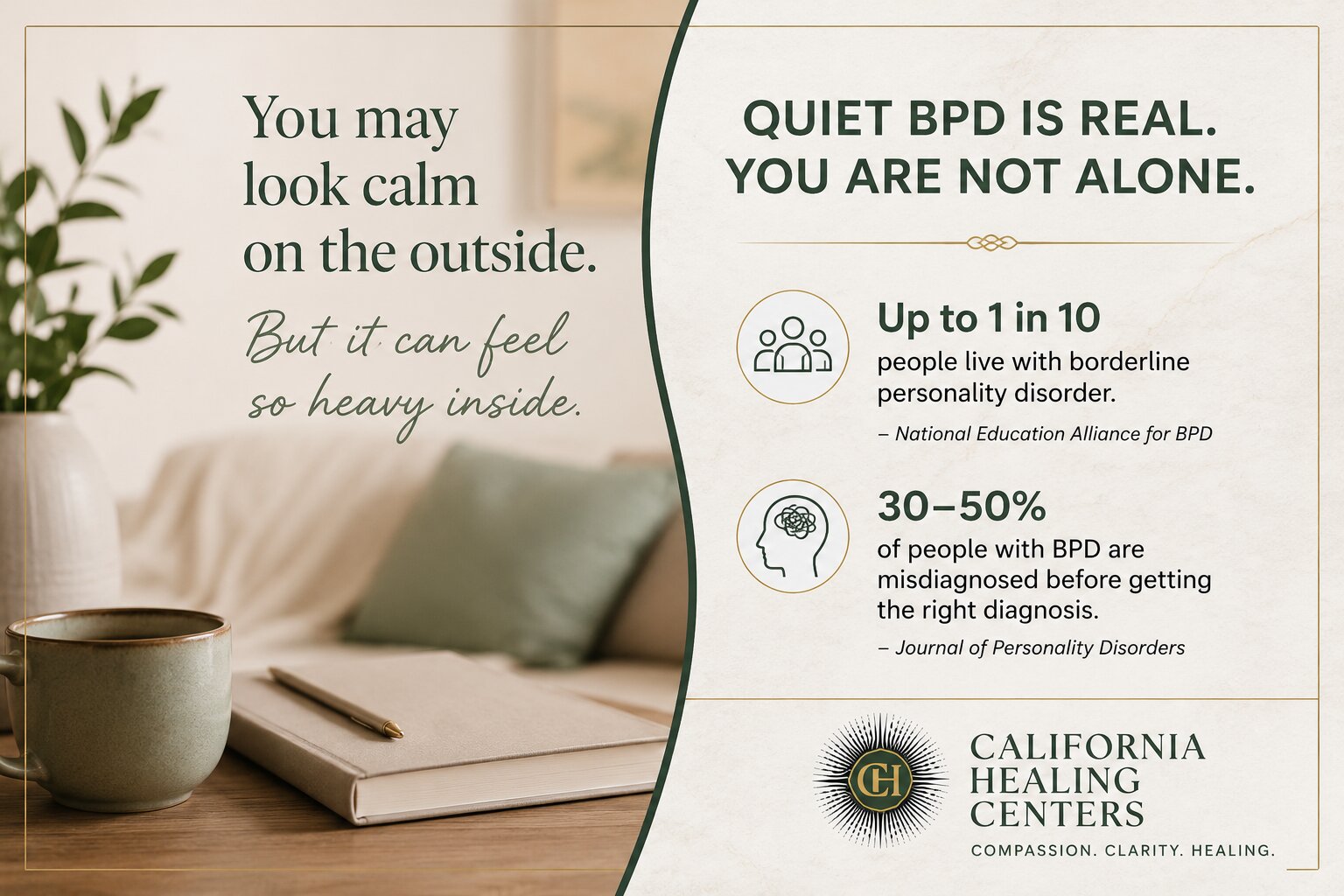
Many individuals spend years receiving treatment for symptoms without anyone recognizing the broader pattern.
Common diagnoses may include:
- Anxiety disorders
- Depression
- Social anxiety
- Perfectionism
- Trauma-related disorders
These conditions may absolutely be present, and they frequently occur alongside borderline personality disorder.
However, when emotional dysregulation, fear of abandonment, unstable self-image, and relationship patterns are viewed separately rather than together, the underlying diagnosis can be overlooked.
Because many people with quiet presentations actively avoid drawing attention to themselves, they may also minimize their own symptoms during treatment.
Statements such as:
- “Other people have it worse.”
- “I’m probably overreacting.”
- “I just need to try harder.”
can delay appropriate evaluation and care.
An accurate assessment looks beyond individual symptoms to understand how emotional regulation, identity, attachment, and relationships interact over time.
The Hidden Cost of Holding Everything Together
Many people become exceptionally good at functioning while suffering.
They continue working.
They care for their families.
They meet obligations.
Over time, however, constantly suppressing emotional pain can become exhausting.
Some individuals experience:
- Chronic emotional exhaustion
- Increasing isolation
- Difficulty trusting relationships
- Persistent shame
- Depression
- Self-harming behaviors
- Thoughts that life will never feel easier
The effort required to appear stable often comes at the expense of genuine emotional well-being.
Functioning is not the same as healing.
How DBT and Residential Treatment Help
Borderline personality disorder is highly treatable.
One of the most effective evidence-based approaches is Dialectical Behavior Therapy (DBT), which helps individuals develop practical skills for managing intense emotions and building healthier relationships.
DBT focuses on four primary skill areas:
- Emotion regulation
- Distress tolerance
- Mindfulness
- Interpersonal effectiveness
Rather than asking people to suppress emotions, DBT teaches them how to experience emotions without becoming overwhelmed by them.
Many treatment plans also incorporate:
- Individual psychotherapy
- Trauma-informed care
- Cognitive Behavioral Therapy (CBT)
- Medication management when appropriate
- Family involvement
- Relapse prevention and aftercare planning
For individuals whose symptoms significantly impair relationships, work, or daily functioning, residential treatment can provide a level of consistency that outpatient therapy may not. At California Healing Centers, clients receive daily DBT, trauma-informed therapy, psychiatric support, and structured therapeutic opportunities throughout the day. This immersive approach allows emotional patterns to be recognized in real time while providing repeated practice using new coping skills within a safe, supportive environment.
What Treatment Looks Like at California Healing Centers
California Healing Centers provides individualized residential treatment for adults experiencing borderline personality disorder and other complex mental health conditions.
Treatment begins with a comprehensive assessment and is tailored to each person’s unique needs.
Depending on clinical recommendations, care may include:
- Comprehensive psychiatric evaluation
- Individual psychotherapy
- Dialectical Behavior Therapy (DBT)
- Cognitive Behavioral Therapy (CBT)
- Trauma-informed treatment
- Group therapy
- Medication management when appropriate
- Mindfulness-based interventions
- Family support when clinically appropriate
- Individualized discharge and aftercare planning
Located in Rancho Santa Fe in San Diego County, California Healing Centers offers a private residential setting where clients can step away from the demands of daily life and focus fully on recovery with consistent clinical support.
You Don’t Have to Keep Carrying It Alone
Many people living with quiet presentations of borderline personality disorder become experts at hiding emotional pain.
Others may never realize how much effort it takes simply to make it through an ordinary day.
If you’ve spent years believing your distress isn’t “serious enough” because you continue functioning, it’s worth remembering that suffering doesn’t become less real simply because it’s invisible.
Healing begins when emotional struggles no longer have to stay hidden.
With evidence-based treatment, compassionate clinical support, and effective skills for emotional regulation, it is possible to build a life where stability comes from within—not from constantly pretending everything is okay.
Frequently Asked Questions
What is quiet BPD?
Quiet BPD is an informal term used to describe a presentation of borderline personality disorder in which emotional distress is primarily directed inward. Instead of expressing anger or emotional pain outwardly, individuals often experience intense self-criticism, shame, withdrawal, and internal emotional suffering.
How is it different from regular borderline personality disorder?
The underlying condition is the same. The primary difference is how emotional dysregulation is expressed. Some people externalize distress through visible interpersonal conflict or impulsive behaviors, while others internalize those same emotions through self-blame, masking, and withdrawal.
Can it be treated?
Yes. Borderline personality disorder responds well to evidence-based treatments, particularly Dialectical Behavior Therapy (DBT). Many individuals also benefit from trauma-informed therapy, psychiatric care, and comprehensive treatment plans tailored to their specific needs.
Why is it often missed?
Because many people continue working, maintaining relationships, and avoiding outward conflict, emotional distress may remain hidden from others. Symptoms are also frequently mistaken for anxiety, depression, or perfectionism unless a comprehensive mental health evaluation is performed.