If most people hear the phrase “workers’ compensation,” they think of physical injuries. A fall at work. A back injury from lifting. A car accident while on the job.
What many people do not realize is that some work-related mental health conditions may also lead people to explore workers’ compensation benefits, especially when trauma, acute stress, or PTSD are involved.
This is an area many people misunderstand. Some assume mental health treatment could never be connected to a workplace event. Others assume they only have one option, such as taking unpaid leave or trying to manage symptoms on their own.
In some situations, there may be more support available than people realize.
At California Healing Centers, we work with individuals and families who need a higher level of care for serious mental health concerns, including trauma, anxiety, depression, and PTSD. For some people, part of the conversation may include understanding what type of insurance or benefits may apply to treatment.
What People Often Miss About Workers’ Compensation And Mental Health
Workers’ compensation is commonly associated with physical harm, but workplace experiences can affect mental health in serious ways too.
A person may witness a traumatic incident at work. Someone in a high-stress profession may develop symptoms after repeated exposure to disturbing or dangerous situations. In other cases, a work-related injury can lead to emotional distress, anxiety, depression, or trauma symptoms that interfere with daily life.
When mental health symptoms begin affecting sleep, concentration, relationships, safety, or the ability to function normally, it may be time to look at treatment options more closely.
That does not mean every work-related mental health concern automatically falls under workers’ compensation. It does mean the topic is worth exploring instead of dismissing it outright.
Mental Health Conditions That May Be Part Of The Conversation
Every case is different, but some of the most common concerns people ask about include:
- Post-traumatic stress disorder (PTSD)
- Acute stress reactions after a workplace incident
- Anxiety related to a traumatic event
- Depression that develops after a severe workplace experience
- Trauma symptoms connected to first responder, medical, industrial, or high-risk work environments
For some individuals, these symptoms are temporary and improve with outpatient support. For others, symptoms become severe enough to require structured, immersive care in a residential setting.
That is often the point where families start asking bigger questions:
- What kind of treatment is needed?
- How long will recovery take?
- What benefits or coverage options are available?
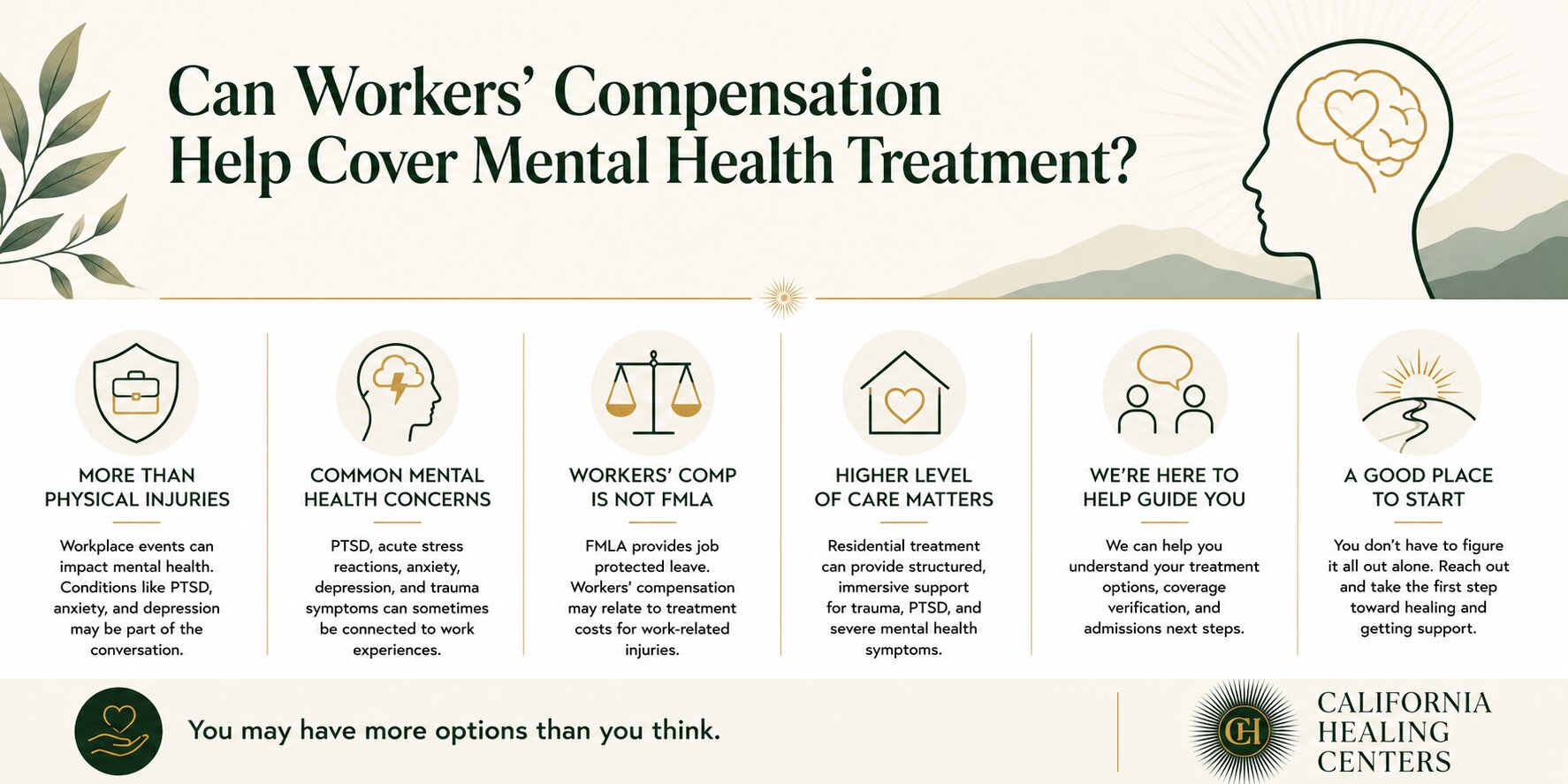
Workers’ Compensation Is Not The Same as FMLA
This is one of the biggest points of confusion.
FMLA is generally about protected leave from work. It may help someone step away from their job temporarily without losing their position, assuming they qualify.
Workers’ compensation is a different type of benefit framework. In some situations, it may relate to treatment costs and work-related injury support.
People often hear about FMLA first, so they assume leave is their only path. But depending on the situation, it may be worth asking whether additional benefits should also be reviewed.
That conversation usually should start with the employer, HR department, case manager, benefits representative, or another qualified professional who can explain what applies in a specific case.
Why This Topic Matters For Families Seeking Treatment
When someone is dealing with trauma, PTSD, severe anxiety, or another serious mental health condition, the last thing they need is more confusion.
Families are often trying to make urgent decisions while also dealing with fear, exhaustion, and uncertainty. They may be wondering how to get help quickly, whether treatment can be covered, and what kind of documentation is needed.
Even learning that workers’ compensation may be worth looking into can be helpful. It gives people another question to ask. Another path to explore. Another possibility besides delaying care.
The important thing is not to self-diagnose coverage or rule yourself out too early.
When A Higher Level Of Care May Be Necessary
Not every work-related mental health concern requires residential treatment. But when symptoms become more serious, a higher level of care may be the safest and most effective next step.
That may be especially important when a person is experiencing:
- Ongoing panic, fear, or emotional dysregulation
- Intrusive memories or trauma triggers
- Severe anxiety or depressive symptoms
- Difficulty functioning at work or at home
- Sleep disruption, isolation, or burnout that continues to worsen
- A decline in physical health, relationships, or daily stability
Residential mental health treatment offers a more structured environment where clients can step away from the pressures of everyday life and focus fully on healing.
Our residential program is designed for individuals who need comprehensive support in a private, comfortable setting. Care may include psychiatric evaluation, medication management, trauma-focused therapies, holistic support, and individualized treatment planning based on the person’s needs.
How California Healing Centers Supports The Process
Our role is not to provide legal advice or determine benefits eligibility.
Our role is to help people access appropriate mental health treatment and understand their next steps from an admissions and coverage standpoint.
When someone reaches out to our team, we can help clarify:
- what level of care may be appropriate
- whether residential treatment may be a fit
- what insurance information should be reviewed
- how to begin the admissions conversation
If you are exploring treatment after a work-related mental health event, it may be helpful to verify your coverage and speak with the appropriate benefits or HR contact about your situation.
You do not have to figure everything out before asking for help.
A Good Place To Start
If you or a loved one is struggling with PTSD, trauma, anxiety, or another serious mental health condition connected to a workplace experience, the best first step is often a simple one: start the conversation.
Ask what type of treatment is clinically appropriate.
Ask what benefits may be available.
Ask whether residential care should be considered.
Many people wait too long because they assume they will not qualify for help or that treatment will be out of reach. In reality, there may be more options than they think.
If you are ready to explore treatment, California Healing Centers can help you take the next step.
Contact our team to discuss your situation and learn more about residential mental health treatment. Verify your insurance or contact us directly.