
The first thing he noticed wasn’t the silence. It was the relief of not having to pretend anymore.
For months, maybe years, he’d been surviving by staying busy enough to avoid himself. Work emails. Grocery runs. Half-finished conversations. Smiling at the right moments. Saying “I’m just tired” instead of admitting he hadn’t really felt like himself in a long time.
Then one night, sitting in the glow of his kitchen light with dishes still in the sink, something in him gave out quietly.
Not dramatically.
Just honestly.
He realized he couldn’t keep carrying depression alone and hoping it would somehow loosen its grip on its own.
That moment happens to more people than you think. Especially people searching late at night for answers about live-in mental health support and wondering what it’s actually like once you get there.
Because most people aren’t just looking for information.
They’re looking for relief from the fear in their own head.
The Fear Before Treatment Is Often the Hardest Part
Depression has a way of making everything feel heavier than it is.
Even making a phone call can feel impossible.
A lot of people imagine inpatient care as cold or impersonal. They picture hospital hallways, being watched constantly, or feeling trapped. Some worry they’ll lose their identity completely. Others worry they’ll walk in and realize they’re “not sick enough” to deserve help.
That internal debate can drag on for months.
Especially for people who are still technically functioning.
They’re showing up to work. Answering texts eventually. Paying bills. Maybe even taking care of other people while privately falling apart themselves.
But depression doesn’t always look dramatic from the outside.
Sometimes it looks like emotional exhaustion hidden under productivity.
Sometimes it looks like canceling plans because pretending to be okay feels physically tiring.
Sometimes it looks like lying in bed after work staring at the ceiling because your brain feels too heavy to move.
For many people considering inpatient mental health San Diego treatment, the scariest part isn’t treatment itself.
It’s admitting they can’t keep living this way.
The First Few Days Feel Strange — And That’s Normal
Nobody really talks about how emotionally disorienting the beginning can feel.
Your nervous system has been stuck in survival mode for so long that slowing down almost feels unsafe at first.
Some people sleep constantly those first few days. Others can’t sleep at all because their brain finally has enough quiet to start catching up emotionally.
You might cry unexpectedly.
Or feel numb and wonder why everyone else seems emotional while you can barely feel anything.
That doesn’t mean treatment isn’t working.
It means your brain and body are decompressing.
One alumni member described it this way:
“It felt like my mind had been holding its breath for years.”
And honestly, that’s what depression often does. It forces people into a constant state of emotional tension. Even simple decisions start feeling overwhelming. Basic tasks feel strangely difficult. Conversations feel draining.
Then suddenly you’re somewhere structured. Meals happen regularly. There are people checking in on you. You don’t have to fake being okay every second of the day.
That adjustment can feel relieving.
It can also feel deeply uncomfortable.
Both experiences can exist together.
You Don’t Have to Hit Rock Bottom to Need More Support
A lot of people delay getting help because they think someone else deserves it more.
They tell themselves:
- “I’m not suicidal enough.”
- “Other people have real problems.”
- “I should be able to handle this.”
- “Maybe I’m just lazy.”
- “I’m still functioning, so maybe I’m fine.”
But functioning and suffering are not opposites.
People can look completely put together while privately feeling emotionally hollow.
Depression often shrinks life slowly. Quietly.
You stop returning calls.
You stop enjoying things you used to care about.
You isolate more.
You feel disconnected from yourself.
You move through life like you’re underwater.
And because it happens gradually, many people don’t realize how bad things have become until they’re emotionally exhausted.
Seeking inpatient mental health San Diego care doesn’t mean you’ve failed.
For many people, it’s the first honest thing they’ve done for themselves in a very long time.
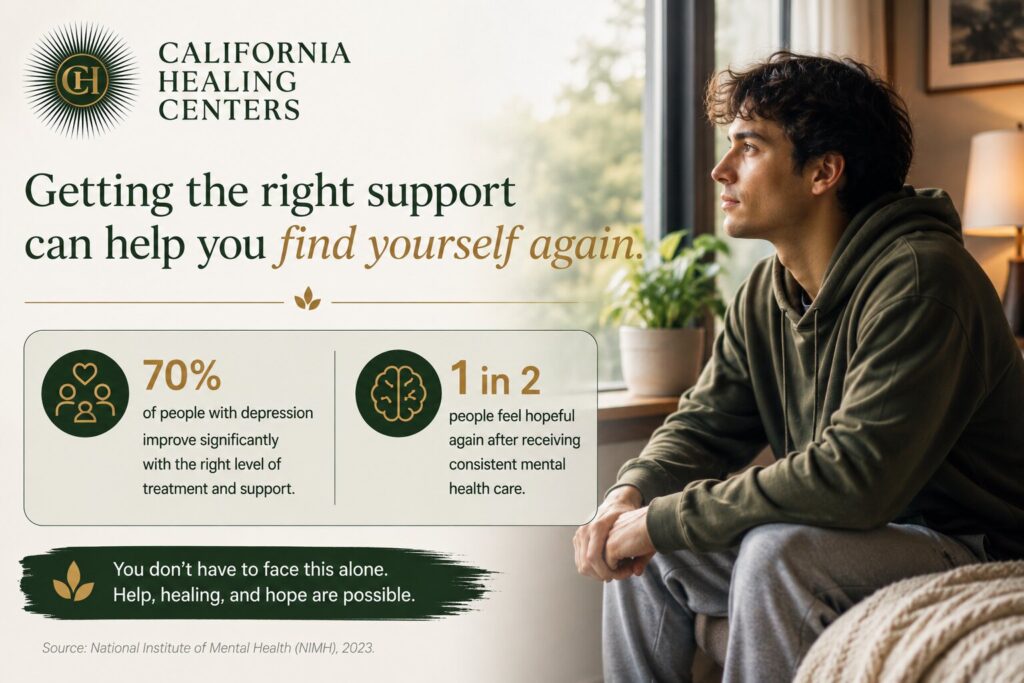
Being Around Other People Changes Something
This surprises almost everyone.
People walk into treatment expecting therapy. Structure. Rules.
What they don’t expect is how powerful it feels to be around people who genuinely understand emotional pain without needing an explanation.
Depression is incredibly isolating. It convinces people they’re different. Broken. Too complicated to relate to anyone else.
Then someone in group therapy says something painfully familiar and suddenly that isolation cracks open a little.
Not because everyone has the same story.
But because emotional suffering recognizes itself.
There’s something deeply healing about not having to translate your pain into something more acceptable.
One person described it like this:
“I stopped feeling like an alien for the first time in years.”
And honestly, that sense of connection matters more than people realize.
Healing rarely happens in complete isolation.
It’s Not Constant Emotional Intensity All Day
A lot of people imagine treatment as endless crying and deep emotional conversations from morning until night.
The reality is usually more balanced.
There are therapy sessions, yes. Group conversations. Mental health support. Psychiatric care if needed. Structure and accountability.
But there are also ordinary human moments.
Coffee in the morning.
Awkward jokes during group.
Quiet walks outside.
Conversations at lunch.
Music.
Rest.
People laugh more than outsiders expect.
Not because depression is funny, but because human beings naturally start reconnecting once they feel emotionally safe enough to lower their guard.
That balance matters.
Especially for people whose nervous systems have been overloaded for a long time.
For many individuals in inpatient mental health San Diego programs, part of healing comes from rediscovering small moments of normalcy again.
Not performing happiness.
Just slowly reconnecting to being human.
Relapsing Emotionally Doesn’t Erase Your Progress
This part matters deeply for alumni who feel ashamed they’re struggling again after previously doing better.
Mental health recovery is rarely linear.
People isolate again.
They stop using coping skills.
They withdraw from support.
They numb out emotionally.
They lose momentum.
That doesn’t mean everything they learned disappeared.
And it doesn’t mean they failed.
A lot of people quietly return to treatment feeling embarrassed, convinced they “shouldn’t need help again.”
But healing isn’t a straight staircase upward.
Sometimes it’s more like learning how to come back to yourself repeatedly after difficult seasons.
There’s courage in returning.
Real courage.
Especially after depression convinces you nobody wants to see you struggling again.
The Goal Isn’t to Become Someone Else
This is important because many people are secretly afraid treatment will erase who they are.
They worry they’ll come back numb. Flattened. Different.
But good mental health treatment isn’t about turning you into a new person.
It’s about helping you reconnect with the version of yourself depression buried underneath exhaustion and hopelessness.
The version that can laugh naturally.
Feel connected again.
Wake up without immediate dread.
Experience moments of peace without guilt.
Sometimes people expect one giant breakthrough moment in treatment.
More often, healing happens quietly.
You realize you slept through the night.
You notice your chest doesn’t feel as tight.
You laugh without forcing it.
You start imagining a future again, even cautiously.
Tiny moments.
But tiny moments matter when you’ve been emotionally drowning.
FAQ: What People Usually Want to Know Before Going
What is inpatient mental health treatment actually like?
Most programs combine therapy, structured daily schedules, emotional support, psychiatric care, wellness activities, and time for rest. The environment is usually far more human and supportive than people expect.
Is inpatient treatment only for severe depression?
Not necessarily. Many people enter treatment because depression has become difficult to manage alone, even if they’re still functioning outwardly. You don’t have to wait until life completely falls apart to deserve support.
How long do people usually stay?
Length of stay varies depending on individual needs, symptoms, and treatment goals. Some people need shorter stabilization periods, while others benefit from longer-term support and structure.
Will I lose my freedom in treatment?
Most residential mental health programs are designed to create safety and stability — not punishment. While there is structure and accountability, the goal is to help people feel supported, not controlled.
What if I’m nervous about opening up?
That’s completely normal. Many people arrive scared, guarded, emotionally numb, or skeptical. Nobody expects instant vulnerability. Trust usually builds slowly over time.
Can I return to treatment if I’ve been before?
Absolutely. Many alumni return for additional support during difficult seasons. Needing help again does not erase previous growth or progress.
Does inpatient mental health San Diego treatment include medication support?
Some programs include psychiatric evaluations and medication management when appropriate. Treatment plans are usually individualized based on each person’s needs and comfort level.
What should I bring emotionally into treatment?
Honestly? Just yourself.
You don’t need to arrive hopeful, motivated, or completely ready. A lot of people show up exhausted and unsure what comes next.
That’s enough to begin.
Depression can make the future feel incredibly small. Like your life has narrowed down to survival mode and isolation.
But sometimes healing starts with one honest decision:
I can’t keep carrying this alone anymore.
If you’re considering more structured support, California Healing Centers offers compassionate residential treatment program services for individuals navigating depression and other mental health challenges.
Call (858) 330-4769 or explore our residential treatment program services to learn more about our residential treatment program services in California.