For years, David believed he had already given treatment a fair chance.
He wasn’t someone who refused help.
In fact, he did exactly what people told him to do.
When anxiety began affecting his sleep, his family doctor prescribed medication. David filled the prescription the same day, took it exactly as directed, and hoped life would finally become easier.
Instead, the first few weeks felt discouraging.
He felt tired during the day. His stomach bothered him. The anxiety improved a little, but not enough to make the side effects seem worthwhile.
At his next appointment, there wasn’t much discussion.
The prescription was renewed.
David left wondering if this was simply as good as life was going to get.
A month later, he stopped taking the medication altogether.
Years passed before he considered treatment again.
Not because he felt better.
Because he had convinced himself medication simply didn’t work.
If you’ve searched, “Who actually adjusts psych meds near me—my family doctor or a psychiatrist?” there’s a good chance your story shares something with David’s.
You’re probably not looking for your first prescription.
You’re wondering whether your previous experience could have been different.
At California Healing Centers, we’ve met many people who believed treatment had failed them when, in reality, they had never experienced consistent, individualized follow-up. Learning more about our medication management services can help you understand why adjusting medication is often just as important as prescribing it in the first place.
The First Prescription Is Rarely the End of the Story
One of the biggest misconceptions about psychiatric medication is that it should produce immediate, obvious results.
People often expect the process to work like taking antibiotics.
You receive a prescription.
You finish the medication.
The problem goes away.
Mental health treatment rarely follows that path.
Finding the right medication can take time.
Finding the right dosage can take time.
Learning how your body responds can take time.
Sometimes the medication itself is appropriate, but the dosage needs adjustment.
Sometimes the dosage is correct, but the medication is not the best fit.
Sometimes another medical condition, sleep problem, or stressful life event changes how well treatment works.
None of those situations automatically mean medication has failed.
They usually mean the treatment plan needs continued attention.
That is why medication management exists.
Family Doctors Play an Important Role
Many people assume family doctors should never prescribe mental health medication.
That simply isn’t true.
Primary care physicians successfully help many individuals experiencing anxiety, depression, and other common mental health concerns.
They understand your overall health history.
They know your medications.
They often recognize mental health concerns before anyone else does.
For many people, beginning treatment with a primary care provider is completely appropriate.
The important thing is recognizing when additional expertise might be beneficial.
Just as your family doctor may refer you to a cardiologist for a complex heart condition, they may recommend working with a psychiatrist or another mental health specialist when symptoms become more complicated or difficult to manage.
That referral isn’t a failure.
It’s simply matching the level of care to your needs.
The Better Question Is Often: Who Is Monitoring Your Progress?
Many people spend hours trying to answer one question:
“Who should prescribe my medication?”
As clinicians, we often encourage a different question.
“Who is carefully following my progress after I begin taking it?”
Prescribing medication is only one part of treatment.
Monitoring is where many of the most important decisions happen.
During follow-up visits, providers may discuss:
- Whether symptoms are improving.
- Changes in sleep.
- Appetite.
- Concentration.
- Mood.
- Energy levels.
- Side effects.
- Daily functioning.
- Stressful life events.
- Whether the dosage should change.
- Whether another medication may provide better results.
Those conversations matter because your mental health isn’t static.
Your treatment shouldn’t be either.
When people search for information about psychiatrist vs primary care meds, they often discover that the difference isn’t simply who writes the prescription. The biggest difference is frequently the level of specialized monitoring, especially when symptoms change or medications require careful adjustments.
If Medication Didn’t Help Before, There May Be More to the Story
One sentence comes up repeatedly during initial appointments.
“I already tried medication.”
That statement deserves respect.
But it also deserves more questions.
Which medication?
For how long?
At what dose?
What improved?
What became worse?
Were follow-up appointments scheduled?
Were adjustments ever discussed?
Did someone explain what to expect during the first few weeks?
Without those answers, it’s difficult to know whether medication truly failed—or whether the process simply ended before the right treatment plan had a chance to develop.
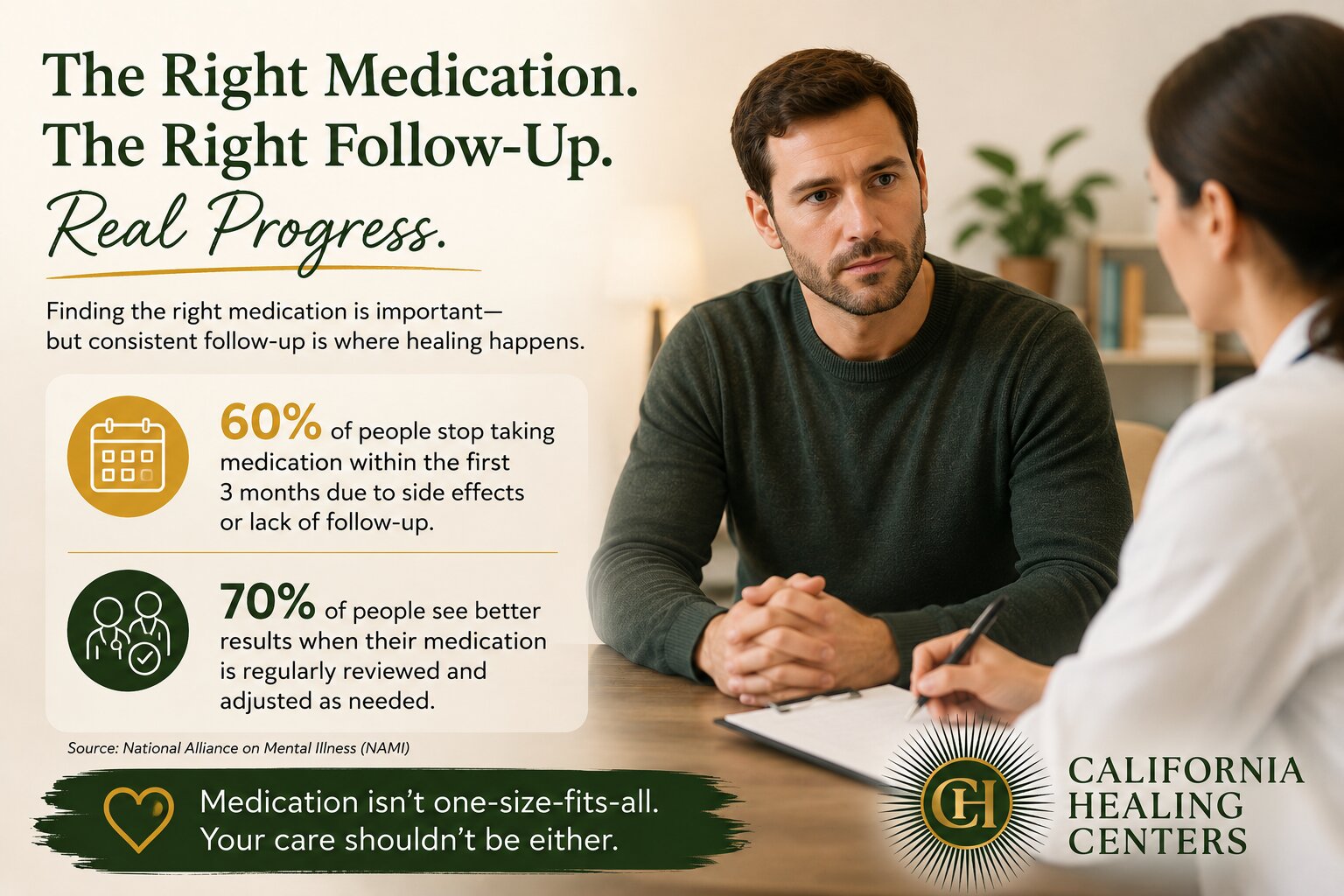
Mental health treatment is rarely successful because of one perfect prescription.
It succeeds because providers continue learning from your experiences and making thoughtful adjustments along the way.
Medication Is Only One Piece of Recovery
Medication can be incredibly valuable.
It can also have limitations.
No prescription teaches coping skills.
No prescription repairs strained relationships.
No prescription processes grief, trauma, or years of emotional pain.
That is why comprehensive care often combines medication with therapy and other supportive services.
For some people, approaches like Internal Family Systems therapy help them better understand long-standing emotional patterns. Others discover encouragement through group therapy, where hearing another person’s story reminds them they aren’t facing these challenges alone.
Treatment works best when each part supports the others.
Medication helps create stability.
Therapy helps create understanding.
Together, they often create lasting change.
Good Medication Management Is Built on Conversation
Imagine buying a pair of shoes without ever trying them on.
If they hurt after the first day, would you conclude that shoes simply aren’t for you?
Probably not.
You’d assume you needed a different size or a different style.
Mental health medication works similarly.
The first option isn’t always the final option.
The process involves trying, evaluating, adjusting, and learning.
Good providers expect those conversations.
They don’t view them as setbacks.
They view them as part of delivering thoughtful care.
That’s why patients should feel comfortable asking questions such as:
- Why was this medication chosen?
- How long before I notice improvement?
- Which side effects are common?
- Which side effects require immediate attention?
- What happens if this medication isn’t helping?
- When should we consider changing the dosage?
Those questions are not signs of distrust.
They are signs of partnership.
You Deserve More Than Guesswork
Many people continue taking medication for months without knowing whether it’s actually helping.
Others stop suddenly because they assume side effects mean something is wrong.
Neither situation is ideal.
Good medication management removes much of that uncertainty.
Instead of guessing, you receive regular opportunities to discuss your progress.
Instead of wondering whether your symptoms are normal, you have someone helping interpret what you’re experiencing.
Instead of feeling alone, you have a treatment plan that continues evolving with you.
That ongoing relationship often becomes the difference between simply taking medication and actually benefiting from it.
A Previous Disappointment Doesn’t Have to Define Your Future
As clinicians, we’ve met countless people who arrive convinced that treatment cannot help because it didn’t help before.
That skepticism is understandable.
Disappointment leaves a lasting impression.
But one difficult experience should never become the final chapter of your story.
Mental health care continues evolving.
Your circumstances change.
Your symptoms change.
Your needs change.
Sometimes the provider changes.
Sometimes the medication changes.
Sometimes the biggest change is simply having someone who listens carefully enough to recognize when adjustments should be made.
Recovery is rarely built on one prescription.
It is built on trust, communication, thoughtful decision-making, and a willingness to keep refining the plan until it genuinely supports your life.
That possibility is still available to you.
Frequently Asked Questions
Can a family doctor prescribe and adjust mental health medication?
Yes. Many primary care physicians prescribe medications for common mental health conditions such as anxiety and depression. They may also adjust medications when appropriate or refer patients for more specialized care if needed.
When is it better to see a psychiatrist?
A psychiatrist may be beneficial if symptoms are complex, multiple medications have been tried without success, side effects are difficult to manage, or a more detailed psychiatric evaluation is recommended.
Does needing medication adjustments mean the medication failed?
No. Medication adjustments are a normal part of treatment. Finding the right medication and dosage often requires ongoing monitoring and collaboration between you and your provider.
How often should medication be reviewed?
The frequency depends on your symptoms, diagnosis, and treatment plan. Early in treatment, appointments are often scheduled more frequently so your provider can monitor progress and make adjustments if necessary.
Should I stop taking medication if I experience side effects?
Do not stop medication without speaking to the prescribing provider unless you are experiencing a medical emergency. Many side effects improve over time, and your provider can help determine the safest next step.
Can therapy improve medication outcomes?
For many people, yes. Therapy can help address emotional patterns, stress, coping skills, and life challenges that medication alone cannot resolve, making the overall treatment plan more effective.
How do I know if my current medication is working?
Improvement may include better mood, improved sleep, reduced anxiety, increased concentration, or better daily functioning. Regular follow-up appointments help evaluate these changes and determine whether adjustments are needed.
Call (858) 330-4769 or visit our medication management services to learn more about our programs and medication management services San Diego, CA at California Healing Centers.