
The Day I Realized Recovery Didn’t Mean My Anxiety Was Finished

For a long time, I believed recovery had an ending.

I imagined there would be one day when I would wake up and realize anxiety was gone forever.

No more racing thoughts.

No more second-guessing myself.

No more sleepless nights replaying conversations that everyone else had already forgotten.

When I completed treatment, life genuinely became better.

I had healthier routines.

I rebuilt relationships that I thought were permanently damaged.

I learned how to recognize my emotions before they controlled my decisions.

People around me noticed the difference.

They told me I looked happier.

More relaxed.

More like myself.

The strange part was that every now and then, anxiety still found me.

Not the overwhelming anxiety that once controlled every hour of every day.

Something quieter.

A stressful week at work.

A disagreement with someone I loved.

A health scare.

An unexpected financial problem.

Suddenly I would notice old thoughts returning.

“What if I’m slipping backward?”

“What if everything I’ve worked for starts falling apart?”

At first, I felt embarrassed.

After all, wasn’t I supposed to be “better” by now?

If you’ve been in recovery for months or years and still find yourself searching for practical ways to calm anxious thoughts, you’re not alone.

Many long-term alumni quietly experience the same concern.

At California Healing Centers, people often discover that recovery isn’t about eliminating anxiety forever. It’s about building healthier ways to respond when anxiety appears. Learning more about CBT therapy helped me understand that healing isn’t measured by never struggling again. It’s measured by how differently I respond when I do.

That shift changed everything.

Recovery Doesn’t Mean Life Stops Being Difficult

One lesson surprised me more than any other.

Treatment changes how you respond to life.

It doesn’t prevent life from happening.

People still lose jobs.

Relationships still become complicated.

Unexpected illnesses still happen.

Stress still appears.

The difference is that recovery gives you better tools than the ones you had before.

Early in my recovery, I secretly believed every anxious day meant I was failing.

Eventually, I realized anxiety wasn’t returning because I had done something wrong.

It was returning because I was human.

There is a tremendous difference between experiencing anxiety and being controlled by anxiety.

That realization removed a tremendous amount of shame.

I Had Mistaken Stability for Permanent Happiness

For a while, I kept waiting to feel permanently confident.

Permanently calm.

Permanently certain.

Those days never arrived.

Instead, something much better happened.

I became more resilient.

Stressful situations still affected me.

They simply stopped defining me.

I recovered faster.

I recognized anxious thinking sooner.

I reached out before problems became overwhelming.

Recovery wasn’t about becoming emotionally untouchable.

It was about becoming emotionally flexible.

That’s a very different goal.

The Skills That Helped Me Most Were Surprisingly Simple

When anxiety first controlled my life, I assumed I needed dramatic solutions.

I thought healing would come through one unforgettable breakthrough.

Instead, the biggest changes came from ordinary habits repeated consistently.

Many of the cognitive behavioral techniques I still rely on today seemed almost too simple at first.

They included:

  • Writing anxious thoughts instead of mentally replaying them.
  • Looking for evidence instead of assuming the worst.
  • Asking whether I was predicting the future rather than responding to facts.
  • Breaking overwhelming responsibilities into manageable pieces.
  • Practicing realistic thinking instead of demanding certainty.
  • Replacing perfection with progress.
  • Recognizing physical signs of anxiety before they became overwhelming.

None of those skills magically erased anxiety.

They simply prevented anxiety from becoming the loudest voice in my life.

That difference became incredibly powerful over time.

One Question Quietly Changed My Thinking

If I had to choose one exercise that transformed my relationship with anxiety, it would be this:

“What would I tell someone I love if they said this about themselves?”

It’s amazing how differently we speak to ourselves.

If a friend forgot one deadline, I wouldn’t call them a failure.

If my partner felt nervous before an important meeting, I wouldn’t tell them they were weak.

Yet I said those things to myself constantly.

Learning to recognize that double standard helped me interrupt anxious thinking before it gained momentum.

Compassion wasn’t something I automatically felt.

It became something I practiced.
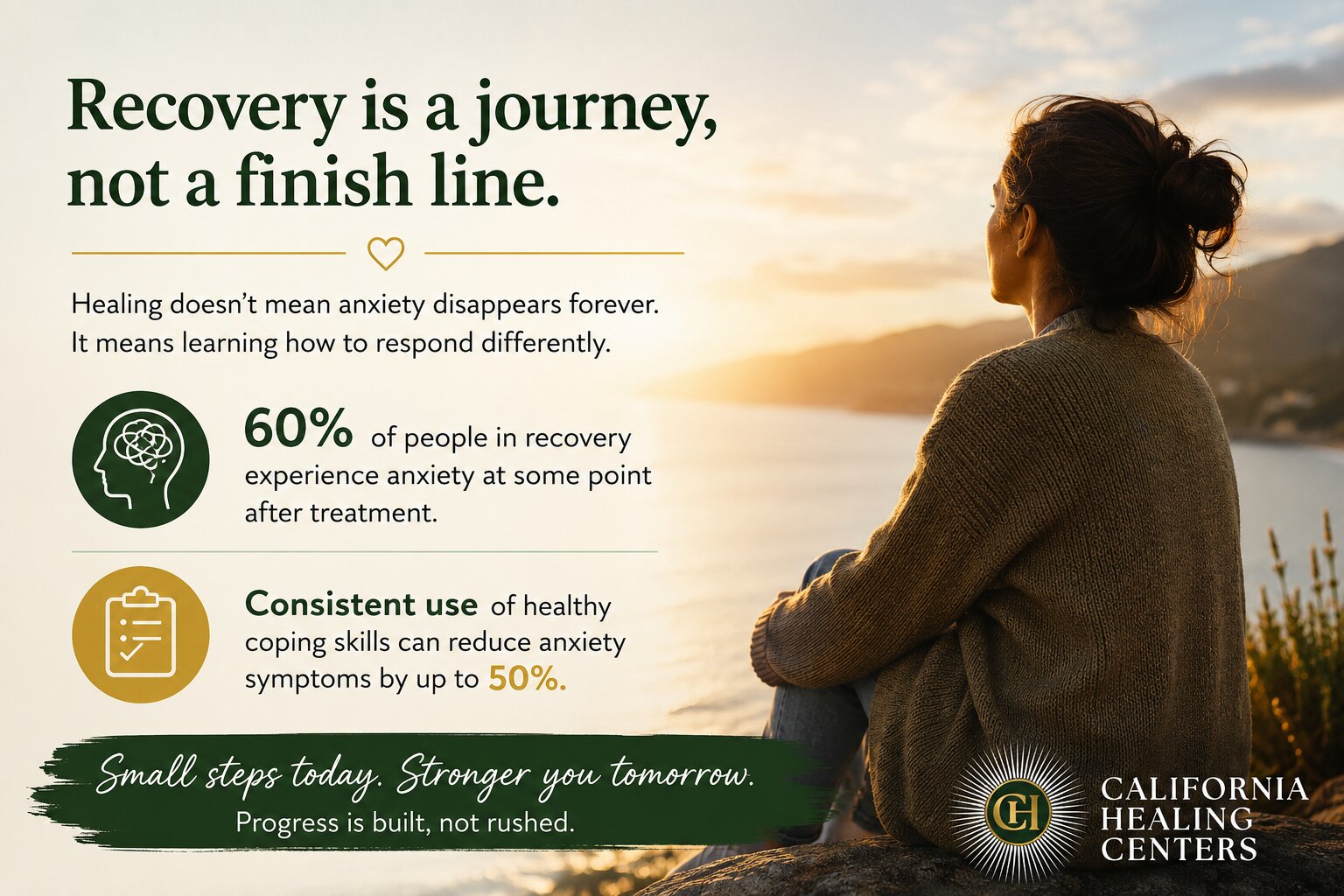
Practical Ways to Manage Anxiety After Recovery

Anxiety Is Like an Overprotective Smoke Alarm

One metaphor stayed with me long after therapy ended.

Anxiety often behaves like a smoke alarm.

Smoke alarms serve an important purpose.

They warn us about genuine danger.

But sometimes they become overly sensitive.

Burning toast can sound exactly like a house fire.

Anxiety often works the same way.

It reacts to uncertainty.

It reacts to possibility.

It reacts to imagined threats as though they are already happening.

The goal isn’t removing the smoke alarm.

The goal is learning how to recognize when it’s responding accurately and when it’s simply reacting too strongly.

That perspective completely changed how I viewed anxious thoughts.

Instead of immediately believing them, I became curious about them.

Curiosity gave me choices.

Long-Term Recovery Can Feel Surprisingly Lonely

One thing nobody warned me about was how quiet recovery eventually becomes.

Early on, everyone asks how you’re doing.

Family checks in.

Friends celebrate milestones.

Therapists help you build routines.

Then life returns to normal.

People assume you’ve graduated from needing support.

Sometimes you begin believing that too.

I slowly stopped using many of the skills that had helped me.

Not because they stopped working.

Because I assumed I no longer needed them.

Months later, anxiety quietly returned.

Not because recovery disappeared.

Because I stopped maintaining it.

Recovery isn’t something you finish.

It’s something you continue practicing.

Just like physical fitness.

Just like healthy relationships.

Just like learning a musical instrument.

Consistency matters more than intensity.

Going Back for Support Didn’t Erase My Progress

One of my biggest fears was returning to therapy.

I worried it meant I had failed.

Eventually, I realized something important.

Professional athletes still have coaches.

Successful musicians still practice.

Doctors continue learning throughout their careers.

Growth doesn’t stop because you’ve already made progress.

Many long-term alumni reconnect with therapy not because they’re in crisis, but because they want to strengthen the life they’ve already built.

Some people find renewed encouragement through group therapy, where they reconnect with others who understand the ongoing work of recovery. Others discover additional insight through Internal Family Systems therapy, helping them better understand emotional patterns that continue showing up years after treatment.

Returning for support wasn’t moving backward.

It was protecting everything I’d already gained.

Healing Looks Different Than I Expected

Looking back, I realize I misunderstood recovery.

I thought success meant never struggling.

Now I define success differently.

Success is recognizing anxious thoughts before they become overwhelming.

Success is asking for help sooner.

Success is sleeping through more nights than not.

Success is enjoying dinner with friends without mentally rehearsing tomorrow’s worries.

Success is recovering from stressful moments in hours instead of weeks.

Healing rarely arrives with fireworks.

Most of the time, it quietly appears through hundreds of ordinary moments that become easier than they once were.

One day you realize something remarkable.

You spent an entire afternoon living your life instead of managing your anxiety.

That’s recovery.

Not perfection.

Freedom.

Frequently Asked Questions

Is it normal for anxiety to return after treatment?

Yes. Anxiety can return during stressful periods even after successful treatment. This doesn’t necessarily mean you’ve lost your progress. Many people simply need to reconnect with healthy coping skills or seek additional support during challenging seasons.

What are some practical techniques for managing anxiety every day?

Helpful strategies often include identifying anxious thoughts, examining the evidence behind them, practicing balanced thinking, breaking large tasks into smaller steps, journaling, and using relaxation techniques consistently.

Can CBT skills still help years after treatment?

Absolutely. CBT-based strategies are designed to become lifelong tools. Many people continue using them years after therapy because they help manage everyday stress and prevent anxious thinking from becoming overwhelming.

Should I return to therapy if I’m struggling again?

Returning to therapy can be a proactive choice rather than a sign of failure. Many people benefit from occasional support to strengthen coping skills, navigate life changes, or prevent symptoms from becoming more severe.

Can group therapy still benefit someone who has been in recovery for years?

Yes. Group therapy can provide encouragement, accountability, and the reminder that recovery is an ongoing journey shared by many people, not something you have to navigate alone.

How do I know if anxiety is becoming a problem again?

If anxiety begins affecting your sleep, relationships, work, daily functioning, or quality of life, or if you find yourself avoiding important activities because of fear or worry, it may be time to seek additional support.

Can recovery continue even if I still have anxious thoughts?

Yes. Recovery isn’t defined by the absence of anxiety. It’s defined by developing healthier ways to respond so anxious thoughts no longer control your decisions or your future.

Call (858) 330-4769 or visit our CBT therapy services to learn more about our mental health therapy and CBT services San Diego, CA at California Healing Centers.

Accessibility Toolbar

The Day I Realized Recovery Didn't Mean My Anxiety Was Finished

For a long time, I believed recovery had an ending.

I imagined there would be one day when I would wake up and realize anxiety was gone forever.

No more racing thoughts.

No more second-guessing myself.

No more sleepless nights replaying conversations that everyone else had already forgotten.

When I completed treatment, life genuinely became better.

I had healthier routines.

I rebuilt relationships that I thought were permanently damaged.

I learned how to recognize my emotions before they controlled my decisions.

People around me noticed the difference.

They told me I looked happier.

More relaxed.

More like myself.

The strange part was that every now and then, anxiety still found me.

Not the overwhelming anxiety that once controlled every hour of every day.

Something quieter.

A stressful week at work.

A disagreement with someone I loved.

A health scare.

An unexpected financial problem.

Suddenly I would notice old thoughts returning.

"What if I'm slipping backward?"

"What if everything I've worked for starts falling apart?"

At first, I felt embarrassed.

After all, wasn't I supposed to be "better" by now?

If you've been in recovery for months or years and still find yourself searching for practical ways to calm anxious thoughts, you're not alone.

Many long-term alumni quietly experience the same concern.

At California Healing Centers, people often discover that recovery isn't about eliminating anxiety forever. It's about building healthier ways to respond when anxiety appears. Learning more about CBT therapy helped me understand that healing isn't measured by never struggling again. It's measured by how differently I respond when I do.

That shift changed everything.

Recovery Doesn't Mean Life Stops Being Difficult

One lesson surprised me more than any other.

Treatment changes how you respond to life.

It doesn't prevent life from happening.

People still lose jobs.

Relationships still become complicated.

Unexpected illnesses still happen.

Stress still appears.

The difference is that recovery gives you better tools than the ones you had before.

Early in my recovery, I secretly believed every anxious day meant I was failing.

Eventually, I realized anxiety wasn't returning because I had done something wrong.

It was returning because I was human.

There is a tremendous difference between experiencing anxiety and being controlled by anxiety.

That realization removed a tremendous amount of shame.

I Had Mistaken Stability for Permanent Happiness

For a while, I kept waiting to feel permanently confident.

Permanently calm.

Permanently certain.

Those days never arrived.

Instead, something much better happened.

I became more resilient.

Stressful situations still affected me.

They simply stopped defining me.

I recovered faster.

I recognized anxious thinking sooner.

I reached out before problems became overwhelming.

Recovery wasn't about becoming emotionally untouchable.

It was about becoming emotionally flexible.

That's a very different goal.

The Skills That Helped Me Most Were Surprisingly Simple

When anxiety first controlled my life, I assumed I needed dramatic solutions.

I thought healing would come through one unforgettable breakthrough.

Instead, the biggest changes came from ordinary habits repeated consistently.

Many of the cognitive behavioral techniques I still rely on today seemed almost too simple at first.

They included:

  • Writing anxious thoughts instead of mentally replaying them.
  • Looking for evidence instead of assuming the worst.
  • Asking whether I was predicting the future rather than responding to facts.
  • Breaking overwhelming responsibilities into manageable pieces.
  • Practicing realistic thinking instead of demanding certainty.
  • Replacing perfection with progress.
  • Recognizing physical signs of anxiety before they became overwhelming.

None of those skills magically erased anxiety.

They simply prevented anxiety from becoming the loudest voice in my life.

That difference became incredibly powerful over time.

One Question Quietly Changed My Thinking

If I had to choose one exercise that transformed my relationship with anxiety, it would be this:

"What would I tell someone I love if they said this about themselves?"

It's amazing how differently we speak to ourselves.

If a friend forgot one deadline, I wouldn't call them a failure.

If my partner felt nervous before an important meeting, I wouldn't tell them they were weak.

Yet I said those things to myself constantly.

Learning to recognize that double standard helped me interrupt anxious thinking before it gained momentum.

Compassion wasn't something I automatically felt.

It became something I practiced.

Practical Ways to Manage Anxiety After Recovery

Anxiety Is Like an Overprotective Smoke Alarm

One metaphor stayed with me long after therapy ended.

Anxiety often behaves like a smoke alarm.

Smoke alarms serve an important purpose.

They warn us about genuine danger.

But sometimes they become overly sensitive.

Burning toast can sound exactly like a house fire.

Anxiety often works the same way.

It reacts to uncertainty.

It reacts to possibility.

It reacts to imagined threats as though they are already happening.

The goal isn't removing the smoke alarm.

The goal is learning how to recognize when it's responding accurately and when it's simply reacting too strongly.

That perspective completely changed how I viewed anxious thoughts.

Instead of immediately believing them, I became curious about them.

Curiosity gave me choices.

Long-Term Recovery Can Feel Surprisingly Lonely

One thing nobody warned me about was how quiet recovery eventually becomes.

Early on, everyone asks how you're doing.

Family checks in.

Friends celebrate milestones.

Therapists help you build routines.

Then life returns to normal.

People assume you've graduated from needing support.

Sometimes you begin believing that too.

I slowly stopped using many of the skills that had helped me.

Not because they stopped working.

Because I assumed I no longer needed them.

Months later, anxiety quietly returned.

Not because recovery disappeared.

Because I stopped maintaining it.

Recovery isn't something you finish.

It's something you continue practicing.

Just like physical fitness.

Just like healthy relationships.

Just like learning a musical instrument.

Consistency matters more than intensity.

Going Back for Support Didn't Erase My Progress

One of my biggest fears was returning to therapy.

I worried it meant I had failed.

Eventually, I realized something important.

Professional athletes still have coaches.

Successful musicians still practice.

Doctors continue learning throughout their careers.

Growth doesn't stop because you've already made progress.

Many long-term alumni reconnect with therapy not because they're in crisis, but because they want to strengthen the life they've already built.

Some people find renewed encouragement through group therapy, where they reconnect with others who understand the ongoing work of recovery. Others discover additional insight through Internal Family Systems therapy, helping them better understand emotional patterns that continue showing up years after treatment.

Returning for support wasn't moving backward.

It was protecting everything I'd already gained.

Healing Looks Different Than I Expected

Looking back, I realize I misunderstood recovery.

I thought success meant never struggling.

Now I define success differently.

Success is recognizing anxious thoughts before they become overwhelming.

Success is asking for help sooner.

Success is sleeping through more nights than not.

Success is enjoying dinner with friends without mentally rehearsing tomorrow's worries.

Success is recovering from stressful moments in hours instead of weeks.

Healing rarely arrives with fireworks.

Most of the time, it quietly appears through hundreds of ordinary moments that become easier than they once were.

One day you realize something remarkable.

You spent an entire afternoon living your life instead of managing your anxiety.

That's recovery.

Not perfection.

Freedom.

Frequently Asked Questions

Is it normal for anxiety to return after treatment?

Yes. Anxiety can return during stressful periods even after successful treatment. This doesn't necessarily mean you've lost your progress. Many people simply need to reconnect with healthy coping skills or seek additional support during challenging seasons.

What are some practical techniques for managing anxiety every day?

Helpful strategies often include identifying anxious thoughts, examining the evidence behind them, practicing balanced thinking, breaking large tasks into smaller steps, journaling, and using relaxation techniques consistently.

Can CBT skills still help years after treatment?

Absolutely. CBT-based strategies are designed to become lifelong tools. Many people continue using them years after therapy because they help manage everyday stress and prevent anxious thinking from becoming overwhelming.

Should I return to therapy if I'm struggling again?

Returning to therapy can be a proactive choice rather than a sign of failure. Many people benefit from occasional support to strengthen coping skills, navigate life changes, or prevent symptoms from becoming more severe.

Can group therapy still benefit someone who has been in recovery for years?

Yes. Group therapy can provide encouragement, accountability, and the reminder that recovery is an ongoing journey shared by many people, not something you have to navigate alone.

How do I know if anxiety is becoming a problem again?

If anxiety begins affecting your sleep, relationships, work, daily functioning, or quality of life, or if you find yourself avoiding important activities because of fear or worry, it may be time to seek additional support.

Can recovery continue even if I still have anxious thoughts?

Yes. Recovery isn't defined by the absence of anxiety. It's defined by developing healthier ways to respond so anxious thoughts no longer control your decisions or your future.

Call (858) 330-4769 or visit our CBT therapy services to learn more about our mental health therapy and CBT services San Diego, CA at California Healing Centers.

Table of Contents
Scroll to Top