
The People Falling Apart the Fastest Are Often the Ones Still Showing Up Early

You haven’t lost your job.

You haven’t disappeared for days.
You haven’t blown up your entire life.
You still answer emails. Still hit deadlines. Still show up to meetings looking relatively normal.

And because of that, almost nobody realizes how hard you’re fighting yourself behind closed doors.

This is one of the biggest reasons high-functioning people delay getting serious help. The outside world keeps rewarding performance while quietly ignoring the cost of maintaining it.

But functioning is not the same thing as being okay.

At California Healing Centers, we talk to people every week who are still succeeding professionally while privately unraveling emotionally. Some eventually realize they need more than occasional therapy sessions or quick coping strategies. For many, exploring live-in mental health support becomes less about “falling apart” and more about finally stopping the constant internal war.

High-Functioning Struggles Are Easy to Hide — Until They Aren’t

People often imagine severe emotional distress looking chaotic.

But many high-functioning adults are incredibly organized on the outside while emotionally exhausted underneath.

They:

  • answer Slack messages while having panic attacks
  • drink every night but never miss a morning meeting
  • numb themselves emotionally while maintaining impressive careers
  • dissociate through family dinners and social events
  • quietly wonder how much longer they can keep this pace up

And because they’re still producing, everyone assumes they’re fine.

Sometimes the person holding everything together is actually the person closest to collapse.

I’ve had patients tell me:

“If I stop moving, I think everything catches up to me.”

That sentence stays with you.

Because underneath high performance is often profound fear.

Fear of slowing down.
Fear of feeling.
Fear of losing control.
Fear that rest might expose how bad things actually are.

You Don’t Need to Hit Rock Bottom to Need More Support

This is where many high-achieving people get stuck.

They compare themselves to stereotypes.

“I’m not homeless.”
“I’m not getting arrested.”
“I’m still functioning.”
“I’m not as bad as other people.”

But emotional suffering is not a competition.

If your nervous system is constantly overloaded…
If your coping mechanisms are becoming destructive…
If substances, anxiety, depression, or emotional numbness are quietly running your life…

…you do not need permission to take that seriously.

One of the most dangerous myths high-functioning people believe is:
“If I can still perform, I must still be okay.”

That’s not always true.

Some people are performing directly through the breakdown.

The Nervous System Eventually Collects Its Debt

This is the part many professionals, executives, caregivers, and high-achievers don’t realize until much later.

You can override exhaustion for a surprisingly long time.

Adrenaline is powerful.
So is fear.
So is perfectionism.

But eventually, the body starts demanding payment.

Sometimes it looks like:

  • panic attacks
  • emotional numbness
  • rage you can’t explain
  • drinking more than you planned every night
  • feeling detached from your own life
  • insomnia
  • burnout so severe it feels physical
  • inability to experience joy anymore
  • sudden emotional crashes after years of “holding it together”

I’ve seen people who could run entire companies but couldn’t sit quietly alone with their thoughts for ten minutes without unraveling emotionally.

That’s not weakness.

That’s accumulated overload.

There’s a reason so many people searching questions around how long is inpatient mental health are not actually asking about timelines first. They’re trying to figure out whether their suffering is finally serious enough to justify stepping away from life for a while.
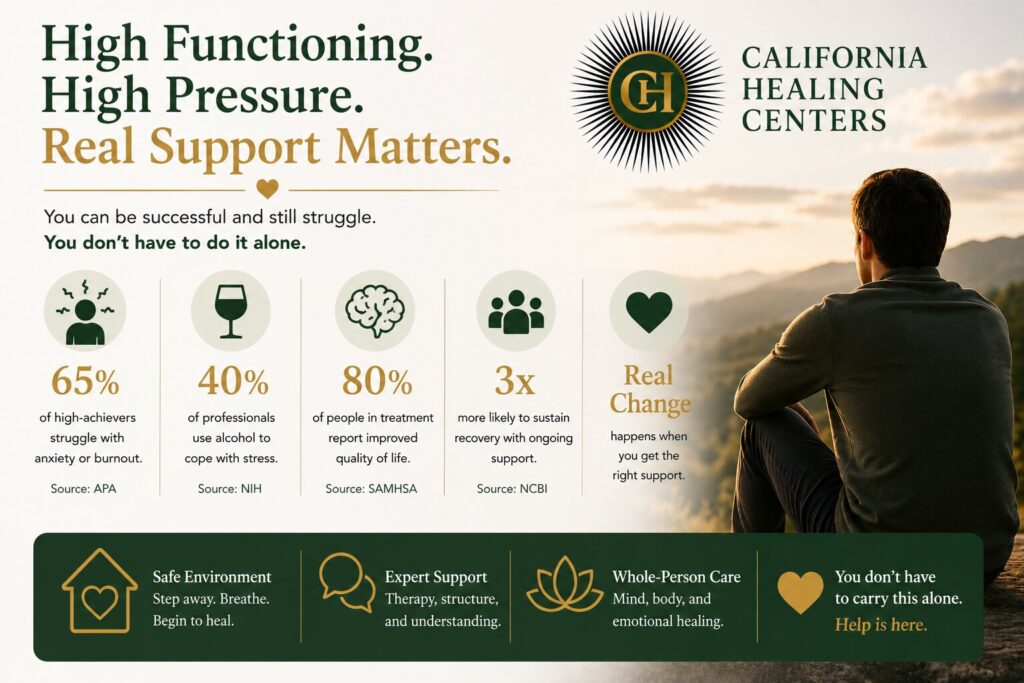
The Burnout Nobody Sees Until It’s Too Late

High-Functioning People Often Wait Too Long

This happens constantly.

People wait until:

  • their marriage is collapsing
  • they can’t stop drinking nightly
  • suicidal thoughts appear
  • panic attacks become constant
  • they emotionally shut down completely
  • substances become non-negotiable
  • they physically cannot maintain performance anymore

By the time many high-functioning adults seek help, they are deeply depleted.

Not dramatic.
Not reckless.
Just exhausted in a way sleep no longer fixes.

The outside world usually misses this because productivity masks pain extremely well.

Especially in ambitious people.

Especially in perfectionists.

Especially in people praised their entire lives for pushing through everything.

Sometimes Weekly Therapy Isn’t Enough Anymore

This can be difficult for high-achievers to accept.

Many people come into treatment believing they should be able to “manage this better.” They want the emotional equivalent of a tune-up:

  • one therapy session a week
  • better routines
  • stricter discipline
  • maybe cutting back slightly

And sometimes that works.

But there are situations where the nervous system is so overloaded that someone needs more distance from daily pressure than outpatient care realistically provides.

Not because they’re incapable.
Not because they’re weak.

Because they’ve been surviving in emergency mode for too long.

Live-in treatment can create something many high-functioning people haven’t experienced in years:

  • uninterrupted rest
  • emotional safety
  • reduced performance pressure
  • consistent therapeutic support
  • nervous system stabilization
  • enough quiet to finally hear themselves think

One executive described it this way:

“I didn’t realize how loud my life was until it finally got quiet.”

That’s often when the real healing begins.

The Fear of Stepping Away Is Real

Let’s be honest about this part.

High-functioning people are often terrified of treatment because they believe stopping means losing everything.

They worry:

  • “What happens to my career?”
  • “What will people think?”
  • “What if I fall behind?”
  • “What if I come back weaker?”
  • “What if I don’t know who I am without the pressure?”

Those fears are real.

But many people are already losing themselves slowly while trying desperately not to pause.

I’ve worked with professionals who spent years white-knuckling their lives because slowing down felt more dangerous than suffering.

Then they entered treatment and realized something uncomfortable:
They weren’t functioning because they were healthy.

They were functioning because they were terrified.

There’s a difference.

Recovery Often Feels Stranger Than People Expect

High-functioning adults are used to solving problems through effort.

Treatment doesn’t always work that way.

Sometimes the hardest part is:

  • resting without guilt
  • not performing constantly
  • feeling emotions fully
  • asking for help
  • admitting you’re overwhelmed
  • existing without productivity defining your worth

That can feel deeply uncomfortable at first.

Especially for people whose identity has been built around competence.

But healing is not laziness.
Rest is not failure.
And stepping away temporarily does not erase everything you’ve built.

In many cases, it protects it.

You May Need More Care Than Your Resume Suggests

This is the sentence many people need to hear.

Your ability to function publicly does not determine the seriousness of your suffering privately.

You can be:

  • intelligent
  • successful
  • respected
  • responsible
  • financially stable

…and still deeply unwell.

Mental health struggles do not only affect people whose lives look chaotic externally. Sometimes the people struggling hardest are simply better at hiding it.

At California Healing Centers, we often meet people who delayed seeking help because they believed treatment was only for people visibly falling apart.

But many eventually realize something important:
They were already falling apart internally. They had simply learned how to do it quietly.

FAQ: High-Functioning Adults Considering Residential Care

Can someone need residential treatment even if they’re still working?

Yes. Many high-functioning adults maintain careers and responsibilities while privately struggling with anxiety, depression, substance use, emotional exhaustion, or burnout.

Is treatment only for people in crisis?

No. Some people seek higher levels of support before reaching a severe crisis because they recognize their current coping strategies are no longer sustainable.

What if I feel guilty stepping away from work?

That’s extremely common among high-achievers. But continuing to push through severe emotional distress can eventually affect your health, relationships, decision-making, and long-term stability.

How do I know if outpatient therapy isn’t enough anymore?

If symptoms continue worsening despite weekly therapy, or if daily life feels emotionally unmanageable, more immersive support may help create stability and deeper healing.

Will treatment ruin my career?

Many professionals worry about this. In reality, untreated mental health struggles or substance use often create greater long-term risks than temporarily stepping away to get support.

How long do people typically stay in live-in treatment?

Length of stay varies based on emotional needs, clinical recommendations, and personal progress. People searching how long is inpatient mental health are often relieved to learn that treatment is individualized rather than one-size-fits-all.

Can treatment help with both mental health and substance use?

Yes. Many high-functioning adults experience overlapping struggles involving anxiety, depression, trauma, burnout, and substance use at the same time.

What if I’m scared treatment will change who I am?

That fear is incredibly common. But many people discover treatment doesn’t erase their personality or ambition — it helps them reconnect with themselves underneath the exhaustion and survival mode.

If you’re functioning on the outside but quietly exhausted underneath, California Healing Centers offers compassionate live-in mental health treatment designed for adults who need deeper support without judgment or shame.

Call (858) 330-4769 or visit our residential treatment program services to learn more about our residential treatment program services in San Diego, CA.


Leave a Comment

Your email address will not be published. Required fields are marked *

Accessibility Toolbar

The People Falling Apart the Fastest Are Often the Ones Still Showing Up Early

You haven’t lost your job.

You haven’t disappeared for days.
You haven’t blown up your entire life.
You still answer emails. Still hit deadlines. Still show up to meetings looking relatively normal.

And because of that, almost nobody realizes how hard you’re fighting yourself behind closed doors.

This is one of the biggest reasons high-functioning people delay getting serious help. The outside world keeps rewarding performance while quietly ignoring the cost of maintaining it.

But functioning is not the same thing as being okay.

At California Healing Centers, we talk to people every week who are still succeeding professionally while privately unraveling emotionally. Some eventually realize they need more than occasional therapy sessions or quick coping strategies. For many, exploring live-in mental health support becomes less about “falling apart” and more about finally stopping the constant internal war.

High-Functioning Struggles Are Easy to Hide — Until They Aren’t

People often imagine severe emotional distress looking chaotic.

But many high-functioning adults are incredibly organized on the outside while emotionally exhausted underneath.

They:

  • answer Slack messages while having panic attacks
  • drink every night but never miss a morning meeting
  • numb themselves emotionally while maintaining impressive careers
  • dissociate through family dinners and social events
  • quietly wonder how much longer they can keep this pace up

And because they’re still producing, everyone assumes they’re fine.

Sometimes the person holding everything together is actually the person closest to collapse.

I’ve had patients tell me:

“If I stop moving, I think everything catches up to me.”

That sentence stays with you.

Because underneath high performance is often profound fear.

Fear of slowing down.
Fear of feeling.
Fear of losing control.
Fear that rest might expose how bad things actually are.

You Don’t Need to Hit Rock Bottom to Need More Support

This is where many high-achieving people get stuck.

They compare themselves to stereotypes.

“I’m not homeless.”
“I’m not getting arrested.”
“I’m still functioning.”
“I’m not as bad as other people.”

But emotional suffering is not a competition.

If your nervous system is constantly overloaded…
If your coping mechanisms are becoming destructive…
If substances, anxiety, depression, or emotional numbness are quietly running your life…

…you do not need permission to take that seriously.

One of the most dangerous myths high-functioning people believe is:
“If I can still perform, I must still be okay.”

That’s not always true.

Some people are performing directly through the breakdown.

The Nervous System Eventually Collects Its Debt

This is the part many professionals, executives, caregivers, and high-achievers don’t realize until much later.

You can override exhaustion for a surprisingly long time.

Adrenaline is powerful.
So is fear.
So is perfectionism.

But eventually, the body starts demanding payment.

Sometimes it looks like:

  • panic attacks
  • emotional numbness
  • rage you can’t explain
  • drinking more than you planned every night
  • feeling detached from your own life
  • insomnia
  • burnout so severe it feels physical
  • inability to experience joy anymore
  • sudden emotional crashes after years of “holding it together”

I’ve seen people who could run entire companies but couldn’t sit quietly alone with their thoughts for ten minutes without unraveling emotionally.

That’s not weakness.

That’s accumulated overload.

There’s a reason so many people searching questions around how long is inpatient mental health are not actually asking about timelines first. They’re trying to figure out whether their suffering is finally serious enough to justify stepping away from life for a while.

The Burnout Nobody Sees Until It’s Too Late

High-Functioning People Often Wait Too Long

This happens constantly.

People wait until:

  • their marriage is collapsing
  • they can’t stop drinking nightly
  • suicidal thoughts appear
  • panic attacks become constant
  • they emotionally shut down completely
  • substances become non-negotiable
  • they physically cannot maintain performance anymore

By the time many high-functioning adults seek help, they are deeply depleted.

Not dramatic.
Not reckless.
Just exhausted in a way sleep no longer fixes.

The outside world usually misses this because productivity masks pain extremely well.

Especially in ambitious people.

Especially in perfectionists.

Especially in people praised their entire lives for pushing through everything.

Sometimes Weekly Therapy Isn’t Enough Anymore

This can be difficult for high-achievers to accept.

Many people come into treatment believing they should be able to “manage this better.” They want the emotional equivalent of a tune-up:

  • one therapy session a week
  • better routines
  • stricter discipline
  • maybe cutting back slightly

And sometimes that works.

But there are situations where the nervous system is so overloaded that someone needs more distance from daily pressure than outpatient care realistically provides.

Not because they’re incapable.
Not because they’re weak.

Because they’ve been surviving in emergency mode for too long.

Live-in treatment can create something many high-functioning people haven’t experienced in years:

  • uninterrupted rest
  • emotional safety
  • reduced performance pressure
  • consistent therapeutic support
  • nervous system stabilization
  • enough quiet to finally hear themselves think

One executive described it this way:

“I didn’t realize how loud my life was until it finally got quiet.”

That’s often when the real healing begins.

The Fear of Stepping Away Is Real

Let’s be honest about this part.

High-functioning people are often terrified of treatment because they believe stopping means losing everything.

They worry:

  • “What happens to my career?”
  • “What will people think?”
  • “What if I fall behind?”
  • “What if I come back weaker?”
  • “What if I don’t know who I am without the pressure?”

Those fears are real.

But many people are already losing themselves slowly while trying desperately not to pause.

I’ve worked with professionals who spent years white-knuckling their lives because slowing down felt more dangerous than suffering.

Then they entered treatment and realized something uncomfortable:
They weren’t functioning because they were healthy.

They were functioning because they were terrified.

There’s a difference.

Recovery Often Feels Stranger Than People Expect

High-functioning adults are used to solving problems through effort.

Treatment doesn’t always work that way.

Sometimes the hardest part is:

  • resting without guilt
  • not performing constantly
  • feeling emotions fully
  • asking for help
  • admitting you’re overwhelmed
  • existing without productivity defining your worth

That can feel deeply uncomfortable at first.

Especially for people whose identity has been built around competence.

But healing is not laziness.
Rest is not failure.
And stepping away temporarily does not erase everything you’ve built.

In many cases, it protects it.

You May Need More Care Than Your Resume Suggests

This is the sentence many people need to hear.

Your ability to function publicly does not determine the seriousness of your suffering privately.

You can be:

  • intelligent
  • successful
  • respected
  • responsible
  • financially stable

…and still deeply unwell.

Mental health struggles do not only affect people whose lives look chaotic externally. Sometimes the people struggling hardest are simply better at hiding it.

At California Healing Centers, we often meet people who delayed seeking help because they believed treatment was only for people visibly falling apart.

But many eventually realize something important:
They were already falling apart internally. They had simply learned how to do it quietly.

FAQ: High-Functioning Adults Considering Residential Care

Can someone need residential treatment even if they’re still working?

Yes. Many high-functioning adults maintain careers and responsibilities while privately struggling with anxiety, depression, substance use, emotional exhaustion, or burnout.

Is treatment only for people in crisis?

No. Some people seek higher levels of support before reaching a severe crisis because they recognize their current coping strategies are no longer sustainable.

What if I feel guilty stepping away from work?

That’s extremely common among high-achievers. But continuing to push through severe emotional distress can eventually affect your health, relationships, decision-making, and long-term stability.

How do I know if outpatient therapy isn’t enough anymore?

If symptoms continue worsening despite weekly therapy, or if daily life feels emotionally unmanageable, more immersive support may help create stability and deeper healing.

Will treatment ruin my career?

Many professionals worry about this. In reality, untreated mental health struggles or substance use often create greater long-term risks than temporarily stepping away to get support.

How long do people typically stay in live-in treatment?

Length of stay varies based on emotional needs, clinical recommendations, and personal progress. People searching how long is inpatient mental health are often relieved to learn that treatment is individualized rather than one-size-fits-all.

Can treatment help with both mental health and substance use?

Yes. Many high-functioning adults experience overlapping struggles involving anxiety, depression, trauma, burnout, and substance use at the same time.

What if I’m scared treatment will change who I am?

That fear is incredibly common. But many people discover treatment doesn’t erase their personality or ambition — it helps them reconnect with themselves underneath the exhaustion and survival mode.

If you’re functioning on the outside but quietly exhausted underneath, California Healing Centers offers compassionate live-in mental health treatment designed for adults who need deeper support without judgment or shame.

Call (858) 330-4769 or visit our residential treatment program services to learn more about our residential treatment program services in San Diego, CA.

Table of Contents
Scroll to Top