
What Families Often Realize Right Before Things Finally Start Changing

By the time parents say, “We’ve tried everything,” they’re usually carrying far more than frustration.

They’re carrying exhaustion.
Fear.
Guilt.
Grief.
Hope that keeps getting broken and rebuilt over and over again.

You may have spent months — or years — trying to help your child hold their life together while quietly watching them slip further away emotionally.

Maybe your son or daughter keeps returning to substances after promising things would change. Maybe depression has become so heavy they barely leave their room anymore. Maybe every conversation feels tense, hopeless, or emotionally loaded.

And somewhere inside all of that, many parents arrive at a painful conclusion:
“Nothing is working.”

At California Healing Centers, we meet families in this exact emotional place every day. Not because they failed. Because prolonged emotional crisis changes entire households. For parents exploring live-in mental health treatment, understanding what deeper support actually offers can sometimes reopen hope families thought they had already lost.

“We’ve Tried Everything” Usually Means You’ve Been Carrying This Alone Too Long

Most parents do not ignore problems.

They overextend themselves trying to solve them.

You’ve likely already tried:

  • therapy appointments
  • emotional support
  • medication changes
  • difficult conversations
  • boundaries
  • softer approaches
  • stricter approaches
  • crisis management
  • begging
  • researching resources late at night
  • pretending you’re okay in front of other people

And when your child continues struggling despite all of that effort, it’s easy to internalize the outcome as failure.

But sometimes the problem is not effort.

Sometimes the level of care simply hasn’t matched the level of suffering yet.

That distinction matters emotionally because many families stop hoping once they believe:
“If all this didn’t work, nothing will.”

But there’s a major difference between:

  • trying many versions of the same level of support
    and
  • changing the environment entirely

Sometimes people need more than encouragement, weekly therapy, or temporary stabilization. Sometimes they need enough support, structure, and emotional safety to interrupt the cycle completely.

Depression Can Quietly Steal a Person’s Ability to Function

Many parents expect severe emotional struggles to look dramatic.

But depression often looks quieter than people imagine.

It can look like:

  • sleeping all day
  • avoiding texts and calls
  • staring at walls or ceilings for hours
  • emotional numbness
  • isolation
  • irritability
  • giving up on routines
  • barely eating
  • sleeping constantly but still feeling exhausted
  • losing interest in life gradually

Families searching phrases related to can’t get out of bed depression are often not watching laziness unfold.

They’re watching someone whose emotional and physical energy have become profoundly depleted.

And honestly, that can be terrifying as a parent because depression slowly shrinks a person’s world while convincing them nothing will help.

You may watch your child become emotionally smaller month after month:

  • less social
  • less hopeful
  • less motivated
  • less connected
  • less recognizable

That kind of helplessness changes families deeply.

Sometimes the Entire Household Starts Living in Survival Mode

This is one of the hidden effects of prolonged mental health struggles.

Over time, families stop functioning normally too.

Parents begin:

  • monitoring moods constantly
  • sleeping lightly
  • panicking over unanswered texts
  • walking on eggshells
  • rearranging their own lives around emotional crisis
  • carrying chronic anxiety every single day

Siblings feel the tension too.
Relationships become strained.
The home slowly starts revolving around instability.

Not because anyone stopped loving each other.

Because human nervous systems cannot remain in nonstop emotional emergency mode forever without consequences.

Eventually, everyone becomes emotionally exhausted.

And often, the struggling person feels enormous shame watching their family suffer while also feeling completely unable to stop the cycle themselves.

That combination — shame plus helplessness — can deepen depression and substance use even further.

More Support Is Not the Same Thing as Giving Up

Parents often carry guilt when considering residential care.

They worry:

  • “Am I abandoning my child?”
  • “Will they feel punished?”
  • “Should I have been able to fix this myself?”
  • “What if they hate me for this?”

Most parents asking these questions love their child deeply.

But love alone cannot regulate severe depression, trauma, addiction, or emotional overwhelm.

And honestly, many parents have already been functioning far beyond their own emotional limits by the time treatment becomes part of the conversation.

Seeking deeper support is not giving up on your child.

In many cases, it’s the moment families stop trying to survive impossible circumstances without enough help.

One parent once said:

“I thought treatment meant we had failed. Looking back, it was the first time we finally stopped drowning.”

That perspective shift matters.

Because treatment is not about replacing family love.

It’s about adding support strong enough to hold everyone up while healing begins.
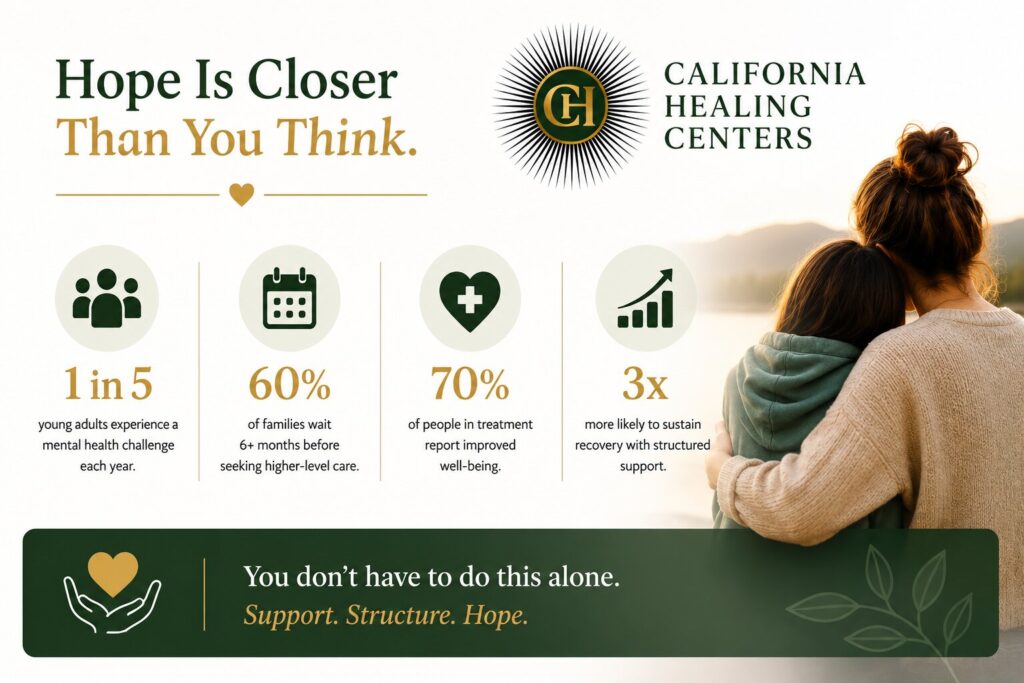
What Parents Often Learn Too Late About Help

Structure Helps People Who No Longer Trust Themselves

A lot of struggling young adults are not simply “unmotivated.”

They’re emotionally overwhelmed to the point where normal functioning feels impossible.

That’s why many people cannot simply “snap out of it” through willpower alone.

When depression, anxiety, trauma, substances, or emotional burnout become severe, even basic daily tasks can feel crushing:

  • getting out of bed
  • showering
  • eating
  • answering messages
  • attending work or school
  • making decisions

This is where structure becomes powerful.

Not harsh control.
Not punishment.

Predictability.

Regular meals.
Consistent sleep.
Therapeutic support.
Reduced chaos.
Distance from destructive routines.
Support available throughout the day instead of only during occasional appointments.

Many young adults entering live-in treatment describe something surprising:
relief.

Not because everything instantly improves.
Because they are no longer carrying every emotional burden alone every waking hour.

Healing Usually Begins Smaller Than Families Expect

A lot of parents hope treatment will create one giant breakthrough moment.

Real healing is usually quieter than that.

Sometimes recovery starts with:

  • sleeping through the night
  • showering consistently
  • making eye contact again
  • eating meals regularly
  • laughing naturally
  • participating in conversations
  • admitting emotions honestly
  • reconnecting with small pieces of hope

Those moments matter more than families often realize.

Because when someone has spent months or years emotionally disappearing, small signs of reconnection can feel enormous.

At California Healing Centers, we’ve seen families arrive emotionally exhausted, terrified, and convinced nothing could possibly help anymore — only to slowly watch their loved one reconnect with themselves in ways the family had not seen in a very long time.

Not overnight.
Not perfectly.

But genuinely.

Some Young Adults Need Distance From the Chaos to Hear Themselves Again

This part is important.

Sometimes the environment itself keeps reinforcing the cycle:

  • unhealthy relationships
  • substance use
  • emotional isolation
  • constant conflict
  • social pressure
  • burnout
  • untreated trauma
  • chronic stress

And even loving families can accidentally become part of the emotional intensity simply because everyone is overwhelmed.

A supportive environment can create enough emotional quiet for people to finally hear themselves underneath the panic, depression, shame, or substances.

One former client explained it this way:

“I didn’t realize how loud my life had become until things finally got quiet.”

That emotional quiet matters.

Because healing rarely begins while someone is still sprinting emotionally every second of the day.

Parents Need Care Too — Even If They Don’t Think They Deserve It

This often gets ignored entirely.

Parents supporting struggling children frequently develop:

  • chronic anxiety
  • sleep issues
  • emotional burnout
  • panic
  • isolation
  • guilt
  • symptoms of trauma themselves

Many become so focused on saving their child that they slowly stop functioning emotionally too.

That is not weakness.

That is what prolonged fear does to human beings.

Support groups, therapy, family counseling, and trauma-informed guidance can help parents:

  • process grief
  • rebuild boundaries
  • communicate differently
  • stop operating entirely from panic
  • reconnect with themselves again

You do not have to destroy yourself to prove how much you love your child.

Sometimes “Nothing Works” Actually Means “We Need a Different Level of Support”

This may be the most important idea in this article.

If your child:

  • keeps returning to substances
  • isolates constantly
  • cannot function consistently
  • struggles to leave bed
  • feels emotionally hopeless
  • cycles between temporary improvement and collapse
  • seems increasingly disconnected from life

…it may not mean healing is impossible.

It may simply mean the current level of support is no longer enough.

There is a difference.

And that difference matters because hopelessness often convinces families they have reached the end of available options when they may actually be standing at the beginning of a more effective kind of support entirely.

FAQ: Families Considering Residential Mental Health Support

How do we know if our child needs more than outpatient therapy?

If symptoms continue worsening despite therapy, or daily functioning has become severely impaired, more immersive support may help create stability and emotional safety.

Can severe depression really make someone unable to leave bed?

Yes. Depression can profoundly affect energy, concentration, sleep, motivation, emotional regulation, and physical functioning.

Is residential treatment only for severe addiction?

No. Many people enter treatment for depression, anxiety, trauma, emotional burnout, or situations where mental health and substance use collide.

Will our child feel abandoned if we pursue treatment?

Many families fear this initially. But many young adults later describe treatment as relieving because they finally stopped carrying overwhelming emotional pain alone.

What if our child refuses help?

Resistance is common. Shame, hopelessness, fear, and emotional exhaustion often make accepting help feel difficult at first.

Does treatment replace the role of family?

No. Healthy treatment supports both the individual and the family system while helping everyone move out of crisis mode.

How long does emotional healing usually take?

Healing timelines vary for every person. Some people stabilize quickly once support and structure are introduced. Others improve more gradually over time.

Can families stay involved during treatment?

Yes. Many programs involve families through communication, therapy, education, and support because healing often affects the entire household.

If your family feels emotionally exhausted from trying to survive this alone, California Healing Centers offers compassionate live-in mental health treatment designed to help struggling adults reconnect with safety, stability, and hope.

Call (858) 330-4769 or visit our residential treatment program services to learn more about our residential treatment program services in San Diego, CA.


Leave a Comment

Your email address will not be published. Required fields are marked *

Accessibility Toolbar

What Families Often Realize Right Before Things Finally Start Changing

By the time parents say, “We’ve tried everything,” they’re usually carrying far more than frustration.

They’re carrying exhaustion.
Fear.
Guilt.
Grief.
Hope that keeps getting broken and rebuilt over and over again.

You may have spent months — or years — trying to help your child hold their life together while quietly watching them slip further away emotionally.

Maybe your son or daughter keeps returning to substances after promising things would change. Maybe depression has become so heavy they barely leave their room anymore. Maybe every conversation feels tense, hopeless, or emotionally loaded.

And somewhere inside all of that, many parents arrive at a painful conclusion:
“Nothing is working.”

At California Healing Centers, we meet families in this exact emotional place every day. Not because they failed. Because prolonged emotional crisis changes entire households. For parents exploring live-in mental health treatment, understanding what deeper support actually offers can sometimes reopen hope families thought they had already lost.

“We’ve Tried Everything” Usually Means You’ve Been Carrying This Alone Too Long

Most parents do not ignore problems.

They overextend themselves trying to solve them.

You’ve likely already tried:

  • therapy appointments
  • emotional support
  • medication changes
  • difficult conversations
  • boundaries
  • softer approaches
  • stricter approaches
  • crisis management
  • begging
  • researching resources late at night
  • pretending you’re okay in front of other people

And when your child continues struggling despite all of that effort, it’s easy to internalize the outcome as failure.

But sometimes the problem is not effort.

Sometimes the level of care simply hasn’t matched the level of suffering yet.

That distinction matters emotionally because many families stop hoping once they believe:
“If all this didn’t work, nothing will.”

But there’s a major difference between:

  • trying many versions of the same level of support
    and
  • changing the environment entirely

Sometimes people need more than encouragement, weekly therapy, or temporary stabilization. Sometimes they need enough support, structure, and emotional safety to interrupt the cycle completely.

Depression Can Quietly Steal a Person’s Ability to Function

Many parents expect severe emotional struggles to look dramatic.

But depression often looks quieter than people imagine.

It can look like:

  • sleeping all day
  • avoiding texts and calls
  • staring at walls or ceilings for hours
  • emotional numbness
  • isolation
  • irritability
  • giving up on routines
  • barely eating
  • sleeping constantly but still feeling exhausted
  • losing interest in life gradually

Families searching phrases related to can’t get out of bed depression are often not watching laziness unfold.

They’re watching someone whose emotional and physical energy have become profoundly depleted.

And honestly, that can be terrifying as a parent because depression slowly shrinks a person’s world while convincing them nothing will help.

You may watch your child become emotionally smaller month after month:

  • less social
  • less hopeful
  • less motivated
  • less connected
  • less recognizable

That kind of helplessness changes families deeply.

Sometimes the Entire Household Starts Living in Survival Mode

This is one of the hidden effects of prolonged mental health struggles.

Over time, families stop functioning normally too.

Parents begin:

  • monitoring moods constantly
  • sleeping lightly
  • panicking over unanswered texts
  • walking on eggshells
  • rearranging their own lives around emotional crisis
  • carrying chronic anxiety every single day

Siblings feel the tension too.
Relationships become strained.
The home slowly starts revolving around instability.

Not because anyone stopped loving each other.

Because human nervous systems cannot remain in nonstop emotional emergency mode forever without consequences.

Eventually, everyone becomes emotionally exhausted.

And often, the struggling person feels enormous shame watching their family suffer while also feeling completely unable to stop the cycle themselves.

That combination — shame plus helplessness — can deepen depression and substance use even further.

More Support Is Not the Same Thing as Giving Up

Parents often carry guilt when considering residential care.

They worry:

  • “Am I abandoning my child?”
  • “Will they feel punished?”
  • “Should I have been able to fix this myself?”
  • “What if they hate me for this?”

Most parents asking these questions love their child deeply.

But love alone cannot regulate severe depression, trauma, addiction, or emotional overwhelm.

And honestly, many parents have already been functioning far beyond their own emotional limits by the time treatment becomes part of the conversation.

Seeking deeper support is not giving up on your child.

In many cases, it’s the moment families stop trying to survive impossible circumstances without enough help.

One parent once said:

“I thought treatment meant we had failed. Looking back, it was the first time we finally stopped drowning.”

That perspective shift matters.

Because treatment is not about replacing family love.

It’s about adding support strong enough to hold everyone up while healing begins.

What Parents Often Learn Too Late About Help

Structure Helps People Who No Longer Trust Themselves

A lot of struggling young adults are not simply “unmotivated.”

They’re emotionally overwhelmed to the point where normal functioning feels impossible.

That’s why many people cannot simply “snap out of it” through willpower alone.

When depression, anxiety, trauma, substances, or emotional burnout become severe, even basic daily tasks can feel crushing:

  • getting out of bed
  • showering
  • eating
  • answering messages
  • attending work or school
  • making decisions

This is where structure becomes powerful.

Not harsh control.
Not punishment.

Predictability.

Regular meals.
Consistent sleep.
Therapeutic support.
Reduced chaos.
Distance from destructive routines.
Support available throughout the day instead of only during occasional appointments.

Many young adults entering live-in treatment describe something surprising:
relief.

Not because everything instantly improves.
Because they are no longer carrying every emotional burden alone every waking hour.

Healing Usually Begins Smaller Than Families Expect

A lot of parents hope treatment will create one giant breakthrough moment.

Real healing is usually quieter than that.

Sometimes recovery starts with:

  • sleeping through the night
  • showering consistently
  • making eye contact again
  • eating meals regularly
  • laughing naturally
  • participating in conversations
  • admitting emotions honestly
  • reconnecting with small pieces of hope

Those moments matter more than families often realize.

Because when someone has spent months or years emotionally disappearing, small signs of reconnection can feel enormous.

At California Healing Centers, we’ve seen families arrive emotionally exhausted, terrified, and convinced nothing could possibly help anymore — only to slowly watch their loved one reconnect with themselves in ways the family had not seen in a very long time.

Not overnight.
Not perfectly.

But genuinely.

Some Young Adults Need Distance From the Chaos to Hear Themselves Again

This part is important.

Sometimes the environment itself keeps reinforcing the cycle:

  • unhealthy relationships
  • substance use
  • emotional isolation
  • constant conflict
  • social pressure
  • burnout
  • untreated trauma
  • chronic stress

And even loving families can accidentally become part of the emotional intensity simply because everyone is overwhelmed.

A supportive environment can create enough emotional quiet for people to finally hear themselves underneath the panic, depression, shame, or substances.

One former client explained it this way:

“I didn’t realize how loud my life had become until things finally got quiet.”

That emotional quiet matters.

Because healing rarely begins while someone is still sprinting emotionally every second of the day.

Parents Need Care Too — Even If They Don’t Think They Deserve It

This often gets ignored entirely.

Parents supporting struggling children frequently develop:

  • chronic anxiety
  • sleep issues
  • emotional burnout
  • panic
  • isolation
  • guilt
  • symptoms of trauma themselves

Many become so focused on saving their child that they slowly stop functioning emotionally too.

That is not weakness.

That is what prolonged fear does to human beings.

Support groups, therapy, family counseling, and trauma-informed guidance can help parents:

  • process grief
  • rebuild boundaries
  • communicate differently
  • stop operating entirely from panic
  • reconnect with themselves again

You do not have to destroy yourself to prove how much you love your child.

Sometimes “Nothing Works” Actually Means “We Need a Different Level of Support”

This may be the most important idea in this article.

If your child:

  • keeps returning to substances
  • isolates constantly
  • cannot function consistently
  • struggles to leave bed
  • feels emotionally hopeless
  • cycles between temporary improvement and collapse
  • seems increasingly disconnected from life

…it may not mean healing is impossible.

It may simply mean the current level of support is no longer enough.

There is a difference.

And that difference matters because hopelessness often convinces families they have reached the end of available options when they may actually be standing at the beginning of a more effective kind of support entirely.

FAQ: Families Considering Residential Mental Health Support

How do we know if our child needs more than outpatient therapy?

If symptoms continue worsening despite therapy, or daily functioning has become severely impaired, more immersive support may help create stability and emotional safety.

Can severe depression really make someone unable to leave bed?

Yes. Depression can profoundly affect energy, concentration, sleep, motivation, emotional regulation, and physical functioning.

Is residential treatment only for severe addiction?

No. Many people enter treatment for depression, anxiety, trauma, emotional burnout, or situations where mental health and substance use collide.

Will our child feel abandoned if we pursue treatment?

Many families fear this initially. But many young adults later describe treatment as relieving because they finally stopped carrying overwhelming emotional pain alone.

What if our child refuses help?

Resistance is common. Shame, hopelessness, fear, and emotional exhaustion often make accepting help feel difficult at first.

Does treatment replace the role of family?

No. Healthy treatment supports both the individual and the family system while helping everyone move out of crisis mode.

How long does emotional healing usually take?

Healing timelines vary for every person. Some people stabilize quickly once support and structure are introduced. Others improve more gradually over time.

Can families stay involved during treatment?

Yes. Many programs involve families through communication, therapy, education, and support because healing often affects the entire household.

If your family feels emotionally exhausted from trying to survive this alone, California Healing Centers offers compassionate live-in mental health treatment designed to help struggling adults reconnect with safety, stability, and hope.

Call (858) 330-4769 or visit our residential treatment program services to learn more about our residential treatment program services in San Diego, CA.

Table of Contents
Scroll to Top