
It’s one of the hardest decisions a parent can face—letting your child step into a place you can’t follow. If you’re here, you’re probably wondering what actually happens behind those doors… and how long they’ll be gone.
I remember sitting in that exact place—heart racing, second-guessing everything, wondering if I was doing the right thing or making a terrible mistake.
Let me walk you through it the way another parent once did for me.
It Doesn’t Feel Like “Sending Them Away”—But It Might Feel That Way at First
No one prepares you for how heavy this decision feels.
Even if you know your child needs more help than you can give at home, there’s still that voice:
What if they think I’m giving up on them?
Here’s what I learned, slowly and painfully—this isn’t abandonment. It’s support, just in a different form.
At home, love is constant. But structure, clinical care, and emotional stabilization? Those are harder to hold together, especially in a crisis.
In a live-in setting, your child isn’t being pushed away. They’re being held—by professionals, by routine, by an environment designed to help them feel safe again.
And safety is where healing begins.
The First Few Days Can Feel Like Everything Is Falling Apart
The beginning is often the hardest part—for both of you.
Your child might be withdrawn. Or angry. Or completely shut down. You might hang up the phone after that first call and wonder if you made things worse.
This is normal.
Those first few days are about decompression. Imagine a mind that’s been running at full speed for months—maybe years—suddenly being asked to slow down. It’s uncomfortable. Sometimes overwhelming.
But underneath that discomfort, something important is happening.
They’re beginning to settle.
Structure Isn’t Control—It’s Relief
Before treatment, everything probably felt unpredictable.
Maybe sleep was inconsistent. Maybe emotions escalated quickly. Maybe every day felt like you were bracing for what might happen next.
Inside residential care, the structure is steady and intentional:
- Mornings start at the same time each day
- Meals are consistent and nourishing
- Therapy happens regularly—not just in crisis moments
- There’s time for rest, reflection, and quiet
At first, your child might resist this. It can feel unfamiliar.
But over time, structure becomes something else entirely—it becomes relief.
Because when everything around you is steady, your mind finally has space to breathe.
You’ll Think About Time More Than Anything Else
This part is hard to admit.
Even while you’re focused on helping your child, there’s a constant question in the background:
How long will this last?
You might find yourself counting days. Wondering when things will feel “normal” again.
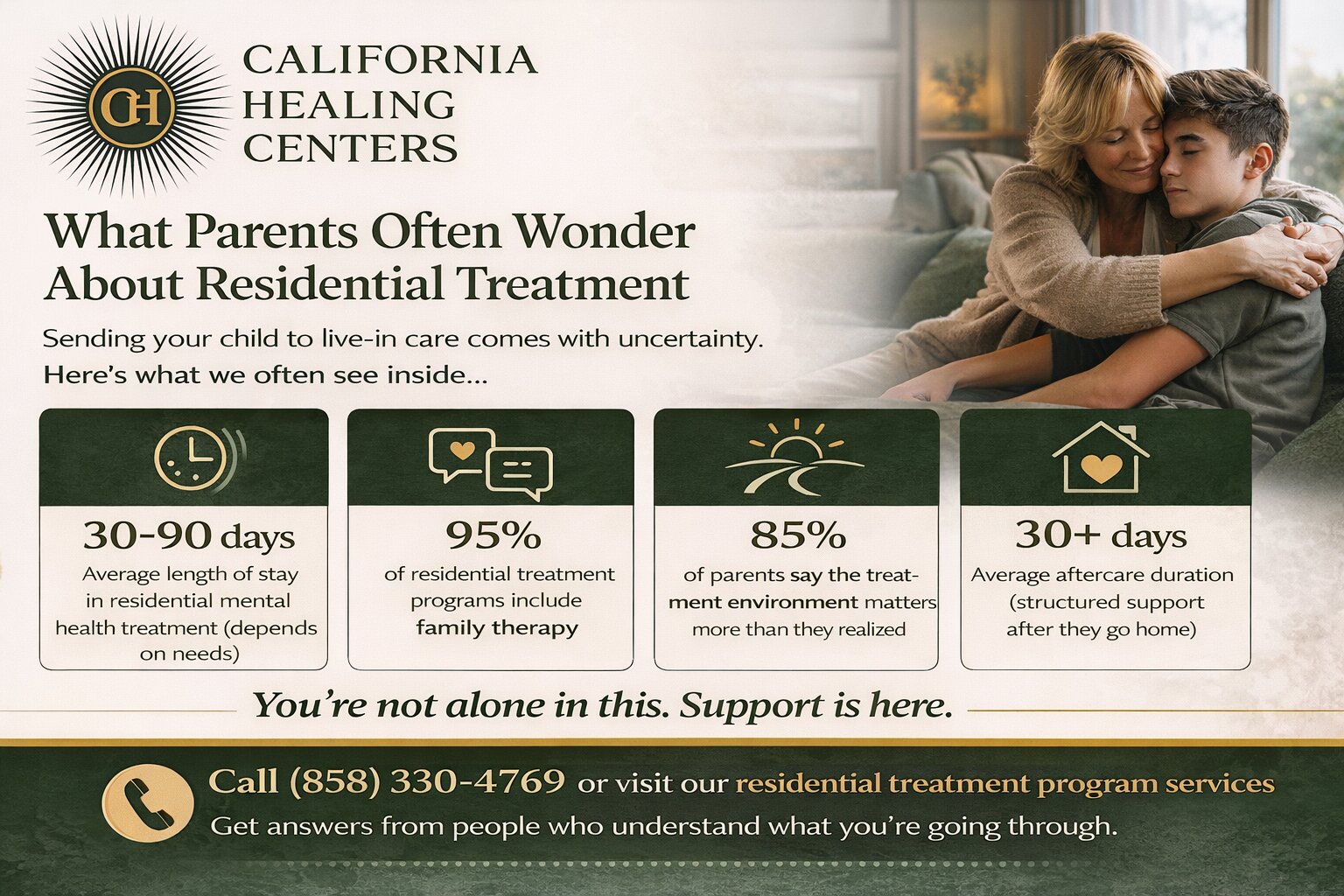
The truth is, there isn’t a fixed answer. The length of stay depends on what your child is working through, how they respond to care, and how stable they become over time.
If you’re trying to understand how long inpatient rehab can last in mental health settings, this residential treatment program page explains the factors that influence that timeline.
But here’s what I wish someone told me earlier:
Time in treatment isn’t something to get through—it’s something to use.
The goal isn’t speed. It’s stability.
Progress Doesn’t Look the Way You Expect
You might be hoping for a big, clear turning point.
But healing rarely works like that.
Instead, it shows up in small, quiet ways:
- They start sleeping through the night
- They engage a little more in conversations
- Their tone softens
- They begin to recognize their own emotions
These changes can feel subtle. Easy to overlook if you’re waiting for something dramatic.
But these are the building blocks of real, lasting change.
You’re Still Part of Their Healing (Even From a Distance)
One of the biggest fears I had was losing my place in my child’s life during treatment.
But good programs don’t cut families out—they bring them in differently.
You may be invited into:
- Family therapy sessions that help repair communication
- Updates that give you insight into their progress
- Guidance on how to support them without overstepping
And maybe most importantly—you get space to breathe, too.
Because supporting someone in crisis can be exhausting in ways no one talks about.
The Environment Matters More Than You Realize
At home, everything is layered with history.
Arguments, patterns, stress—all of it lives in the same space.
Residential care gives your child something new: a reset.
They’re in a place where:
- They’re not defined by past behavior
- They’re surrounded by others who understand
- They can focus fully on themselves without outside distractions
Sometimes, healing needs distance—not from love, but from the environment where pain has been repeating.
Coming Home Isn’t a Finish Line—It’s a Transition
This is something many parents don’t expect.
You might think: Once they come home, everything will be okay.
But coming home is actually the next phase of healing.
Your child may return with:
- New tools for managing emotions
- Greater self-awareness
- A need for continued support (like therapy or structured care)
And things may still feel fragile at times.
That doesn’t mean it didn’t work. It means healing is continuing.
A Quiet Truth Most Parents Don’t Say Out Loud
There’s a moment, somewhere in the middle of all this, where you realize something unexpected:
You didn’t lose your child by letting them go.
You gave them a chance to come back to themselves.
And that’s not failure.
That’s love, in one of its hardest forms.
Frequently Asked Questions Parents Often Have
How long will my child typically stay in residential care?
There’s no universal timeline. Some individuals stay for a few weeks, while others may need longer depending on their mental health needs, progress, and stability. The focus is always on readiness—not rushing.
Will my child be able to contact me during treatment?
Yes, in most programs, communication is encouraged—but it may be structured. This helps your child stay focused on their healing while still maintaining connection with you.
What if my child doesn’t want to be there?
Resistance is common, especially in the beginning. Over time, as they begin to feel safer and more understood, many individuals start to engage more openly in the process.
Will I be involved in their treatment?
In most cases, yes. Family involvement is often a key part of the healing process, whether through therapy sessions, updates, or education on how to support your child moving forward.
What happens after they leave residential care?
Aftercare is important. Your child may transition into structured daytime care, ongoing therapy, or other forms of support to maintain progress and continue building stability.
How do I know if this is the right step?
If you’re feeling overwhelmed, unsure how to help, or noticing that things are getting worse despite your efforts—it may be time to explore a higher level of care. You don’t have to make that decision alone.
You Don’t Have to Carry This Alone
If you’re here, it means you care deeply. And that matters more than anything.
If you’re trying to understand what the next step could look like, call (858) 330-4769 or explore our residential treatment program services to learn more about how support can begin.
Even taking the time to read this is a step forward.